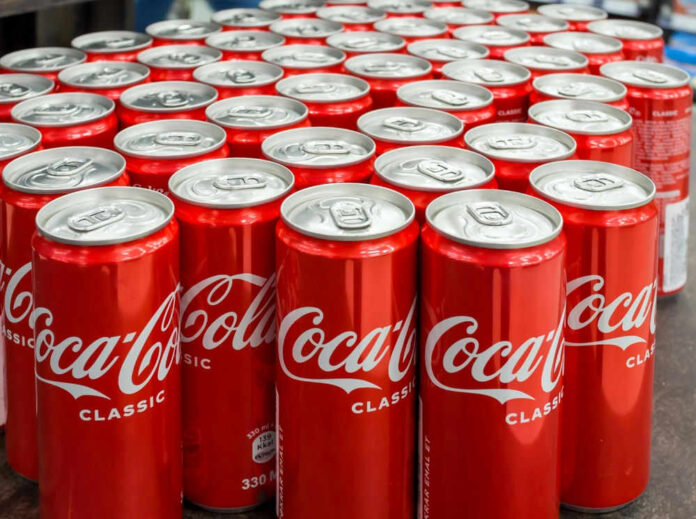
President Trump’s bold announcement that Coca-Cola will use real cane sugar in U.S. beverages has sent shockwaves through the industry, sparking debates on taste, health, and economics.
At a Glance
- Trump claims Coca-Cola will switch to cane sugar in U.S. products.
- Coca-Cola has not confirmed the change but acknowledged Trump’s enthusiasm.
- The Corn Refiners Association warns of economic consequences.
- Public opinion is divided over taste and health implications.
Trump’s Announcement Rocks the Beverage World
President Donald Trump announced via Truth Social that Coca-Cola has agreed to use real cane sugar in its U.S. beverages, a move that has already generated a flurry of reactions from consumers and industry stakeholders. Trump, a known aficionado of Diet Coke, emphasized the superiority of cane sugar for both taste and quality, suggesting that this change is part of a broader push towards healthier food policies under his administration.
Despite the fanfare surrounding Trump’s announcement, Coca-Cola has refrained from confirming a complete switch. The company issued a statement thanking Trump for his enthusiasm and promised more details on upcoming product innovations. This cautious response leaves many wondering whether Trump’s announcement is a done deal or a strategic move to test public reaction before making any official commitments.
Economic and Political Implications
The potential shift from high fructose corn syrup (HFCS) to cane sugar in Coca-Cola’s U.S. products has significant economic and political implications. The Corn Refiners Association, representing HFCS producers, quickly voiced concerns, highlighting potential job losses and a negative impact on farm income. They argue that replacing HFCS with cane sugar offers no nutritional benefit and could depress domestic production in favor of increased imports.
On the flip side, sugar producers and importers stand to gain from heightened demand for cane sugar, which has traditionally been used in Coca-Cola products outside the U.S. The debate underscores the ongoing tension between agricultural lobbies and the complexities of U.S. food policy. President Trump’s influence could sway public and corporate opinions, setting a precedent for future ingredient reformulations across the food and beverage industry.
Consumer Preferences and Health Considerations
American consumers have long shown a preference for “Mexican Coke,” which is sweetened with cane sugar, citing a distinct taste difference compared to its corn syrup-laden counterpart. This consumer sentiment has fueled ongoing demand for cane sugar-sweetened beverages, often sold at a premium in specialty stores across the U.S. The switch could cater to these preferences, potentially boosting Coca-Cola’s domestic sales.
Health advocates argue that both cane sugar and HFCS are caloric sweeteners with similar impacts when consumed in excess. However, the discourse around ultra-processed foods and sweeteners is gaining momentum, and reformulations like this one could be seen as steps toward healthier consumption patterns. Nevertheless, critics remain skeptical, suggesting that the move is more about taste and market positioning than genuine health benefits.
Awaiting Coca-Cola’s Next Move
As of now, Coca-Cola has yet to provide a definitive answer on whether it will fully adopt cane sugar for its U.S. products. The company’s executives face significant pressure to navigate between consumer preferences, governmental influences, and the financial implications of such a transition. With President Trump’s backing, the spotlight is on Coca-Cola to deliver on promises of “innovative offerings” that could redefine its iconic brand.
The unfolding situation highlights the power dynamics at play in corporate America, where presidential influence meets corporate strategy. As consumers and industry stakeholders await further developments, the potential switch to cane sugar remains a hot topic, reflecting broader societal debates about food quality, corporate responsibility, and government intervention.