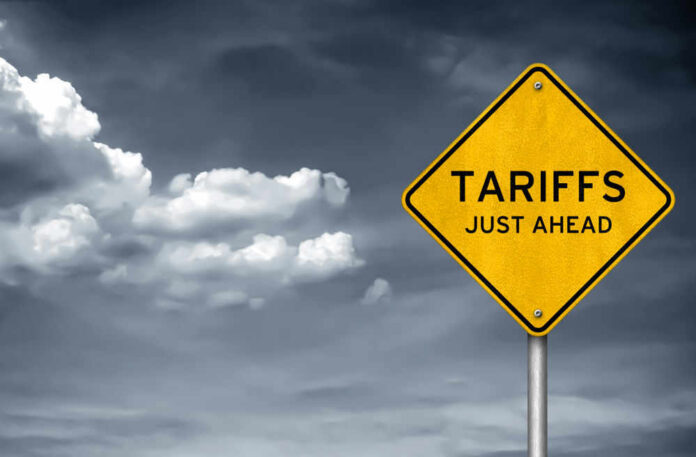
The Supreme Court shut down President Trump’s “Liberation Day” tariff strategy—so the administration pivoted fast, using a different law to keep pressure on foreign trade cheaters.
Story Snapshot
- President Trump launched broad “reciprocal” tariffs in April 2025 using IEEPA, including a 10% baseline and higher country-specific rates on dozens of nations.
- The White House paused and negotiated, reaching multiple reduced-rate deals with partners like the UK, EU, Japan, and others over 2025.
- In February 2026, the Supreme Court struck down the IEEPA tariff approach, forcing the administration to switch legal authorities.
- The administration responded with temporary 10% Section 122 tariffs (150 days) and reinstated 25% steel and aluminum tariffs while launching new investigations into partner practices.
- In March 2026, the administration reinstated 25% tariffs on both steel and aluminum and removed exemptions for multiple major partners, including Canada, Mexico, the EU, the UK, Japan, South Korea, and others.
From “Liberation Day” to a Legal Roadblock
President Trump’s early-April 2025 “Liberation Day” plan aimed at one central complaint: major trading partners sell into the U.S. market while protecting their own with tariffs, non-tariff barriers, and industrial policies that tilt outcomes against American workers.
The executive order imposed a 10% baseline tariff on imports and higher “reciprocal” rates—sometimes reaching 30% to 50%—across a wide set of countries targeted for perceived non-reciprocity.
Trump administration takes steps to impose new tariffs, announcing investigations into key trading partners. https://t.co/LVH9LCTodV
— CBS News (@CBSNews) March 12, 2026
Within days, the administration announced a negotiation pause that kept a baseline tariff in place for many countries while creating room for bilateral bargaining. Over the next months, the White House highlighted a string of country arrangements that lowered threatened rates for some partners, while keeping the overall leverage structure intact.
That “deal-making under deadline” approach became a defining feature of the second-term tariff push, distinguishing it from the more China-centered focus of many first-term actions.
Supreme Court Strikes IEEPA Tariffs, Testing Executive Power
In February 2026, the Supreme Court struck down the IEEPA-based tariff framework, and tariff collections under that authority ended shortly afterward. For constitutional conservatives, the ruling carried a clear institutional message: even when voters demand tougher trade enforcement, presidents must stay inside the legal boundaries Congress established.
That check matters because emergency-power statutes can invite mission creep, and lasting policy should rest on authorities that can survive court review.
Rather than abandon the underlying objective—pushing for reciprocity and addressing persistent trade imbalances—the administration shifted to other tools that were still available.
The move underscores how trade policy is not only an economic debate, but a governance debate: which branch writes the rules, what powers the executive can claim, and how durable any “America First” trade posture will be when challenged in court. The available reporting does not resolve every date detail, but the legal pivot is consistent across sources.
Section 122 Tariffs: A Rapid Pivot With a Short Clock
After the court decision, the administration turned to temporary Section 122 tariffs—set at 10% for 150 days—applied broadly on top of existing “most-favored-nation” duty rates. That structure matters for households watching prices because stacking duties can raise costs on imported inputs and consumer goods, depending on exemptions and product categories.
At the same time, supporters argue that a time-limited, legally grounded measure can preserve leverage while longer-term negotiations continue.
Steel and Aluminum Reinstated as Investigations Expand
In March 2026, the administration reinstated 25% tariffs on both steel and aluminum and removed exemptions for multiple major partners, including Canada, Mexico, the EU, the UK, Japan, South Korea, and others.
Steel and aluminum sit at the intersection of jobs, defense supply chains, and industrial capacity, which is why these categories repeatedly return in tariff debates. The administration also emphasized tighter enforcement against evasive practices affecting downstream products.
Alongside tariff resets, the administration moved toward new investigations into trading partners’ practices, aiming to document and challenge barriers beyond headline tariff rates. That investigative track aligns with the “reciprocity” theme—focusing on market access, regulatory obstacles, and industrial policies that can be difficult to quantify but still shape outcomes.
The research available here summarizes the broad direction and tools used; it does not provide granular findings of each ongoing probe, so conclusions should remain limited to documented actions.
Sources:
timeline of trade policy in the trump administration
understanding trump’s new tariffs
tariffs in the second trump administration
trump’s trade war timeline: a date guide