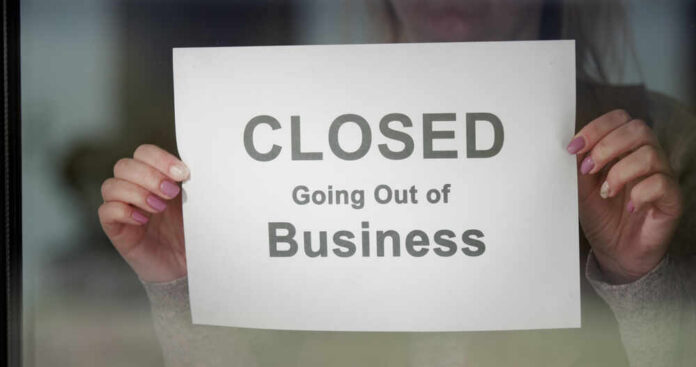
America’s once-dominant sandwich empire just shuttered 729 locations in a single year, exposing a troubling reality: corporate headquarters is making record profits while the small business owners who carry the brand are quietly going broke.
Story Snapshot
- Subway closed 729 U.S. stores in 2025, marking its tenth consecutive year of decline and steepest contraction in recent history
- Corporate net income soared to $688 million while franchise revenue dropped 6 percent, revealing a profit paradox that favors headquarters over struggling franchisees
- The chain’s U.S. footprint shrank from over 27,000 locations at its 2015 peak to just 18,733 stores, falling below 20,000 for the first time in two decades
- Average Subway locations generate only $500,000 annually in sales, significantly lower than competitors and insufficient for sustainable franchisee profitability
The Franchise Model’s Fatal Flaw
Subway’s all-franchise business structure creates a fundamental misalignment between corporate interests and franchisee survival. Corporate collects royalties regardless of whether individual stores make money, while franchisees absorb every cost increase from labor to rent to food supplies.
This arrangement worked during expansion, but becomes predatory during contraction. When average unit volumes hover around $500,000 annually and margins compress to single digits, franchisees face a mathematical impossibility: covering rising operational costs while sending checks to corporate.
The closures aren’t strategic consolidation despite corporate spin. They represent small business owners throwing in the towel after exhausting their savings.
Subway is continuing to shrink its U.S. footprint, closing a net 729 locations in 2025 — its steepest decline in years. https://t.co/BkK2cLi3WN
— KTVU (@KTVU) May 7, 2026
Corporate Profits While Franchisees Bleed
The financial statements tell a damning story. Subway corporate reported net income jumping from $397 million in 2024 to $688 million in 2025. Meanwhile, franchise revenue declined by 6 percent to $767 million. This divergence exposes how corporate can thrive by cutting costs and consolidating operations while the franchise network contracts.
Franchisees bear the actual market risk, invest their capital, and employ local workers. Corporate simply collects fees. When 729 locations close, that represents roughly 5,000 to 10,000 job losses and millions in franchisee investment wiped out. Yet corporate posts record profits by optimizing what remains.
The Value Menu Gambit
Subway introduced 15 items under five dollars as its salvation strategy, abandoning limited-time promotions for permanent value positioning. This move acknowledges brutal market reality: consumers want cheap sandwiches, and Subway can’t command premium prices. The problem lies in basic economics.
Franchisees already operate on razor-thin margins. Permanent value pricing means permanent margin compression. Labor costs keep rising. Rent doesn’t decrease. Food suppliers increase prices.
Yet franchisees must sell more sandwiches at lower prices to survive. Corporate wins because higher transaction volumes generate more royalty payments. Franchisees lose because volume rarely compensates for margin erosion. This isn’t strategy. It’s desperation dressed as innovation.
International Expansion Reveals Domestic Failure
While U.S. locations collapsed, Subway opened over 1,000 international stores in 2025 with 12,000 more under franchise agreements. This geographic divergence reveals corporate’s true assessment of American market viability. International expansion offers lower labor costs, less competitive markets, and franchisees willing to accept terms U.S. operators increasingly reject.
Subway’s domestic contraction isn’t temporary adjustment. It represents acknowledgment that the U.S. market can’t support current unit economics. Corporate rhetoric about “rightsizing” and “ensuring restaurants are in the right locations” translates simply: many American markets can’t sustain Subway franchises anymore, so corporate focuses investment where returns look better.
The Quiznos Warning Sign
Subway’s trajectory mirrors Quiznos’ catastrophic collapse from 5,000 locations at peak to approximately 200 today. Both chains pursued aggressive expansion, recruited franchisees with optimistic projections, then watched helplessly as unit economics failed at scale.
Franchisee lawsuits against Quiznos alleged the corporate parent profited from expansion while franchisees struggled with unsustainable costs and territorial cannibalization. Subway faces similar dynamics: franchisees opened stores too close together, saturating markets and splitting customer bases.
Corporate collected fees from each new opening. Now franchisees close stores they should never have opened. The franchise model works brilliantly for corporate during expansion and terribly for franchisees during contraction.
Operational Improvements Ring Hollow
Subway claims restaurant evaluation scores and Google reviews reached two-year highs, suggesting quality improvements across remaining locations. These metrics mean little when the fundamental business model fails. Better Google reviews don’t pay rent. Higher evaluation scores don’t cover labor costs.
Improved operations matter only when unit economics support profitability. With 800 locations temporarily closed and only 100 new stores expected in 2026 against probable hundreds more closures, operational improvements resemble rearranging deck chairs. Franchisees need revenue growth and margin expansion, not incremental quality improvements that fail to translate into financial viability.
Subway closed over 700 US stores as franchise model faces strain https://t.co/brSHxwYTlQ
— FOX Business (@FoxBusiness) May 6, 2026
The Reckoning Ahead
Subway’s future hinges on whether remaining franchisees can achieve profitability or simply represent the next closure wave. Corporate’s private equity owners purchased the chain expecting restructuring to enhance enterprise value. That restructuring means continued closures, franchisee consolidation, and market exits.
The optimistic scenario sees Subway stabilizing around 15,000 higher-performing U.S. locations with improved unit economics. The pessimistic scenario sees accelerating closures as more franchisees recognize the math doesn’t work.
Either way, thousands of small business owners who invested their savings in Subway franchises face financial hardship while corporate posts profits. That’s the franchise model working exactly as designed: socializing risk to operators while privatizing returns to corporate.
Sources:
Subway closed over 700 US stores as franchise model faces strain – FOX Business
Subway locations closures sandwich – The Independent
Subway closes over 700 restaurants in the United States – Merca20