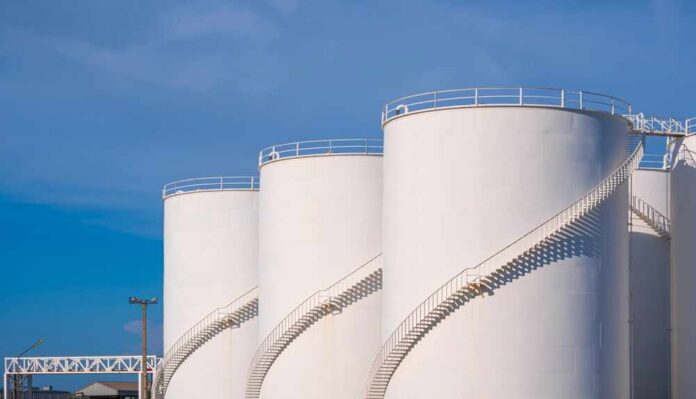
The U.S. Strategic Petroleum Reserve has fallen to its lowest level since 1983, and the drop follows a large emergency release tied to the Iran war and the Strait of Hormuz disruption.
Quick Take
- The reserve fell to 298.7 million barrels, according to Department of Energy data reported by The New York Times and others, marking a level not seen since 1983.
- President Trump authorized a 172 million barrel release in March after Iran moved to restrict oil shipments through the Strait of Hormuz.
- The Department of Energy said it had already released 17.5 million barrels between March 20 and April 24.
- The reserve remains above its statutory minimum of 252.4 million barrels, but the margin is now much smaller than it was before the crisis.
What Drove the Drop
The decline did not happen by accident. The Department of Energy and market reports tie it to an emergency response that began after the Iran war disrupted oil flows and threatened tanker traffic through the Strait of Hormuz. Reuters reported that the reserve fell to 340.3 million barrels in June, then kept sliding as scheduled releases continued.
The sharpest part of the story is scale. The Energy Information Administration said the Department of Energy released 17.5 million barrels from the reserve between the week ending March 20 and the week ending April 24.
That matters because it shows a deliberate drawdown, not a paper change. The government used the stockpile the way it was meant to be used: as a shock absorber during a supply crisis.
US strategic petroleum reserves have been depleted to the lowest levels in four decades. H/t @DRBCurtis pic.twitter.com/B0h2NiYRj5
— Lisa Abramowicz (@lisaabramowicz1) August 11, 2026
Why 1983 Keeps Coming Up
The 1983 comparison gives the story its force. Reuters said the reserve hit 340.3 million barrels in mid-June, the lowest level since 1983, and later reporting said it slipped to 316.5 million barrels and then 298.7 million barrels as more oil came out.
By late July and early August, multiple outlets described the reserve as below 300 million barrels for the first time in more than four decades.
That number lands hard because the Strategic Petroleum Reserve was built for emergency use after supply shocks, not as a normal source of crude.
Even so, the government still has room above the legal floor, and the reserve still holds a large physical stock of oil in Texas and Louisiana. The warning sign is not that the tank is empty. The warning sign is that the buffer is getting thinner right when the world still feels unstable.
The Bigger Policy Question
This is where the debate gets serious. Supporters of the drawdown argue that emergency oil belongs in the market when a war threatens supply and prices.
Critics see a reserve that has been pulled down too far and too often. The Government Accountability Office has noted that the United States has released more than 500 million barrels from the reserve over time, with much of that in recent crisis periods, which makes future refill decisions harder and more expensive.
For readers outside Washington, the practical issue is simple. A lower reserve can still help in a crisis, but it gives the country less room if another shock hits before the tank is rebuilt.
That is why the “lowest since 1983” line keeps spreading across headlines. It is not just a trivia point. It is a warning that the nation’s emergency cushion is now much slimmer than it used to be.
Sources:
foxbusiness.com, oilpriceapi.com, storagecurve.com, thevaultreport.com, spr.doe.gov, tradingeconomics.com, pewresearch.org, bipartisanpolicy.org, ycharts.com, reuters.com, spglobal.com