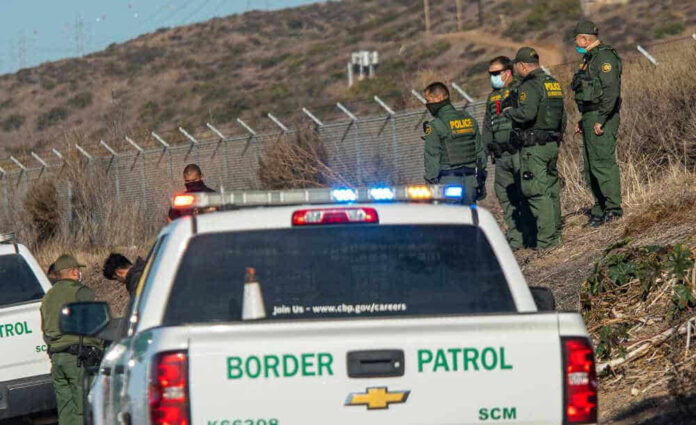
Washington froze bulldozers in Big Bend after a $1.7 billion push collided with Texas-sized backlash and rugged facts on the ground.
Story Snapshot
- Customs and Border Protection awarded $1.7 billion tied to Big Bend border infrastructure.
- Federal officials paused construction activities inside Big Bend National Park amid outcry.
- Local sheriffs said the terrain already blocks vehicles and people in key stretches.
- Debate centers on whether roads and barriers add security or add damage for little gain.
What Triggered The Sudden Pause
Customs and Border Protection approved a major delivery order that references “border wall in Big Bend Texas,” with Southwest Valley Constructors as the awardee. The public record shows the order and its Big Bend scope.
The number turned heads because it rivals the largest single-site spending in the program. Days later, video and reports of ground clearing inside the national park fueled anger from both conservationists and local law enforcement voices, who argued the plan misread the land.
Federal leaders responded by halting construction activity inside Big Bend National Park. Officials said they would visit the area and review next steps on routing and methods. A pause is not a cancellation.
It is a pressure valve while agencies weigh terrain limits, public access, and how to project power where nature already builds cliffs. The review now must square cost, security value, and the park’s legal protections before heavy work restarts or moves.
What The Contract Actually Covers
News outlets and advocates framed the award as a wall through the entire park. Customs and Border Protection described a mixed package beyond walls: vehicle barriers, patrol roads, and sensors across select segments in the broader Big Bend sector, with no thirty-foot wall slated for popular park sites, according to agency explanations reported in Texas media.
The gap between the contract label and the field plan helped fuel confusion, and critics seized on the label to question federal candor at the outset.
Contracting language often uses legacy program terms. That still leaves a trust problem. The Department of Homeland Security has legal power to waive many environmental rules, which speeds work but also cuts public input and studies that build buy-in.
When agencies move fast, opponents argue they hide the ball. When they slow down, supporters accuse them of dithering while smugglers adapt. Clear maps and schedules would calm both sides more than slogans.
Trump admin briefly pauses contentious border project in Texas' Big Bend National Park https://t.co/pI43L9tIIg pic.twitter.com/Gn21jKFLLK
— New York Post (@nypost) August 18, 2026
The Sheriffs’ Terrain Test
All five sheriffs in the Big Bend region said the land itself blocks most traffic. They described steep mountains, deep canyons, vast desert, and a constant river as natural barriers that already shape flows.
Terrell County Sheriff Thaddeus Cleveland, a Republican and former Border Patrol agent, supports border security but opposed vehicle barriers planned for spots where a car cannot drive anyway. That claim hits the core question: are taxpayers buying deterrence or buying maintenance headaches?
Common sense says build where the return is real. Roads and low-profile barriers can help agents move faster to interdictions. But laying road into the most remote reaches can also open access for smugglers who could not reach them before, if patrol coverage lags.
That is a planning test, not a theology fight. If the terrain already wins, spend the money where it loses—choke points, crossings with steady traffic, and places technology can watch what humans cannot.
What The Evidence Says About Barriers In Rough Country
Research on border barriers shows mixed results. Some studies find fences and barriers reduce crossings by a third in certain corridors; others find people reroute and risks shift, not end. Effectiveness depends on terrain and nearby infrastructure.
Rough ground without roads makes barriers harder to patrol and easier to bypass out of sight. Barriers work best when paired with manpower and sensors that turn a wall from a symbol into a system.
🇺🇲Border construction was halted today at Big Bend National Park, at least temporarily.
It just so happened that some of the park’s major attractions were in the way of a new patrol road and vehicle barriers being bulldozed along the southern border.
The work has drawn… pic.twitter.com/fOc7pLMVnW
— Mario Nawfal (@MarioNawfal) August 18, 2026
Environmental groups reported bulldozers clearing native plants near Santa Elena Canyon and warned of damage to wildlife and river access, echoing a long trail of concerns when waivers bypass reviews.
Former National Park Service leaders urged the Department of Homeland Security to avoid building inside the park without full compliance and public input. One hard number would change many minds: a credible estimate of crossings deterred in this exact terrain versus alternative uses of the same funds.
Sources:
apnews.com, bigbendsentinel.com, fox26houston.com, usnews.com, cnn.com, spectrumlocalnews.com, newsweek.com, san.com, highergov.com