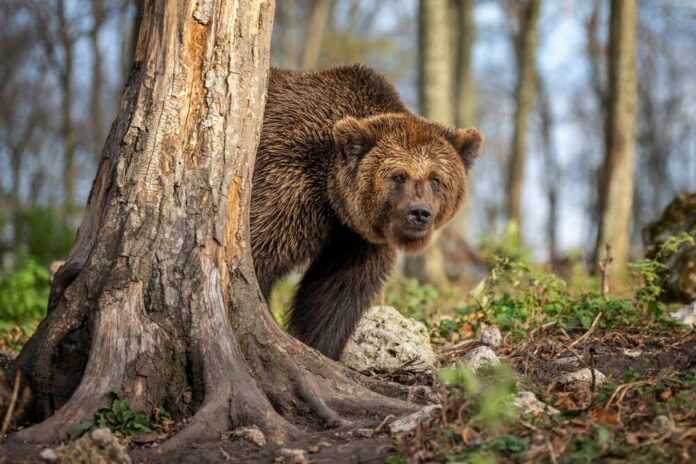
A canister of bear spray may have been the only thing standing between two Army soldiers and death when a brown bear emerged from its den during a spring training exercise in Alaska’s wilderness.
Story Snapshot
- Two 11th Airborne Division soldiers were seriously injured in a brown bear attack during land navigation training at Joint Base Elmendorf-Richardson’s Arctic Valley area on April 16, 2026
- The soldiers deployed bear spray during the defensive attack, which wildlife officials credit with potentially saving their lives
- Both soldiers received immediate medical care and showed improvement by April 18, though ongoing treatment continues in an Anchorage medical facility
- Alaska Department of Fish and Game assessed the attack as defensive behavior from a bear emerging from hibernation, with the animal still not located despite searches
- The incident highlights the unique dangers of Arctic warfare training and may prompt enhanced wildlife safety protocols for military operations in bear country
When Training Meets Nature’s Schedule
The attack unfolded during what should have been a routine Thursday afternoon land navigation exercise in the Arctic Valley training area, where soldiers from the 11th Airborne Division regularly hone skills critical for Arctic warfare. The remote, forested terrain provides ideal conditions for navigation drills but places troops directly in prime brown bear habitat.
Spring timing proved particularly hazardous, as bears emerge hungry and defensive after months of hibernation. The soldiers encountered the bear in conditions that wildlife experts describe as textbook dangerous, yet their preparation made the difference between survival and tragedy.
Brown bear attacks soldiers training in Alaska https://t.co/SwcPxiinhv pic.twitter.com/zzwB7ITjbM
— New York Post (@nypost) April 18, 2026
The Lifesaving Spray That Worked
Alaska Department of Fish and Game Regional Supervisor Cyndi Wardlow emphasized that the soldiers’ deployment of bear spray likely prevented a fatal outcome. Research shows bear spray deters attacks in over ninety percent of encounters, a statistic that transformed from academic to visceral reality for these two service members.
The base task force responded immediately, providing on-site medical care before transporting both soldiers to an Anchorage medical facility. By Saturday, April 18, Army officials confirmed the soldiers were showing improvement, though their identities remain protected and specific injury details withheld pending ongoing investigation.
Arctic Warfare’s Hidden Adversary
Joint Base Elmendorf-Richardson hosts the 11th Airborne Division precisely because Alaska’s harsh environment prepares soldiers for Arctic combat scenarios. That same environment harbors an estimated population of brown bears that regard the training grounds as their territory, particularly in spring when post-hibernation hunger drives aggressive foraging behavior.
Alaska records twenty to thirty bear attacks annually, with military personnel facing occupational exposure that civilians rarely encounter. Previous incidents include a 2021 soldier encounter at Fort Wainwright that ended without serious injury and a 2023 civilian mauling near Anchorage, both reinforcing that wildlife conflict remains an unavoidable aspect of Alaska operations.
Lt. Col. Jo Nederhoed, speaking for the 11th Airborne Division, affirmed that soldier safety and well-being constitute the highest priority, with full coordination between military command and wildlife authorities.
The investigation proceeds jointly between JBER and Alaska Department of Fish and Game, examining whether current protocols adequately address wildlife risks or require enhancement.
The bear responsible has not been located, consistent with ADF&G policy when attacks appear defensive rather than predatory. Wildlife officials determined the bear was protecting its space after emerging from its den, behavior considered natural rather than aggressive hunting.
Rethinking Training Protocols in Bear Country
The incident may trigger substantive changes in how the Army conducts training in wildlife-dense environments. Short-term responses could include temporary pauses in Arctic Valley exercises and intensified bear awareness briefings for all personnel.
Long-term implications point toward mandatory bear spray training, possible modifications to training schedules that avoid peak bear activity periods, and enhanced wildlife monitoring in high-risk zones.
These adjustments would acknowledge a fundamental truth: preparing soldiers for Arctic combat means preparing them for everything the Arctic contains, including thousand-pound predators defending their territory.
The broader military implications extend beyond JBER. As Arctic operations gain strategic importance amid geopolitical tensions, the Army must balance realistic training conditions against wildlife hazards that conventional warfare doctrine rarely addresses.
The soldiers’ successful use of bear spray demonstrates that proper equipment and training can mitigate risks, but the serious injuries sustained confirm that even prepared personnel remain vulnerable.
Families of deployed soldiers and base personnel now confront renewed awareness of dangers that have nothing to do with simulated combat and everything to do with Alaska’s untamed reality.
Sources:
2 US Army soldiers in Alaska injured in bear attack during training exercise – Fox News
2 soldiers in Alaska seriously injured in bear attack during training mission, Army says – ABC News
2 soldiers attacked by bear during training at Army base Alaska – CBS News
2 JBER soldiers injured by bear during training exercise – Alaska Public Media