
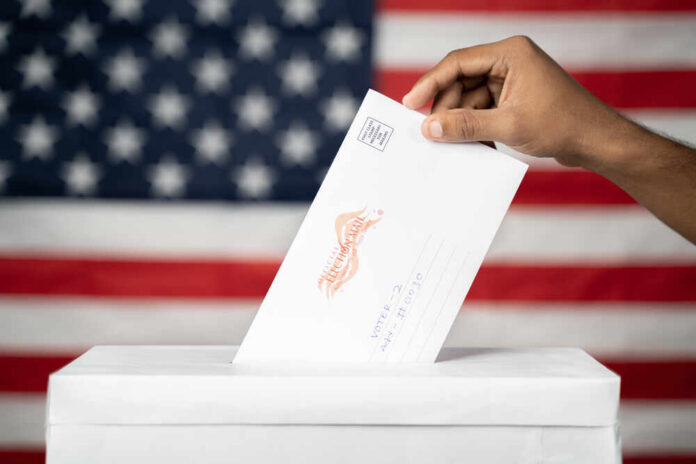
Federal investigators are tracing a name-based election ploy in Alaska that could test how far campaigns can push confusion without breaking the law.
Story Snapshot
- The New York Times reported a coordinated hunt for “Dan Sullivan” names in Alaska.
- A candidate named Daniel J. Sullivan Jr. made the ballot near incumbent Sen. Dan S. Sullivan.
- The Department of Justice sued to block certification if confusion tainted results.
- Courts split: Alaska’s high court restored the candidate; a federal judge tossed the DOJ case.
The Reported Plan To Seed A Namesake On The Ballot
The New York Times said senior Democratic campaign figures told a staffer to find Alaskans named Dan Sullivan during summer 2025, according to a dozen sources, texts, and draft legal files. The target was obvious: Senator Dan S. Sullivan. Soon, Daniel J. Sullivan Jr. filed to run. He later appeared on the ballot without a party. Whether this was a clever tactic or a corrupt one depends on proof of direction, intent, and money. The paper’s records exist, but the public has not seen them in full.
The disputed candidate’s presence created a clear chance for confusion. Ballots listed Dan S. Sullivan, the Republican incumbent, and Daniel J. Sullivan Jr., with no party tag. The Department of Justice argued that this pairing posed a “substantial likelihood” of misleading voters. The agency warned certification could bless “an electoral process that lacked integrity” if the outcome hinged on misdirected votes. Campaigns try to win close races at the margins. A second Dan can move a margin.
What Alaska’s Election System Did, And What The Courts Decided
Alaska election officials first removed Daniel J. Sullivan from the ballot. The Alaska Supreme Court later put him back on, clearing him to face voters. That sequence shows two truths at once. Administrators saw red flags. Judges concluded the law still allowed his run. The court’s order did not prove a conspiracy was false; it ruled on ballot access. A federal judge then dismissed the Department of Justice’s effort to block certification if Dan S. Sullivan lost, weakening the immediate federal remedy.
The Department of Justice lawsuit signaled the Trump administration was ready to police confusion risks in tight races. Critics answered that the case overreached. Supporters said it protected clean counts. Dismissal does not answer the core facts. It only closes that legal lane. If the Department of Justice believes texts and witness accounts show a planned namesake strategy, it can continue to investigate under other laws. Voters deserve clarity. So do the candidates who followed the rules as written.
Claims, Denials, And What Actually Needs Proof
Representative Mary Peltola’s camp rejected the “Decoy Dan” charge and called it a distraction. Alaskans voiced mixed reactions, with some shrugging at the fuss and others seeing a dirty trick. Daniel J. Sullivan Jr. said he entered the race on his own and was not a spoiler. He told The Associated Press he ran independently. These denials matter. They set the bar: investigators must link instructions, timing, and benefits to real people with real evidence, not just hunches.
DECOY DAN: The DOJ sent more than 20 target and preservation letters as part of its expanding probe into the Alaska U.S. Senate race, where a retired schoolteacher named Daniel J. Sullivan was allegedly recruited as a spoiler candidate to siphon votes from Sen. Dan Sullivan.… pic.twitter.com/1QRyRtdB3G
— Fox News Politics (@foxnewspolitics) November 4, 2026
Common sense says three questions decide the case. First, did anyone recruit a namesake to split votes? Second, did the candidate know that was the point? Third, did voters actually get misled? Each one needs different proof. Texts and emails can show planning. Money trails can show support. Sworn testimony can show intent. Ballot data and interviews can show impact. Without those links, the story stays in the realm of suspicion and spin, which serves partisans but not the public.
How Conservatives Should Weigh The Evidence
Conservatives prize fair contests, clear ballots, and trust in the count. The reported directive to “find Dans” clashes with those values if proven. The Department of Justice’s concern about voter confusion also aligns with election integrity priorities, even if a judge disagreed with the chosen remedy. At the same time, due process matters. Courts restored the candidate and rejected the Department of Justice suit. The right path now is sunlight: publish the records, follow the money, and let tools of law, not headlines, settle it.
What Comes Next, And What Will Settle It
Three steps will close the loop. First, release the full text and email chains behind the reported recruitment, with authors, dates, and attachments. Second, examine payments, consulting contracts, and filings for both campaigns and any intermediaries; match money to moves. Third, analyze precinct returns and voter statements to measure confusion, not just assume it. If the facts show a designed spoiler, there should be penalties. If not, lawmakers should still tighten ballot naming rules to prevent a repeat.
Sources:
foxnews.com, watoday.com.au, alaskapublic.org, washingtonexaminer.com, wpxi.com