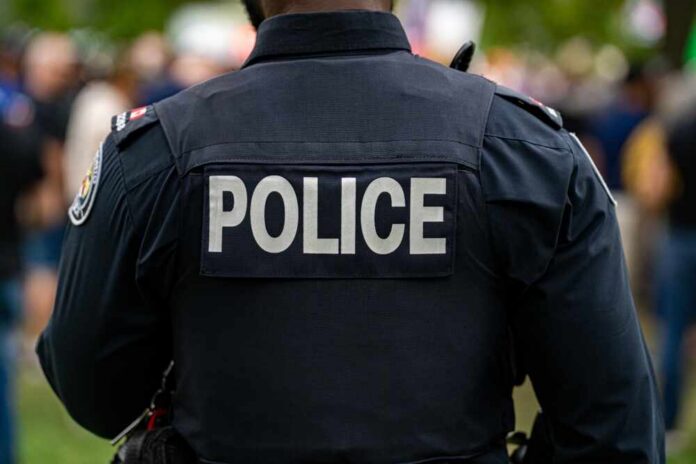
A 10-year Philadelphia police veteran was shot to death after answering a 1 a.m. gun call in West Philly.
Story Highlights
- Prosecutors charged Eric Lewis, 35, with killing Officer Shane Seiber, 40.
- Police say officers met an armed man at a North 52nd Street home before gunfire.
- The wounded officer survived; District Attorney Larry Krasner detailed broad charges.
- Officials described shots fired at nine more officers during the chaos.
What Happened On North 52nd Street
Philadelphia officers went to a home on the 100 block of North 52nd Street around 1 a.m. after a report of a man with a gun. Police say the encounter turned violent inside the residence. Officer Shane Seiber, 40, was shot and later died. Another officer was hit many times but survived. Reporters placed the scene in West Philadelphia and described a fast, close fight that spiraled into multiple shots fired in seconds.
Police leadership identified Seiber as a 10-year member of the force who leaves a family and fellow officers mourning. The second officer’s condition improved after treatment, according to local reports that followed the hospital updates. These details shaped an immediate citywide response, from patrol shifts to public statements. The event landed hard because a routine service call turned deadly, and it happened in a neighborhood where officers answer similar calls nightly.
The Charges Filed Against Eric Lewis
Philadelphia District Attorney Larry Krasner named Eric Lewis, 35, as the person officers encountered at the home. Krasner announced charges that include homicide of a law-enforcement officer, murder, attempted homicide, aggravated assault, reckless endangerment, and weapons offenses. Prosecutors say Lewis shot Seiber, wounded the second officer, and fired at nine more responding officers who were not hit. Police identified Seiber as the officer who died, and the District Attorney’s Office tied the charges to that fatal encounter.
Prosecutors often stack counts when gunfire places many people at risk. That approach reflects common sense and American conservative values about clear lines: do not threaten police, do not endanger the public, and face strong penalties if you do. Krasner’s office listed a broad set of offenses. The scope signals a case that treats every round as a choice with legal weight. One brief note of process applies: an arrest and charges are allegations until the court reaches a verdict.
How The Encounter Turned Into Gunfire
Police accounts describe officers meeting an armed man at the address and a struggle that followed. During that struggle, both officers were shot multiple times, according to official statements quoted in local coverage. The scene details remain concise in public summaries, but they place Lewis at the center of the clash with the officers in tight quarters. The description supports the prosecution’s theory that the shots came during a close, physical fight inside the home.
🇺🇸 Philadelphia Police Officer Shane Seiber, a 40-year-old 10-year veteran & father of two, was killed in an ambush shooting in West #Philadelphia. His 33-year-old partner, a father of five, was shot 12 times & is recovering.
Eric Lewis, an employee of the Philadelphia Water… pic.twitter.com/rxpMuDkCYR
— ɢʙᴇɴɢᴀ 🎖 (@gbenga_daily) October 11, 2026
Commissioner Kevin Bethel and the District Attorney framed the attack as brazen and deadly. Reporters repeated the “ambush” language that officials used to capture the shock of sudden violence against police. News outlets also noted that the nine additional officers who rushed to help did not get hit, despite claims that shots targeted them as they arrived. The case filings mirror that telling by adding attempted-murder counts that cover those officers.
Who Eric Lewis Is, And Why It Matters In Court
Reports link Eric Lewis to prior convictions for assault, theft, and carrying a firearm in public, citing court records and a 2015 guilty plea to weapons offenses from a 2013 case. Those facts explain why this case drew fast attention to past conduct. Prior records do not prove the current charges, but they can affect bail, sentencing exposure, and public trust in the system when a person with a record appears in a new violent case.
Authorities also listed Lewis as a city water employee in recent coverage, which raised questions in local talk about screening and supervision. Voters expect simple guardrails: if someone has a history with weapons and assault, the city should look hard at where he works and who he serves. That view aligns with conservative priorities on safety, accountability, and standards for public jobs. The courtroom will still decide guilt, but policy makers will face hiring questions next.
What Comes Next In The Case
Prosecutors will present the case at a preliminary hearing, then seek an indictment or hold to answer on the top counts. Police will continue to process evidence, including firearms, casings, and videos, to lock in the shooting sequence and each shot’s path. The medical examiner’s report will set manner and cause of death for Seiber, and doctors will document the surviving officer’s wounds. The docket will grow fast as the state builds a timeline that matches testimony with forensic proof.
Philadelphia will honor Officer Seiber in the coming days. The department will adjust patrols and review tactics for gun calls inside homes. Residents will see more blue lights at night and more caution on similar calls. The case against Lewis now moves into the steady grind of hearings, filings, and lab work. Justice in a cop-killing must be swift and strong, but it must also be sure. That is how a city grieves and stays safe at the same time.
Sources:
cbsnews.com, nbcphiladelphia.com, inquirer.com, apnews.com, whyy.org, foxnews.com, phillyburbs.com, nytimes.com, fox29.com