A Florida-registered speedboat ends in bloodshed off Cuba’s north coast—and Americans still don’t know who was on board.
Story Snapshot
- Cuba claims its border guard troops killed four people and wounded six after a shootout with a Florida-registered speedboat in Cuban territorial waters.
- The Cuban Interior Ministry says its forces approached to check identification and were fired on first; a Cuban commander was reportedly injured.
- U.S. officials had not publicly confirmed the identities or nationalities of the boat’s occupants as of the initial reports.
- Rep. Carlos Gimenez called for an independent investigation, describing the incident as a potential “massacre” and pressing to determine whether Americans were involved.
- The episode lands amid renewed U.S.-Cuba pressure in Trump’s second term and heightened regional diplomacy with Secretary of State Marco Rubio traveling in the Caribbean.
What Cuba Says Happened in the Waters off Villa Clara
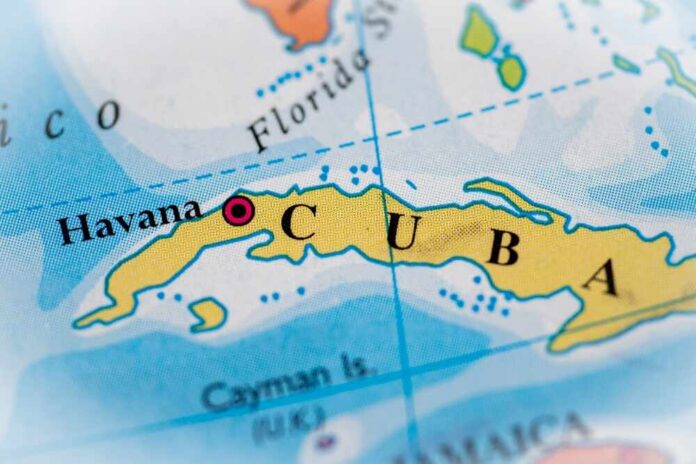
Cuba’s government reported that border guard troops spotted a speedboat about one mile northeast of the El Pino Canal in the Falcon area of Villa Clara Province on the morning of Feb. 25, 2026. According to the Interior Ministry’s account, the patrol approached the vessel and requested identification. Cuban officials say the boat’s crew opened fire first, injuring a Cuban commander, and the guards returned fire.
Cuban authorities said the exchange left four people dead and six others wounded aboard the speedboat, which was described as registered in Florida.
Officials said the injured were evacuated for medical treatment and that the circumstances remained under investigation. The core facts repeated across early coverage are grim but narrow: four deaths, six injuries, and a claim from Havana that it acted in self-defense during an attempted identification check.
What Remains Unverified—and Why That Matters
Independent verification is the central problem. Reporting emphasized that details largely come from Cuban official statements, while outside journalists have limited ability to confirm what happened at the scene or to validate who was on the boat.
That uncertainty is not a small footnote; it is the difference between a clear-cut maritime firefight and a political incident with American victims, legal consequences, and escalating diplomatic fallout. As of the initial reports, the United States had not publicly confirmed identities.
That information vacuum also invites emotionally charged narratives from both directions. Cuban officials frame the shooting as border defense against armed intruders. In South Florida and among Cuba-watchers, the Florida registration raises immediate questions about possible U.S. ties and about whether Havana’s account is complete.
Without names, citizenship, or a publicly documented chain of events, Americans are left trying to interpret a lethal encounter based mainly on the word of a regime with a long record of controlling information.
BREAKING: Four people are dead and 6 others injured after a confrontation between a Florida-registered speedboat and Cuban border authorities in Cuban territorial waters, according to a statement posted by the Cuban Embassy to the United States on X. https://t.co/feeXwYLRoA
— NBC Montana (@NBCMontana) February 25, 2026
U.S. Political Response: Calls for a Probe, but No Official Readout Yet
Rep. Carlos Gimenez publicly urged an independent investigation and pressed the U.S. government to establish whether the dead or wounded were Americans. That demand reflects a basic constitutional instinct: when U.S. persons may be involved in lethal overseas incidents, the public deserves verified facts and a transparent accounting.
At the same time, early reporting said the White House and State Department did not immediately comment, leaving room for uncertainty to harden into speculation.
Secretary of State Marco Rubio’s presence in the Caribbean for heads-of-state talks added another layer of sensitivity. Even without a formal U.S. response, the timing means regional governments are watching closely for Washington’s next move.
If Americans were on board, pressure will build for answers quickly. If they were not, the Florida connection still matters because it suggests a U.S.-adjacent maritime route where miscalculation, weapons, and political tensions can collide with deadly speed.
The Broader Tension Under Trump’s Renewed Pressure Campaign
The incident comes amid broader U.S.-Cuba friction in Trump’s current term, with reporting tying heightened tension to U.S. actions that disrupted Venezuela’s leadership and, in turn, strained Cuba’s energy lifeline.
Separate reporting also described Trump applying economic pressure and publicly signaling that Cuba could be nearing a breaking point. Those strategic dynamics do not prove anything about this speedboat’s mission or intent—but they do help explain why a single firefight can become a geopolitical flashpoint.
Americans should watch two concrete developments next: identification of the victims and an evidence-based timeline that does not rely solely on a single government’s narrative.
A verified account protects U.S. interests either way—by establishing whether Americans were harmed, or by preventing a rushed escalation built on partial facts. Clear answers also matter for border and maritime security, because Florida-to-Cuba routes have a long history, and this case shows how fast they can turn violent.
Sources:
Cuban troops kill 4 in confrontation with Florida speedboat