The fire that trapped Nathan Matthews’ crew in western Colorado did more than claim four lives; it exposed how much quiet risk America now takes for granted to keep wildfire chaos at bay.
Story Snapshot
- Fourth wildland firefighter Nathan Matthews died from burn injuries after a June 27 burnover in western Colorado.
- The crew was dropped by helicopter on the Knowles Fire near the Colorado–Utah border and overrun when the blaze cut off escape routes.
- Three firefighters died at the scene; Matthews fought for nearly a month in burn care before dying of his injuries.
- The case highlights growing wildfire danger, the strain on rural communities, and the quiet courage of modern fire crews.
How A Routine Wildfire Mission Turned Into A Deadly Burnover
Federal officials say Nathan Matthews, a 43-year-old wildland firefighter from Lincoln, Nebraska, died on a Friday from injuries he suffered on June 27 while fighting the Knowles Fire in western Colorado.
He was part of a Helitack crew flown by helicopter into rough country near the Colorado–Utah border to hit a fast-growing blaze early. That kind of mission is supposed to stop a small fire from becoming a monster. On this day, the monster won.
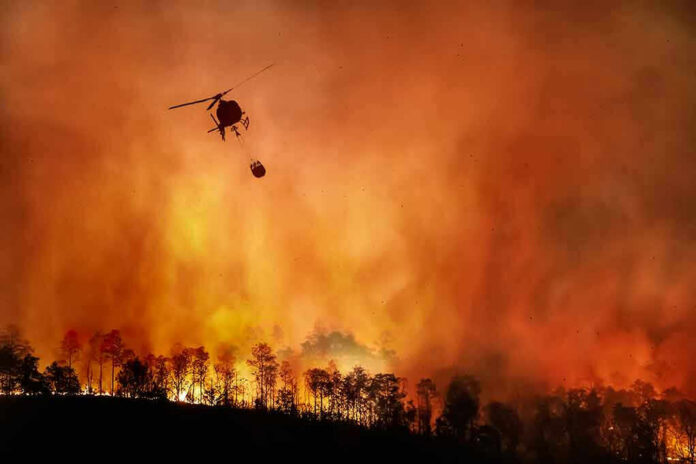
The crew was caught in what fire agencies call a burnover, when flames and heat move so fast that every escape route closes and the fire rolls over firefighters where they stand. Matthews and four others were working in Mesa County, west of Grand Junction, when the fire suddenly changed behavior.
Three of his teammates died there on the slope. Matthews survived the burnover itself, but the burns were deep and severe, and the battle moved from the fireline to the hospital.
The Long Fight In Burn Care And The Fourth Line Of Duty Death
The United States Wildland Fire Service said Matthews had been receiving medical care for burn injuries since the incident and died from those injuries weeks later.
Wildland fire leaders called his death “another heartbreaking loss” for the fire family and noted that he was the fourth firefighter to die from the same incident.
Local and national reports describe Matthews as a skilled firefighter who had spent his career going toward danger when others were told to get out. Nebraska officials and community groups in Lancaster County posted condolences, saying they were heartbroken that a local wildland firefighter died from injuries sustained while responding to the Knowles Fire.
A memorial service is expected, with flags ordered to half-staff in his honor, and his name now joins a growing roll of fallen firefighters from this summer’s western wildfires.
What Burnover Deaths Reveal About Modern Wildfire Risk
This incident pulls back the curtain on how risky our wildfire strategy has become. Helitack crews are sent in early, often with limited backup, because the goal is to crush a fire before it reaches homes, highways, and power lines.
They work in steep terrain, in shifting winds, with flames that can outrun a sprint. In Colorado’s Knowles Fire, the same terrain that needed protecting turned into a trap when the fire found a canyon or slope that funneled heat right back onto the crew.
We are heartbroken by the loss of wildland firefighter Nathan Matthews, who passed away from injuries sustained while responding to the Knowles Fire in Colorado.
Today, we honor his service and remember Emily Barker, Nick Hutcherson, and Sydney Watson, who were also lost during… pic.twitter.com/pRiSjhVfPT
— Bridger Aerospace (@BridgerAero) July 26, 2026
For years, Americans have watched wildfire headlines and moved on, unless smoke choked their own town. This burnover shows the real cost of that distance.
We see more growth into fire-prone areas, more pressure to hold fires back from new homes, and more calls to “do something” the moment smoke appears.
That “something” usually means crews like Matthews dropping in fast, with little room for error, so people far away can keep living like fire season is just background noise.
Honor, Accountability, And The Questions Still On The Table
Agency statements so far focus on honoring Matthews and the three firefighters who died at the scene, and that respect is right. They also state clearly that he died from injuries sustained in the burnover while responding to the Knowles Fire. There is no serious public dispute of that basic fact.
The gap is elsewhere: how a crew doing standard work ended up in a position with no way out, and whether command, forecasting, or policy choices left them too exposed as the fire changed.
Americans often stress personal courage, local duty, and clear chains of responsibility. Matthews’ story hits all three. He stepped up to protect land and communities most people will never see.
He trusted a system that asked him to risk his life and promised, at least in principle, to manage that risk with care.
As the investigation moves forward, many voters will expect not only praise for his bravery but hard questions about how incident leaders read conditions, how safety rules were applied, and whether political pressure to “save every tree and cabin” pushed crews into danger.
Sources:
cbsnews.com, facebook.com, fox13seattle.com, ksl.com