Homeland Security just turned food stamp fraud into a national immigration dragnet with names, arrests, and a promise this is only the start.
Story Snapshot
- Homeland Security launched a nationwide Immigration and Customs Enforcement operation focused on alleged fraud in the Supplemental Nutrition Assistance Program.
- Officials named initial arrestees and said each entered the country unlawfully and then accessed benefits through deception.
- Reports described multiple arrests across the country, beginning with four Haitian nationals and a separate case of a Cuban national.
- The agency framed this as a sustained push to protect taxpayer-funded aid and restore program integrity.
DHS moves from talk to action with named arrests
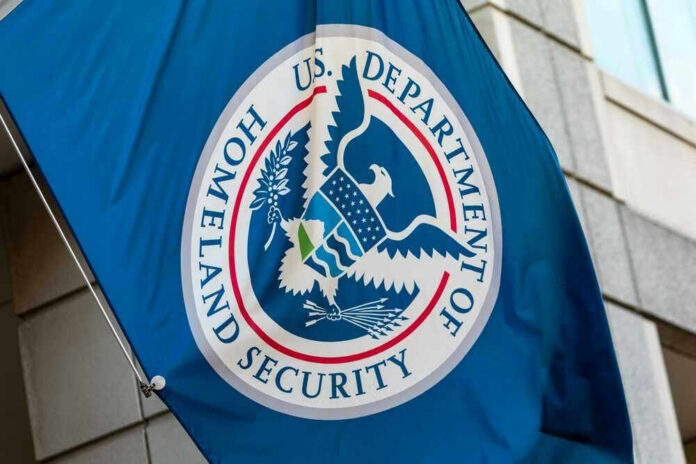
The Department of Homeland Security announced a nationwide push by Immigration and Customs Enforcement to target people accused of using deception to obtain Supplemental Nutrition Assistance Program benefits. Officials named several arrestees to mark the launch and said each person entered the United States unlawfully and then obtained benefits fraudulently. Reports identified four Haitian nationals and a separate case of a Cuban national as part of the first wave. The department signaled a continuing, coordinated campaign.
Federal officials stressed a line many miss in heated debates. This operation is not about every noncitizen who shows up in a case file. It targets alleged false statements and schemes to collect benefits that the law reserves for eligible households. Some noncitizens can lawfully receive benefits, and U.S.-citizen children in mixed-status homes can also qualify. Fraud means lying or concealing to get aid you do not qualify for, not simply living in a household that receives help.
Who was named and why those names matter
Reports listed the first four arrestees as Rubstony Junior Theodore, Wilbert Jean Baptiste, Louis Jean, and Jhensly Charles. Coverage also pointed to Cuban national Elizabeth Povea Rodriguez in a related arrest. Some of these individuals had prior arrests or a misdemeanor record, which investigators may use as leads when checking identity, residence, or employment records linked to benefit claims. Federal agencies often start a fraud sweep by pairing alleged benefit misuse with existing records that can verify facts fast.
Officials framed the operation as defending limited aid funded by taxpayers. That claim lands with broad support among Americans who expect programs to police abuse. It also reflects a core conservative value: help the truly eligible, and stop theft so resources reach families who play by the rules. On this frame, the action tests two demands at once. It enforces immigration law while protecting the integrity of a major safety net program.
How SNAP rules and fraud differ from rumor
Federal law excludes those here unlawfully from direct Supplemental Nutrition Assistance Program benefits. Yet households get tricky. A parent who is not eligible may live with a U.S.-citizen child who is eligible. The program still counts household income and expenses to set the child’s benefit. That math confuses the public and creates an opening for bad actors who misstate who lives where, what they earn, or which identity they use. Fraud cases hinge on those lies, not on presence alone.
Improper payments and fraud are not the same thing. Improper payments cover agency or paperwork mistakes and can include overpayments to people who did not try to deceive anyone. The Government Accountability Office reported that many recent Supplemental Nutrition Assistance Program errors came from states not fully verifying key data. The Department of Agriculture has said billions of dollars each year fall into waste, fraud, and abuse, which is why it is pressing states to strengthen checks. Those figures explain why investigators are casting a wider net.
What this operation signals for the months ahead
Homeland Security described the new push as sustained, with more arrests to come as cases develop. Reports labeled it nationwide, but early coverage focused on the initial handful of named cases that kicked it off. That approach tracks with large federal efforts. Agencies often start with cases where they believe proof is clearest. They then expand using patterns in applications, addresses, employers, or retailers tied to suspected trafficking. Expect more identity checks, more data matches, and more joint work with state benefit offices.
DHS launches nationwide ICE operation targeting illegal immigrants accused of SNAP food stamp fraudhttps://t.co/2sAmARloJn
— Liz Cartee (@CarteeLiz) October 21, 2026
This wave also puts dishonest retailers on notice. Prior federal studies found a small share of stores trade benefits for cash, a practice called trafficking. While the national trafficking rate was estimated at 1.6 percent in a recent study period, those dollars add up fast and attract fraudsters who coach applicants to lie or who swipe multiple cards at once. When Immigration and Customs Enforcement pairs immigration data with benefit data, it can cut off both ends of the scam: the false claim and the illegal cash-out.
Sources:
foxnews.com, redstate.com, lifezette.com, ground.news, newswav.com, dhs.gov, feeder.co