
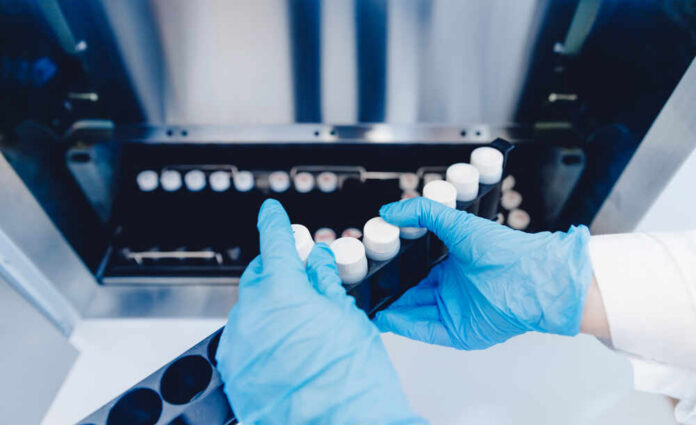
One speck of blood on a bedroom TV stand and a used plastic fork 14 years later just turned a Texas mom and real estate agent into the prime suspect in one of Arlington’s most brutal murders.
Story Snapshot
- Police say new FBI genetic genealogy cracked a 2012 stabbing that left a woman dead with nearly 100 wounds.
- Detectives report that DNA from a tiny blood droplet at the scene pointed to a relative, then to a friend: Mayra Velasquez.
- Undercover officers later grabbed a fork Velasquez used at lunch; court documents say the DNA matched the crime-scene blood.
- The case spotlights how “family tree” DNA tools now drive cold-case arrests across Texas, raising big questions about proof and privacy.
How a friendship ended in a savage killing that went cold
Arlington police say it started as an ordinary day in January 2012, when 32-year-old Irasema Chavez was found stabbed nearly 100 times inside her apartment. Detectives described it as one of the city’s most brutal homicides, yet the case stalled.
Blood at the scene gave them a female DNA profile, but that profile did not match anyone in standard law enforcement DNA databases at the time. For more than a decade, the trail chilled, and the file moved to the cold-case unit.
Chavez was not a stranger to the woman now accused of killing her. Police say 42-year-old Mayra Velasquez, a mother and local real estate agent, was Chavez’s friend. When the homicide happened, there was no clear suspect who fit the evidence.
With no hit coming back from the DNA and no confession, the case sat. For years, Chavez’s family had no clear answer about who could have done something so vicious, and many in the community assumed it might never be solved.
FBI family-tree DNA turns old blood into a new suspect
Everything changed when Arlington’s cold-case unit asked the Federal Bureau of Investigation (FBI) Dallas field office to review that old blood sample using investigative genetic genealogy, often called family-tree DNA. This method starts with the unknown DNA profile from the crime scene.
Analysts upload it to public genealogy databases and look for people who share enough DNA to be relatives. From there, they build out a family tree using birth records, public documents, and other data.
A 14-year-old Texas cold case recently took a dramatic turn after cutting-edge DNA technology led investigators to a murder suspect, according to reports.https://t.co/pcjWz4AB27
— KFDM News (@kfdmnews) July 21, 2026
According to the Arlington press conference, FBI genealogists found that the mystery DNA linked to a specific family line and eventually to a relative of Velasquez. Investigators say that traditional detective work then focused on Velasquez herself.
She was a Hispanic woman whose background and relationship history placed her near Chavez and the apartment complex at the right time. In this type of case, that genealogy hit does not prove guilt by itself, but it narrows the field and puts a name on the board for deeper investigation.
The fork in the trash and the match police call decisive
Once Velasquez was a target, detectives needed direct DNA from her to compare with the old blood droplet. Rather than ask her for a voluntary sample, undercover officers watched her in daily life.
Court documents say they collected plastic forks she used while eating with friends, grabbed from trash left behind. That fork went to a lab. Police say the DNA on it matched the blood droplet from Chavez’s bedroom TV stand, tying Velasquez to biological material at the murder scene.
From this view, this is where the case feels strong. The government did not rely only on some distant cousin’s DNA on a website. They followed up with a direct sample they say Velasquez left on a fork, which reportedly matched blood from the apartment.
That looks like classic police work backed by science. At the same time, the public has not seen the full lab reports, chain-of-custody logs, or cross-examination of the methods. The defense has not yet had its full say in court.
Texas cold cases and the rise of “DNA plus genealogy” justice
This arrest fits a growing Texas pattern. In Dallas County, prosecutors used a similar forensic genetic genealogy process in the Mary Hague Kelly murder and won a life-without-parole sentence after a jury heard decades of DNA evidence.
In another case, police used advanced genealogy to identify a suspect in the killing of teenager Deanna Ogg, with authorities boasting a confidence level of “one in an octillion.” Law enforcement now calls this technology a game changer for unsolved murders.
Over and over, these stories follow the same arc. Old biological evidence gets retested with new tools. Genealogy narrows the field to a family. Investigators watch and collect trash, drink containers, or utensils to get a fresh sample. A lab declares a match, and the suspect is arrested.
Officers and prosecutors then tell the public that “DNA solved the case,” which sounds final and scientific. That messaging can shape public opinion long before a jury weighs reasonable doubt.
Proof, privacy, and the danger of treating DNA like magic
For many Americans, this feels like justice finally catching up with killers who thought time would save them. That instinct is strong, especially when a family has waited more than a decade to bury a loved one with answers.
But Americans also stress limited government and careful proof. When police use genealogy databases built from consumer tests, they reach into data people shared to learn about ancestry, not to help solve crimes.
Some experts warn that genetic genealogy is an investigative tool, not courtroom proof by itself. The real legal weight should rest on that final match between the crime-scene DNA and the suspect’s own sample, along with other evidence like interviews and video.
In the Chavez case, detectives say statements Velasquez made in her interview also helped support the arrest. Whether those statements, the fork DNA, and the original blood droplet can stand up to hard defense testing will decide if this case ends in a conviction or in doubt.
Sources:
abcnews.com, youtube.com, cnn.com, nbcdfw.com, arlingtontx.gov