A new U.S. boat strike meant to crush “narco‑terrorists” now raises hard questions about proof, rules, and who is really dying on the high seas.
Story Snapshot
- U.S. forces hit an alleged drug boat in the eastern Pacific, killing 2 and leaving 6 survivors.
- The strike is part of a wider Trump-era campaign that has killed more than 210 suspected traffickers since 2025.
- U.S. Southern Command says “intelligence confirmed” the boat was running drugs, but has not released evidence.
- The Pentagon watchdog is reviewing whether these deadly strikes follow proper targeting rules and the law.
New Pacific Strike Shows How Deadly the Anti-Drug Boat Campaign Has Become
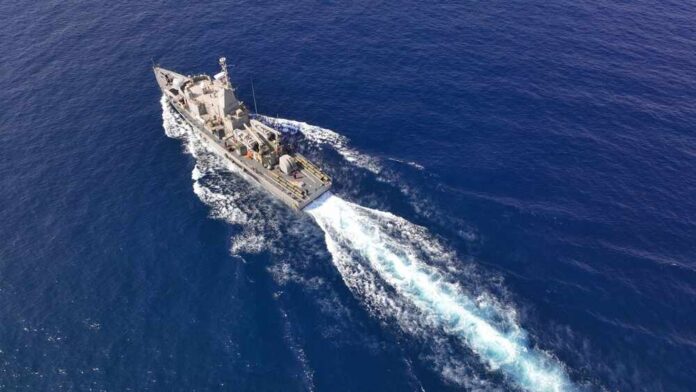
U.S. defense officials say the latest strike hit a small vessel in the eastern Pacific Ocean that they accuse of smuggling drugs, killing two people on board and leaving six survivors in the water.[5]
This was one more attack in a long-running campaign against what the Trump administration calls “narco-terrorists” using the Caribbean and Pacific as sea highways into the United States.[5][25] Reports now put the total death toll from these boat strikes at more than 210 people since the operations began in September 2025.[5][6][21]
U.S. Southern Command, which oversees military activity in Latin America, said the latest boat was moving along a “known narco-trafficking route” and was “engaged in narco-trafficking operations,” using the same language it has used in prior strikes.[5][23]
Officials have described previous targets as being run by “designated terrorist organizations,” tying the mission to a counterterror label that allows more aggressive military action.[10][12][25] Once again, though, the military did not show proof that this particular boat was actually carrying narcotics when it was destroyed.[5][6][23]
SOUTHCOM’s “Narco-Terrorist” Narrative Meets a Thin Public Record
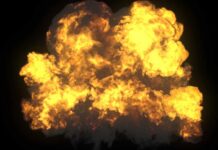
U.S. Southern Command has released short videos of several strikes, usually showing a low-profile boat on calm seas and then a sudden explosion that engulfs the vessel in fire and smoke.[10][11][14][15] These clips are powerful and dramatic, and they back up the claim that the U.S. can hit small targets far from shore.
But they do not reveal who is on the boat, what is in the cargo hold, or what kind of tracking and surveillance led to the decision to use lethal force instead of boarding or seizing the vessel.[2][6][29]
US strike on an alleged drug boat kills 2, leaves 6 survivors, in the eastern Pacific Ocean https://t.co/sZVYkxLv82
— O.C. Register (@ocregister) June 22, 2026
In public statements, commanders say intelligence confirmed the boats were on established smuggling routes and working for foreign criminal or terrorist groups like Venezuelan gangs or Colombian guerrillas.[10][12][20][24][25]
Yet news outlets from the Associated Press to CBS and PBS note that the Pentagon has offered no underlying intelligence, no cargo photos, no names or records for those killed, and no test results showing seized drugs, even as the death toll has passed the 200 mark.[4][21][23][29]
That gap leaves many details of each incident hidden, even while the government’s “narco-terrorist” label spreads through repeated media coverage.
Aggressive Tactics Raise Oversight and Constitutional Concerns
The Trump administration launched these strikes as part of a harder line on border security and drug cartels, arguing that cutting off cocaine and fentanyl at sea protects American families from poison and violence in their own communities.[20][24][25]
Supporters see the campaign as long overdue after years of weak enforcement and open-border chaos. But even some allies are asking how far lethal force at sea should go when the government will not release evidence that each target was actually a threat, rather than a fisherman, a migrant, or a low-level smuggler who never got a day in court.[21][23][29]
The Pentagon’s own inspector general has opened a review into whether the military is following an “established targeting framework” for these boat strikes.[4][29] That watchdog review suggests that, inside the system, there are real questions about how targets are chosen and whether the rules of engagement match U.S. law, international maritime law, and basic standards of due process.
For constitutional conservatives who care about limits on government power, that matters: if a president can quietly approve dozens of lethal strikes on nameless people in international waters without public proof, the same model could one day be aimed closer to home.
Balancing Tough Drug Enforcement With Demands for Transparency
Some human rights groups have begun calling these operations “extrajudicial killings,” arguing that destroying civilian boats far from any declared war zone looks less like traditional combat and more like the state acting as judge, jury, and executioner.[1][4][20][29]
They point out that the U.S. often describes those killed as “suspected” traffickers, not confirmed cartel leaders, and that a number of survivors from past strikes were simply left clinging to debris until local rescue teams could reach them, if they were found at all.[2][4][6][21] These critics want more disclosure of who died, what evidence existed, and how commanders weighed risks to innocent life.
For many, this story hits two nerves at once. On one hand, there is deep anger over deadly drugs flowing over the southern border and through coastal routes, and a desire to see Washington finally take that threat seriously. On the other hand, there is equal distrust of a national security system that for years pushed endless wars, secret surveillance, and “trust us” intelligence.
Demanding clear rules, real oversight, and proof does not weaken the fight against cartels; it protects the Constitution so that this and any future administration cannot quietly stretch wartime powers into open-ended authority over life and death.
Sources:
[1] Web – US strike on an alleged drug boat kills 2, leaves 6 survivors, in the …
[2] Web – US strike on alleged drug smuggling boat kills 3 in eastern Pacific
[4] Web – US military strikes alleged drug boat in eastern Pacific, killing 2 – …
[5] Web – US military strikes alleged drug boat in eastern Pacific, killing 2 – …
[6] Web – US military strikes alleged drug boat in eastern Pacific, killing 2 – …
[10] Web – Latest US strike on alleged drug boat in eastern Pacific kills 2
[11] YouTube – US military strike on alleged drug boat in the eastern Pacific kills 1 …
[20] YouTube – U.S. Military launches strike on suspected drug boat in Caribbean
[23] Web – U.S. military strike on alleged drug boat in Pacific Ocean kills 3 …
[24] Web – US military kills three ‘narco-terrorists’ in latest lethal strike on …
[25] Web – US military strikes another alleged drug boat, killing 2 – AP News
[29] Web – The US military carried out a strike on an alleged narco – Facebook