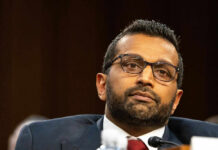
The most shocking part of the Kerr Kriisa saga is not that a former college guard now faces federal wire fraud charges—it is how fast rumor, outrage, and a sealed indictment fused into a public verdict before most people even know what he is actually accused of.
Story Snapshot
- Former college guard Kerr Kriisa was arrested by the Federal Bureau of Investigation (FBI) in a $2.2 million fraud case.
- Prosecutors say the scheme involved wire fraud and sports bribery, with possible decades of prison time if he is convicted.
- The exact fraud mechanics, victims’ names, and key evidence are still sealed, even as media and fans race ahead of the facts.
- The case lands amid a wider wave of game-fixing and betting scandals that already stain college basketball.
From college point guard to federal defendant
Kerr Kriisa built his name as a skilled but polarizing point guard, bouncing from Arizona to West Virginia, then Kentucky and Cincinnati. He already carried baggage: a nine-game suspension at West Virginia after admitting he took impermissible benefits at Arizona.
That episode painted him, in many fans’ minds, as someone willing to bend rules for personal gain. Now, the stakes are far higher. On July 5, 2026, the FBI arrested him in Lexington, Kentucky, in connection with an alleged multimillion-dollar fraud scheme.
Reports say he is being extradited to federal court in West Virginia, where prosecutors have charged him with wire fraud tied to a $2.2 million scheme that allegedly involved sports bribery.
The Department of Justice, through public statements and social posts, confirms that he is under indictment on five federal wire fraud counts. These are not minor technical violations. Wire fraud is a go-to tool for federal prosecutors when they believe someone used electronic communications or transfers to deceive victims out of money.
What we know about the $2.2 million scheme—and what we do not
Most headlines focus on one number: $2.2 million. That is the total prosecutors say two victims lost after trusting Kriisa. Reports describe a pattern of repeated payments over time, and at least one outlet notes an allegation that he directed one victim to send money to another. Yet, the public still does not have the full indictment.
There is no detailed description of each transfer, no timeline of every communication, no bank records laid out for voters and fans to inspect. That gap matters if you still believe in the presumption of innocence.
Instead, the story reaching the average fan is built from layers of summary. Kentucky Sports Radio first pushed out key details, and major outlets from Reuters to the New York Post and Sports Illustrated echoed them within hours, citing that single source for the specific $2.2 million figure and fraud framing.
Social media then added gasoline: talk of “point shaving,” “Estonian mafia,” even bizarre claims that he promised to sell his organs as part of the scheme. Many of these attention-grabbing angles are explicitly labeled as rumors or unconfirmed by the same outlets spreading them, yet they still shape what people think.
Media echo chambers and the rush to moral judgment
This is where common sense about due process collides with the modern outrage machine. On one side, you have the Department of Justice and FBI stating that a grand jury has indicted Kriisa, which means at least some evidence convinced citizens to move the case forward.
On the other side, you have a public that almost never sees that evidence, only digestible clips and hot takes. When every major outlet repeats “multimillion-dollar fraud” and “decades in prison” without walking through the proof, the average reader fills in the blanks with emotion, not facts.
Former CBB player Kerr Kriisa has been arrested and indicted for a $2.2 million fraud scheme, the DOJ announced 🚨
Kriisa carried out the scheme over four years and used “false representations, fabricated documents, and deceptive communications” per the DOJ’s release. pic.twitter.com/81CmwA4W89
— The College Sports Company (@CollegeSportsCo) July 6, 2026
For many fans, Kriisa’s earlier suspension for impermissible benefits becomes retroactive evidence that “he was always dirty.” Podcast hosts call him “unserious” or “lackadaisical” and tie past on-court attitude to off-court criminal intent. La Familia, a Kentucky alumni team in The Basketball Tournament, quietly removed him from their roster and issued a statement to distance themselves.
Institutions know they will be punished in the court of public opinion if they stand by someone under federal indictment, so they step back long before a jury hears a single witness.
How Kriisa’s case fits a growing sports betting and fraud pattern
The allegations against Kriisa do not appear in a vacuum. Federal prosecutors recently charged twenty-six people, including fifteen former college players, in a sweeping scheme to fix college and Chinese Basketball Association games for illegal betting profits.
Court documents describe “fixers” recruiting players with bribes of ten to thirty thousand dollars per game, instructing them to underperform so bettors could cash in against the spread.
In another set of NCAA cases, six men’s basketball players were found to have manipulated games or shared insider information with bettors, leading to permanent ineligibility.
Academic research backs up what those indictments hint at: big-money sports, especially men’s basketball and football, attract more academic and ethical fraud than other college athletics.
When you combine rising legal sports betting, easy online access, and young athletes who often come from modest backgrounds, you get a tempting environment for “quick money” offers.
From a law-and-order view, this is exactly why stiff penalties and clear lines matter. If game integrity collapses, the entire product loses trust—with fans, with sponsors, and with the larger public.
Presumption of innocence versus hard-earned skepticism
So how should a reader sort Kerr Kriisa’s story today? The hard facts are that he was arrested by the FBI, indicted on federal wire fraud charges, and accused of a $2.2 million scheme that prosecutors link to sports bribery. There is enough smoke that serious law enforcement took action.
At the same time, key documents are sealed, much of the narrative relies on a single early media source, and some of the most lurid claims are admitted rumors. A fair-minded approach is simple but demanding: hold two ideas at once.
First, respect the gravity of federal fraud and bribery charges, especially in a sports world already scarred by fixing scandals. Second, refuse to treat untested allegations and click-bait rumors as proof.
Demand to see the indictment, the financial records, the victim statements, and the defense response before deciding what this young man did or did not do. The justice system, not Twitter or talk radio, should have the final say.
Sources:
abcnews.com, nypost.com, frontofficesports.com, reuters.com, si.com, people.com, washingtontimes.com, facebook.com, instagram.com, forbes.com, nbcnews.com, justice.gov