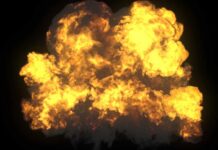

Even Russia’s own officials say the deadliest danger in Crimea this week wasn’t a missile—it was a malfunctioning, aging military aircraft slamming into a cliff.
Story Snapshot
- A Russian An-26 military transport plane crashed into a cliff in Crimea during a scheduled flight after contact was lost around 6 p.m. local time Tuesday.
- Russian authorities reported 29 people killed, with some uncertainty across reports about whether the crew totaled six or seven and whether any survivor was initially possible.
- Moscow’s Defense Ministry publicly attributed the crash to a suspected technical malfunction and said there was no “damaging interference.”
- Russia’s Investigative Committee opened a criminal probe tied to alleged violations of flight regulations as wreckage recovery and on-scene investigation continued.
Crash Site Details and the Official Cause
Russian state outlets, citing the Defense Ministry and investigators, reported that an An-26 turboprop transport aircraft went down in Crimea’s Bakhchisarai district after losing contact during a routine flight. The wreckage was found in a mountainous, forested area where the plane struck a cliff, complicating search and recovery.
Russian officials said the working theory is technical malfunction and emphasized that investigators saw no signs of external “damaging interference” such as an attack.
BREAKING: 29 killed after Russian AN-26 military plane crashes over Crimea pic.twitter.com/MAxDbwgxAM
— Rapid Report (@RapidReport2025) March 31, 2026
Authorities reported 29 fatalities among the passengers and crew, but early details varied slightly across outlets on whether the crew count was six or seven. Some early reporting also left ambiguity about survivors before later updates largely converged on no survivors.
Those discrepancies are common in first-hour incident reporting, especially in remote terrain. As of the latest updates cited by multiple outlets, recovery operations and documentation of the crash scene were ongoing.
Why Crimea Makes Every Incident Politically Charged
Crimea’s status is central to why even a non-combat crash immediately draws attention. Russia annexed the peninsula from Ukraine in 2014 following a disputed referendum, and the region has since become a critical military hub on the Black Sea.
Since Russia’s broader war in Ukraine escalated in 2022, Crimea has remained a flashpoint, with periodic reports of strikes on Russian assets. In that context, Moscow’s quick denial of interference signals how sensitive any aviation loss is in the area.
What the Criminal Probe Signals About Accountability
Russia’s Investigative Committee opened a criminal case related to potential violations of flight regulations, a step that typically allows investigators to compel documents, interrogate responsible personnel, and formally examine maintenance and operational decisions.
Russian officials have not released detailed maintenance records or a technical fault description in the initial reporting. Without those specifics, outside observers are limited to the official description of a malfunction and the fact that the aircraft impacted a cliff in rugged terrain during a scheduled flight.
Aging Aircraft, High Operational Tempo, and Wartime Strain
The An-26 is a Soviet-designed transport platform used for short-range cargo and passenger missions, and multiple reports linked the crash to broader concerns about aging fleets operating under sustained wartime pressure.
Several outlets noted that Russia’s tempo of military aviation has increased since 2022, and that maintenance burdens for older designs can rise during prolonged conflict conditions. Sanctions-related constraints on parts and supply chains were also raised as a factor that can complicate long-term sustainment, even if no direct link is proven in this specific crash.
What Americans Should Take From This—Without Guesswork
U.S. readers watching the war should separate confirmed facts from the narratives that often follow. The confirmed points are grim and straightforward: a scheduled Russian military flight in Crimea ended with 29 deaths, an on-site commission was sent, and a formal probe began.
Moscow’s position is that the cause was internal and technical, not hostile action. Until investigators release evidence—maintenance findings, flight data, or a final report—claims beyond that remain unverified and should be treated cautiously.
For American conservatives, the broader lesson is familiar: governments often demand public trust while withholding the hard details that earn it. Transparency, accountability, and truthful timelines matter—especially in wartime—because they shape how the public understands risk, readiness, and the cost paid by ordinary families.
In this case, the public record still hinges on official statements, and the real test will be whether investigators publish concrete findings or keep the conclusion at “malfunction” without proof.
Sources:
Russian military plane crash in Crimea kills 29 people
Russian military plane crash in Crimea kills 29 people
Russian military plane crash in annexed Crimea, killing 29 people on board
Russian military plane crashes in annexed Crimea, killing 29 people
Russia military plane crash in Crimea kills 29 people
Russian military plane crashes into Crimea cliff, killing 29 people
Russian military plane crash in Crimea kills 29 people