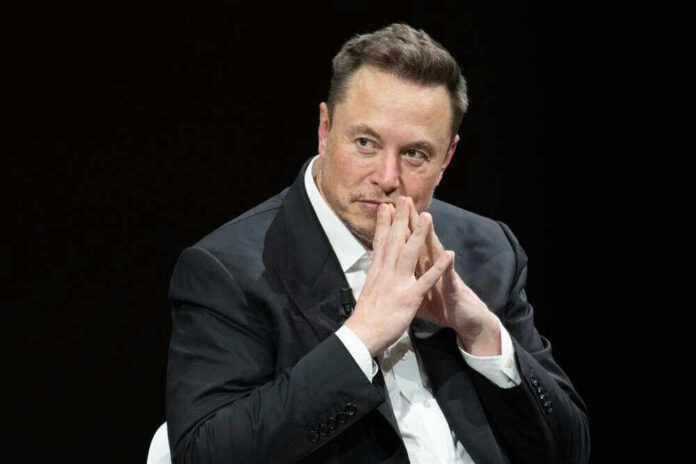
Elon Musk’s bold Terafab announcement promises American self-reliance in chips, delivering Texas jobs and countering globalist supply chains amid skyrocketing war costs draining our economy.
Story Highlights
- Musk unveils two advanced chip fabs in Austin, Texas, run jointly by Tesla and SpaceX to end reliance on foreign suppliers like TSMC and Nvidia.
- One fab targets Tesla vehicles and Optimus robots; the other builds space-hardened chips for AI data centers, aiming for massive compute power.
- Texas gains economic boost with jobs and tech hub status, aligning with America First manufacturing revival despite endless overseas wars.
- Musk cites critical shortages: without Terafab, AI and robotics stall as global output falls short of U.S. innovation needs.
Musk Unveils Terafab in Austin
On March 21, 2026, Elon Musk presented Terafab plans at an Austin facility near Tesla’s Gigafactory. He announced two dedicated chip fabrication plants jointly operated by Tesla and SpaceX. The first fab produces chips for Tesla vehicles and Optimus humanoid robots.
The second fabricates specialized chips for space AI data centers enduring high temperatures and harsh environments. Musk posted details on X, emphasizing self-reliance amid global semiconductor shortages. This joint venture marks the first public Tesla-SpaceX chip collaboration.
Musk says SpaceX and Tesla to build advanced chip factories in Austin https://t.co/NHMZsWbk4g https://t.co/NHMZsWbk4g
— Reuters (@Reuters) March 22, 2026
Addressing Critical Chip Shortages
Musk stated Terafab addresses insufficient supply from manufacturers like Nvidia, TSMC, Samsung, and Micron. Tesla developed in-house AI chips like Dojo since 2019 for autonomous driving but still depends on external sources. SpaceX, post-merger with xAI, faces amplified AI needs for Starlink and space applications.
Musk warned his companies’ demands will exceed worldwide chip output. On March 22, he elaborated on X about necessities for AI and robotics scaling. Recent hints include Tesla taping out AI6 chips by December 2026 while maintaining Nvidia orders.
Ambitious Compute Targets and Vertical Integration
Terafab targets 100-200 GW compute on Earth and 1 TW annually in space, doubling current U.S. capacity. This supports Tesla’s Full Self-Driving, Optimus scaling, and SpaceX’s AI satellites. Musk centralizes control across Tesla, SpaceX, and xAI through vertical integration, reducing foreign dependency.
SpaceX’s impending $1.75T IPO provides funding synergy. The project leverages Texas’ tech growth and proximity to Tesla operations. No construction timeline or permits announced as of March 23.
Economic Boost for Texas Amid National Strains
Austin and Texas stand to gain a hiring boom and economic surge from Terafab. The initiative bolsters U.S. chip sovereignty, complementing CHIPS Act goals in the race against China. Suppliers remain interim partners with gratitude expressed by Musk. Short-term, orders to Nvidia and TSMC continue.
Long-term, it accelerates AI hardware trends and disrupts space AI niches with radiation-hardened chips. This private-sector push contrasts federal overspending on foreign wars now costing billions weekly.
Musk says Tesla, SpaceX to build advanced chip manufacturing facilityhttps://t.co/jDC7WYCvLt
— Dave Schwickerath (@DaveSchwick) March 24, 2026
Expert Views on Feasibility Risks
Industry analysts note Musk’s semiconductor inexperience and history of timeline delays, like Optimus robots. Bloomberg and TechCrunch highlight execution risks despite supply urgency. Optimists see unprecedented AI and space compute enabled. Skeptics question unproven scales and fab expertise.
Consensus confirms announcement facts: dual fabs, Austin site, no timeline. Musk positions Terafab as essential: build or lack chips entirely. As war drains resources, such innovation underscores need for domestic focus over global entanglements.
Sources:
Musk says Tesla and SpaceX to build advanced chip factories in TX
Elon Musk unveils chip manufacturing plans for SpaceX and Tesla
Elon Musk announces plans to manufacture chips for SpaceX and Tesla