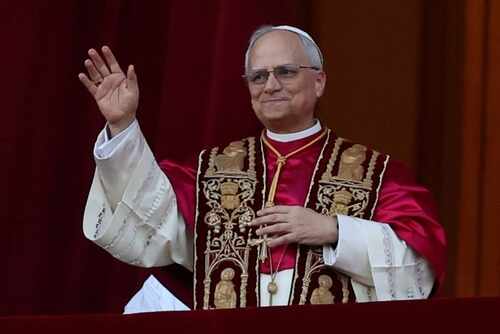
The Vatican’s first American pope is using Holocaust Remembrance Day to draw a hard line against antisemitism—while the world’s politics keep rewarding division.
Story Snapshot
- Pope Leo XIV used International Holocaust Remembrance Day (Jan. 27, 2026) to reaffirm the Catholic Church’s rejection of antisemitism, citing the Vatican II declaration Nostra Aetate.
- He amplified the message through a @Pontifex post and followed with public remarks and a Vatican audience prayer calling for an end to antisemitism, prejudice, and genocide.
- The statements landed during the 25th anniversary year of the UN-designated remembrance day and amid widespread reporting of rising antisemitism globally.
- Leo also tied the theme to broader calls for peace, including the Middle East, signaling a continued emphasis on religious freedom and human dignity.
What Pope Leo Said—and Why Jan. 27 Matters
Pope Leo XIV marked International Holocaust Remembrance Day by posting a message through the @Pontifex account reaffirming the Catholic Church’s commitment to opposing antisemitism.
The day commemorates the liberation of Auschwitz-Birkenau on January 27, 1945, where more than one million people—most of them Jews—were murdered. The Holocaust’s death toll reached six million Jews, making the remembrance an annual warning about where hate and state power can lead.
On Holocaust Remembrance Day, I would like to recall that the Church remains faithful to the unwavering position of the Declaration #NostraAetate against every form of antisemitism. The Church rejects any discrimination or harassment based on ethnicity, language, nationality, or…
— Pope Leo XIV (@Pontifex) January 27, 2026
Leo’s message referenced Nostra Aetate, a landmark Second Vatican Council declaration issued in 1965 that repudiated antisemitism and urged a new relationship between Catholics and Jews.
That context matters because it anchors his statement in formal Church teaching rather than a one-off social-media sentiment. For readers tired of politics turning tragedy into talking points, the Vatican’s emphasis here is specific: condemn hatred against Jews and reject discrimination rooted in ethnicity, language, nationality, or religion.
Nostra Aetate as a Bright-Line Standard Against Discrimination
The Vatican II declaration is repeatedly framed in coverage as a foundational precedent because it directly rejects hatred and persecution of Jews “at any time and by anyone,” while emphasizing Christians’ spiritual ties to Judaism.
That is a major break from centuries of hostility and represents a doctrinal commitment, not a partisan platform. When Pope Leo invokes it, he is signaling continuity—an institutional stance meant to outlast headlines and election cycles, and a reminder that scapegoating minorities is incompatible with Christian teaching.
That moral line also carries a civic lesson Americans can recognize: when institutions don’t clearly draw boundaries against bigotry, radicals rush in to fill the vacuum.
The reporting does not claim the Pope can solve antisemitism through words alone, but it does show he is trying to strengthen norms—publicly, repeatedly, and across multiple venues.
In an era when “tolerance” rhetoric is often used to justify censorship or ideological policing, the Church’s approach here is more direct: reject hatred while appealing to conscience.
From a Tweet to the Vatican Microphone: How Leo Escalated the Message
Coverage describes a brief but deliberate sequence: a Holocaust Remembrance Day message on January 27; additional remarks later that day when leaving Castel Gandolfo; and a prayer during his weekly Vatican audience on January 28.
In that audience prayer, Pope Leo asked for “the gift of a world with no more antisemitism” and broadened the plea to include “no more prejudice, oppression, or persecution,” urging leaders to remain vigilant against genocide. The timeline indicates intentional follow-through, not a single news-cycle post.
Those remarks also intersected with the international climate. Reports link Leo’s peace appeals to broader Middle East tensions and geopolitical uncertainty, placing his anti-antisemitism stance within a wider call to prevent hatred from fueling conflict.
The sources do not claim he offered a detailed policy blueprint, but they do show he is using the papacy’s global platform to argue that religious and ethnic targeting is a warning sign—one that can escalate into persecution and mass violence if leaders ignore it.
What Conservatives Should Watch: Moral Clarity vs. Politicized “Hate” Enforcement
American conservatives have seen “anti-hate” language abused domestically to justify speech policing, DEI bureaucracy, and selective enforcement that punishes mainstream views while excusing intimidation from politically favored groups.
The reporting on Pope Leo’s statements does not advocate those policies; it focuses on condemning antisemitism and warning against genocide. That distinction matters.
There is a world of difference between moral clarity about evil and empowering governments or supranational bodies to regulate speech and belief.
Pope Leo calls for end to antisemitism worldwide https://t.co/MQpod1sndb https://t.co/MQpod1sndb
— Reuters World (@ReutersWorld) January 28, 2026
The most grounded takeaway from the available reporting is narrow but important: Pope Leo XIV is reinforcing a longstanding Church doctrine that rejects antisemitism and calls for vigilance against persecution, while connecting Holocaust memory to present-day risks.
What remains unclear from the sources is whether the Vatican will pair this messaging with new institutional initiatives beyond public statements and prayer. For now, the news is the line he drew—publicly—at a moment when many global elites prefer slogans over standards.
Sources:
Pope on Holocaust Remembrance Day: Church rejects all forms of antisemitism
Pope Leo condemns antisemitism on Holocaust Memorial Day
Pope Leo calls for end to antisemitism worldwide
Pope’s powerful message for Holocaust Remembrance Day
Pope Leo condemns antisemitism and acts of genocide
Pope Leo marks Holocaust Memorial Day, prays for peace in Middle East