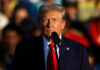
A bombastic, pro-Trump lawyer just beat Colombia’s ruling left in the first round—now the president’s allies claim nearly a million potential irregularities in the voter roll.
Story Snapshot
- Abelardo de la Espriella, a Trump-style hardliner, led Colombia’s presidential first round with roughly 44% of the vote.[1][3]
- Leftist rival Iván Cepeda, backed by President Gustavo Petro, trailed narrowly with about 41% and heads to a runoff.[1][3]
- Cepeda and Petro now question the count, pointing to hundreds of thousands of disputed voter identifications and alleged software issues.[2][3]
- The clash pits tough-on-crime populism against “total peace” progressivism, under a cloud of distrust that feels uncomfortably familiar to American voters.[1][3]
Trump-Style Populist Surges As Colombia’s Left Stumbles
Abelardo de la Espriella did not just squeeze into Colombia’s presidential runoff; he dominated the first round and forced the ruling left on the defensive.
Colombia’s electoral authority reported that the pro-Trump lawyer secured nearly 44 percent of the vote, short of an outright majority but clearly ahead of the field.[1][3]
Left-wing senator Iván Cepeda, closely aligned with President Gustavo Petro, followed with around 41 percent, ensuring a head-to-head runoff later this month.[1][3]
The numbers were not a fluke of one poll or one network. Politico, Latin America Reports, and European and regional outlets all described the same outcome: de la Espriella first, Cepeda second, margins separated by only a few points but consistent across sources.[1][2][3]
That kind of cross-outlet agreement usually signals that, at least at the level of basic totals, the count reflected what was coming in from precincts nationwide, not a media mirage stitched together on election night.
Ruling Left Cries Foul Over Rolls, Software, And Foreign Meddling
The reaction from the president’s camp did not center on how to win over de la Espriella’s voters. Instead, key allies moved quickly to question the process.
Left presidential candidate Iván Cepeda and supporters publicly flagged what they described as a discrepancy in the electoral roll involving roughly 885,000 people or identification numbers, insisting those records needed verification before they would fully accept the results.[2][3]
President Gustavo Petro echoed the skepticism, signaling he would await judicial review rather than bless the preliminary tallies.[2]
Pro-Trump presidential candidate wins spot in Colombian runoff https://t.co/jcXvY2hQDq
— POLITICO (@politico) June 1, 2026
Reports from international outlets added more fuel to the controversy. Euronews and others summarized the left’s accusation that “hundreds of thousands” of votes were manipulated and even suggested that foreign actors tampered with the software used in the count, though they emphasized that no concrete evidence had been presented.[3]
That matters: the allegation lands loudly in the public square, while the underlying proof remains opaque, a pattern Americans have seen after close races from Florida in 2000 to 2020’s post-election fights.
Populist Law-And-Order Pitch Versus ‘Total Peace’ Idealism
The stakes go well beyond one disputed spreadsheet column. De la Espriella built his brand by promising a “shock” campaign against criminal groups, explicitly admiring United States President Donald Trump’s hard-line and style.[1][3][5]
His message: crush drug cartels and armed gangs, restore basic order, and stop treating security as an academic debate. That resonates in a country exhausted by decades of violence and skeptical of elite promises that never quite make neighborhoods safer.
Iván Cepeda offers a mirror-image vision. A leftist senator and longtime human-rights advocate, he has been a major supporter of Gustavo Petro’s project of “total peace,” an ambitious effort to negotiate with or demobilize multiple armed organizations simultaneously.[1][2][5] Supporters frame it as the only realistic path to end endless war; critics see appeasement dressed in idealistic language.
Democracy On Trial: Disputes, Audits, And Public Trust
The post-election narrative now revolves less around who finished first and more around whether Colombians should trust the system that produced that result.
Multiple outlets describe the runoff as a done procedural fact, with electoral authorities already advancing de la Espriella and Cepeda to the second round on the basis of nearly complete results—over 99% of ballots counted in some tallies.[2][3][5]
Yet the president’s allies urge caution, hinting at manipulated software and suspect registration entries without releasing a detailed technical breakdown.
BOGOTÁ, Colombia (AP) — Bombastic pro-Trump lawyer Aberaldo de la Espriella pulled ahead as a leader in Colombia’s race for the presidency in the first round of elections over the weekend, capitali… https://t.co/qjK5I4gXlD
— KSAN News (@ksannews) June 1, 2026
Healthy democracies do not fear audits or transparent reviews. Calls to verify nearly 885,000 questionable records or to confirm software integrity make sense, as long as they rest on verifiable data and finite timelines rather than open-ended doubt.
The risk arises when political actors deploy allegations without evidence robust enough to withstand scrutiny by courts or electoral tribunals.
That pattern erodes confidence, teaches voters to distrust any unwelcome result, and leaves the door open for both authoritarian temptations and foreign meddling.
Sources:
[1] Web – Pro-Trump candidate pulls ahead in Colombia presidential vote as …
[2] Web – Pro-Trump presidential candidate wins spot in Colombian runoff
[3] Web – Bukele-inspired Abelardo de la Espriella wins first round of …
[5] Web – Abelardo de la Espriella – Wikipedia