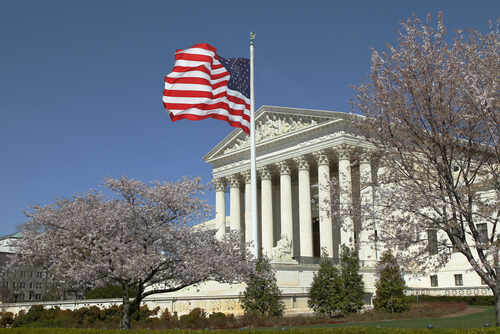
The Supreme Court appeared ready to strike down President Trump’s executive order limiting birthright citizenship, with even conservative justices expressing skepticism about the administration’s attempt to reinterpret 150 years of constitutional precedent during historic oral arguments.
Story Snapshot
- Trump became the first sitting president to attend Supreme Court oral arguments, defending his Day 1 executive order restricting birthright citizenship
- Conservative justices, including Chief Justice Roberts and Justice Gorsuch, questioned the administration’s constitutional arguments, signaling potential rejection
- The case challenges Trump’s order limiting citizenship to children of U.S. citizens or legal permanent residents, excluding children of undocumented immigrants and temporary visitors
- The 14th Amendment’s Citizenship Clause and the 1898 Supreme Court precedent U.S. v. Wong Kim Ark stand at the center of the legal battle
Historic Courtroom Appearance Underscores Immigration Priority
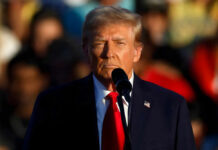
President Trump made history on April 1, 2026, by attending Supreme Court oral arguments in Trump v. Barbara, marking the first time a sitting president has appeared for such proceedings. The case directly challenges his executive order signed on Day 1 of his term in early 2025, which restricted birthright citizenship to children of U.S. citizens or legal permanent residents.
Trump’s physical presence signals the administration’s commitment to ending what conservatives view as a dangerous immigration magnet that rewards illegal entry and birth tourism with American citizenship for newborns.
Constitutional Text Versus Executive Authority
The 14th Amendment’s Citizenship Clause states that all persons born in the United States and subject to its jurisdiction are citizens. Ratified in 1868 to overturn the Dred Scott decision that denied citizenship to Black Americans, the clause has been understood for over 150 years to guarantee citizenship based on birthplace.
Solicitor General John Sauer argued the clause applies only to those with allegiance to the United States, excluding children of illegal aliens. ACLU Legal Director Cecilia Wang countered that the Constitution protects everyone born here equally, preventing government overreach in stripping citizenship rights.
Conservative Justices Express Concerns About Precedent
During arguments, conservative justices including Chief Justice Roberts and Justice Gorsuch appeared frosty toward the administration’s position, questioning whether an executive order could override the 1898 Wong Kim Ark decision.
That landmark case affirmed citizenship for a child born to Chinese legal residents, establishing that birthplace determines citizenship regardless of parental status. The justices’ skepticism suggests reluctance to abandon settled precedent, even as they balance concerns about immigration sovereignty.
Justice Kavanaugh questioned whether Congress, rather than the executive branch, holds authority to modify citizenship rules, highlighting separation of powers concerns that resonate with constitutional conservatives.
Breaking News: Key Supreme Court justices appeared skeptical of President Trump’s efforts to limit birthright citizenship during oral arguments. Follow updates here. https://t.co/G7lfh29XmN
— The New York Times (@nytimes) April 1, 2026
Immigration Policy Implications and Sovereignty Concerns
The administration’s order targets what it characterizes as pull factors for illegal immigration, including birth tourism where foreign nationals enter temporarily to secure U.S. citizenship for their children. Approximately 300,000 children are born annually to non-citizen parents in the United States.
Conservative advocates argue the current interpretation rewards illegal behavior and creates chain migration pathways that burden taxpayers with welfare costs. The executive order would require citizenship verification beyond birth certificates, fundamentally altering immigration enforcement.
Critics warn such changes could affect over four million existing citizens and undermine family unity, though supporters contend restoring original constitutional understanding protects American sovereignty and discourages exploitation of generous citizenship laws.
Awaiting a Ruling with National Consequences
The Supreme Court is expected to issue its decision within two to three months of the April 1 arguments. Lower courts have blocked the executive order pending this final ruling, maintaining the current birthright citizenship system. A decision upholding the block would reaffirm Wong Kim Ark and preserve universal birthright citizenship as interpreted since 1898.
A ruling for the administration would represent an unprecedented limitation on the 14th Amendment’s scope, potentially requiring congressional action to fully implement new citizenship verification systems. The outcome will directly impact federal immigration enforcement, hospital birth procedures, and identification systems while influencing political debates through the 2026 midterms and 2028 presidential election.
Sources:
Oral arguments underway in Supreme Court’s landmark birthright citizenship case
Mike Davis: Sanity must be restored on birthright citizenship
The key arguments in the birthright citizenship case
What to know about Supreme Court’s blockbuster birthright citizenship case
The Supreme Court’s birthright citizenship decision hinges on a case you’ve never heard of
Birthright citizenship: Hard questions and the best answers for Trump’s challengers