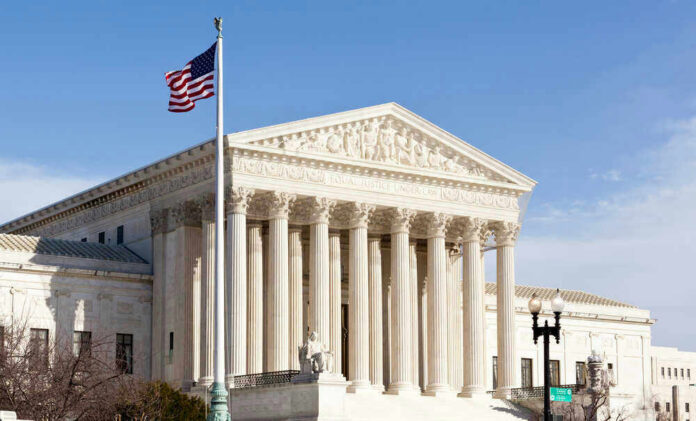
The Supreme Court is set to decide whether state and local assault weapons bans can survive the Second Amendment, and the fight centers on AR-15-style rifles now in common use across America.
Quick Take
- The Court will review laws in Connecticut and Cook County, Illinois, that ban AR-15s and similar rifles.
- Lower courts have upheld those bans, even when challengers say the rulings conflict with Supreme Court precedent.
- The dispute turns on whether “assault weapon” laws fit the Constitution’s text, history, and tradition test.
- Supporters of the bans point to mass shootings and public safety, while gun rights advocates call the laws vague and unlawful.
What the Supreme Court Will Review
The Supreme Court agreed to examine whether governments may prohibit semiautomatic rifles such as the AR-15 under the Second Amendment. The cases come from Connecticut and Cook County, Illinois, and both lower courts upheld the bans.
The issue matters because the Court’s modern gun rulings have pushed judges to look at text, history, and tradition instead of broad policy balancing. That shift gives challengers a stronger opening than they had years ago.
US Supreme Court to hear challenge to state-level assault rifle bans https://t.co/FrA8hDV4DX https://t.co/FrA8hDV4DX
— Reuters (@Reuters) July 1, 2026
The case also lands in a political moment that favors sharp debate over the meaning of the right to keep and bear arms. Gun rights lawyers say the rifles are among the most common firearms in the country and therefore should receive constitutional protection.
Public safety groups argue the opposite and say the bans target weapons tied to mass shootings. The Court’s review now puts those two views on a direct collision course.
Why Lower Courts Kept the Bans Alive
Lower courts have repeatedly upheld assault weapons bans, including in the Seventh Circuit, which accepted restrictions in Illinois. Those courts often leaned on tests that weighed public safety against gun rights, even though the Supreme Court later rejected that style of analysis in Bruen.
That is one reason challengers say the bans rest on outdated logic. They argue the courts should have asked whether the banned rifles are covered by the Second Amendment at all.
Supporters of the bans point to a different record. The Connecticut law was revised after the Sandy Hook Elementary School shooting, and backers said the changes were meant to save lives.
Gun control advocates also argue that states can adopt stricter rules when they believe public safety demands it. In their view, the government does not need to wait for more tragedy before acting. That argument has carried weight in several courts, even as gun rights groups keep pressing the Supreme Court for a cleaner rule.
The Core Constitutional Fight
At the center of the dispute is whether AR-15-style rifles are protected arms or outside the Constitution’s shield. Gun rights supporters say the rifles are in common use for lawful purposes and are owned by millions of Americans.
They also argue that the phrase “assault weapon” is a political label, not a technical legal category, which makes the bans vague and hard to defend. That claim goes to the heart of the case, because vague laws give officials too much room to decide who may keep what guns.
𝐒𝐔𝐏𝐑𝐄𝐌𝐄 𝐂𝐎𝐔𝐑𝐓 𝐀𝐆𝐑𝐄𝐄𝐒 𝐓𝐎 𝐃𝐄𝐂𝐈𝐃𝐄 𝐈𝐅 𝐓𝐇𝐄 𝐂𝐎𝐍𝐒𝐓𝐈𝐓𝐔𝐓𝐈𝐎𝐍 𝐏𝐑𝐎𝐓𝐄𝐂𝐓𝐒 𝐀𝐑-𝟏𝟓 𝐎𝐖𝐍𝐄𝐑𝐒𝐇𝐈𝐏
The Court announced it will take up whether cities and states can ban Americans from owning AR-15s and similar semi-automatic rifles — a… pic.twitter.com/HfbBFwIlm9
— M.A. Rothman (@MichaelARothman) July 1, 2026
Backers of the bans answer that the rifles are more useful for military-style firepower than home defense, and they say courts have long allowed limits on dangerous or unusual weapons.
They also say the bans are narrow, since they target specific semiautomatic models and features rather than all firearms. The Supreme Court’s recent gun decisions have already raised doubt about older lower-court rulings, and even some conservative justices have signaled interest in taking up these cases sooner rather than later.
What Happens Next
The Court’s review could settle a question that has split judges for years: whether a rifle like the AR-15 belongs in the Second Amendment’s protected class or can be singled out for a ban. If the justices side with the challengers, many state and local laws could face fresh attacks.
If they side with the bans, lawmakers in blue states will likely treat that as a green light to keep tightening gun rules. The stakes reach far beyond Illinois and Connecticut.
Sources:
apnews.com, youtube.com, x.com, firearmslaw.duke.edu, supremecourt.gov, supreme.justia.com, reddit.com, nbcnews.com