
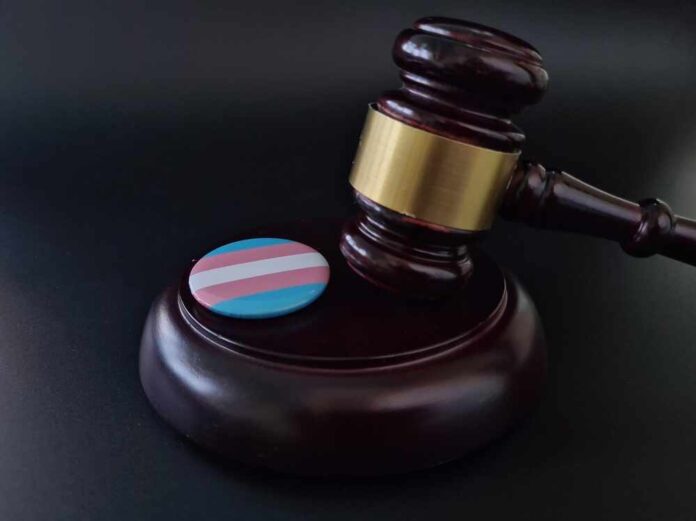
Signaling a major victory for women’s sports advocates, the Supreme Court will hear cases on transgender athlete bans from two states.
Although more than half of U.S. states have enacted protections for female athletes, activist judges have repeatedly blocked these laws.
This landmark decision could finally settle the question of whether states can safeguard women’s sports from biological males.
The Supreme Court is set to review lower court decisions that blocked Idaho and West Virginia from enforcing bans on transgender athletes participating in girls’ and women’s sports teams.
The cases will likely be argued this fall, with a final decision expected by June 2026.
This move follows the Court’s June decision that upheld Tennessee’s law banning certain medical procedures for transgender youth.
That ruling, which split along ideological lines, determined the ban was not discriminatory because “the restrictions turn on age and the purpose of the medical treatment, not whether the person is transgender.”
The stakes could not be higher for female athletes across the entire nation.
State officials have urged the justices to address what they describe as a “growing trend of males identifying as females competing against – and beating – females in women’s sports across the country.”
West Virginia Attorney General JB McCuskey celebrated the Court’s decision to hear the case.
He stated: “It’s a great day, as female athletes in West Virginia will have their voices heard. The people of West Virginia know that it’s unfair to let male athletes compete against women; that’s why we passed this commonsense law preserving women’s sports for women.”
Meanwhile, Idaho Attorney General Raúl Labrador said, “For too long, activists have worked to sideline women and girls in their own sports.”
“Men and women are biologically different, and we hope the court will allow states to end this injustice,” he added.
The cases involve two separate challenges. In West Virginia, a middle school student named Becky Pepper-Jackson, who is biologically male but identifies as female, sued to be allowed to join a girls’ cross-country team.
In Idaho, Lindsay Hecox, who is biologically male but identifies as female, challenged Idaho’s pioneering law, which was the first in the nation to protect women’s sports.
This represents a significant shift from the Biden administration’s stance that blanket bans on transgender athletes are unlawful.
The Trump administration took the opposite approach, implementing policies to protect women’s sports and restrict biological males from competing against females.
The National Collegiate Athletic Association has also adjusted its policies in recent years following President Trump’s executive order, limiting transgender athletes’ participation in women’s sports.
The Court’s ruling could bring national clarity to an issue that has divided state legislatures and school districts.
The ACLU, which is representing the transgender athletes, claims the bans are discriminatory.
However, supporters of the laws point to the evident physical advantages that biological males retain even after hormone therapy.
These include a larger skeletal structure, increased lung capacity, and greater muscle mass, which are advantages that can compromise the integrity of women’s sports.
The Supreme Court’s decision will determine whether the 14th Amendment and Title IX can be interpreted to force states to allow biological males to compete in women’s sports, potentially changing the landscape of female athletics forever.