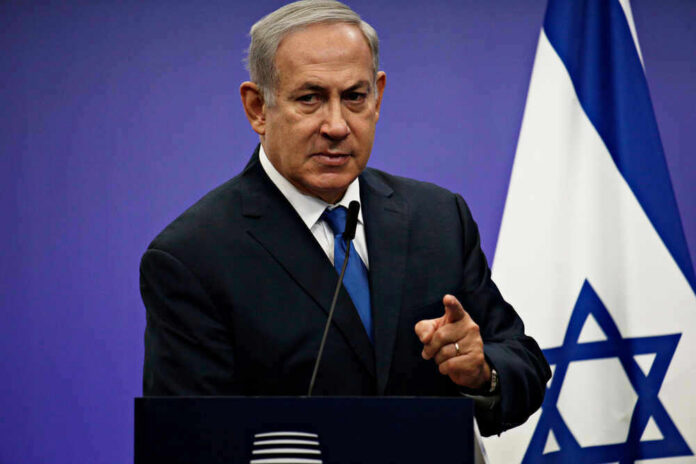
A blunt phone call where President Trump told Benjamin Netanyahu he was “crazy” is now exposing a deeper fight over who controls American war policy and Middle East peace: Washington voters or foreign hardliners.
Story Snapshot
- Trump has openly confirmed calling Israel’s prime minister “crazy” during a heated call over Lebanon and Iran talks.[1][2][3]
- He was angered that continued Israeli strikes in southern Lebanon were jeopardizing United States negotiations to end hostilities with Iran.[1][2][3]
- Axios and other outlets report Trump also warned Netanyahu he had helped keep him out of prison and pushed him to pull back.[1][3][4]
- Netanyahu and his allies now downplay the clash as a “tactical” dispute while insisting Israel’s military moves are justified.[4]
Trump Confirms the “Crazy” Call and Explains His Frustration
President Donald Trump has personally confirmed that he called Israeli Prime Minister Benjamin Netanyahu “effing crazy” during a tense phone conversation about Israel’s offensive in southern Lebanon.[1][2][3]
In multiple interviews, including with a New York Post podcast, Trump said he was “a little bit perturbed” that Netanyahu’s ongoing clashes with Hezbollah in Lebanon were complicating delicate peace negotiations between the United States and Iran.[1][2]
Trump emphasized that constant fighting risked derailing a possible deal to end broader hostilities.[2][3]
'A LITTLE BIT PERTURBED': President Trump confirmed a report that he criticized Israeli Prime Minister Benjamin Netanyahu as “crazy” in a Monday phone call because Israel’s fighting with Hezbollah in Lebanon was holding back peace talks with Iran. MORE: https://t.co/6GC2a66Y9y pic.twitter.com/C8uRs4OgtQ
— NEWSMAX (@NEWSMAX) June 3, 2026
Axios was the first outlet to publish detailed reporting on the private call, citing two sources familiar with the conversation.[4]
According to that account, Trump confronted Netanyahu over an Israeli operation against targets in Lebanon that had triggered Iranian threats to walk away from talks.[1][4]
The report said Trump told Netanyahu, “You’re fucking crazy,” and reminded him that he believed his administration had helped keep the Israeli leader out of prison by backing him on key issues.[3][4] Trump’s later public comments effectively validated the core of that story.[1][2][3][4]
A Clash Over Israel’s Tactics While the U.S. Seeks an Iran Deal
News coverage of the episode stresses that the argument was not about whether Israel has a right to defend itself, but about how its tactics in Lebanon were impacting United States diplomacy with Iran.[1][2][3]
Axios and broadcast segments describe Iran signaling it was “done with peace talks” after Israeli forces intensified operations against Hezbollah positions in southern Lebanon.[1][3][4]
Trump, focused on securing an end to hostilities with Tehran, reportedly viewed fresh strikes as jeopardizing a potential agreement and risking a wider regional war.[1][2][3]
Television analysis notes that Trump told Netanyahu at some point, “We got to stop this. We’ve worked very well together,” framing his complaint as a demand for restraint, not abandonment.[1][2]
Trump has also publicly stated that, despite Iranian threats, Iran has not actually left the negotiating table and that a deal could still be within reach if escalation is contained.[2]
For Americans wary of endless Middle East wars, the call highlights Trump’s willingness to push even close allies when United States interests and the goal of avoiding another drawn-out conflict are at stake.[2][3]
Netanyahu’s Response and the Battle Over the Narrative
Israeli government defenders and Netanyahu allies have tried to portray the controversy as overblown, casting the confrontation as a “tactical disagreement” rather than a fundamental break in the alliance.
According to an analysis summarizing Netanyahu’s comments, he has emphasized shared strategic goals with Washington even while disputing any suggestion that Israel is sabotaging peace efforts.
Israeli officials and supporters stress that their actions in Lebanon followed Hezbollah provocations and ongoing threats against Israeli civilians, arguing that deterrence requires forceful responses.[4]
Trump Unleashed: "Bibi, Are You Effing Crazy?!"
Trump just sat down with Miranda Devine, and this was NOT a normal political interview.
He confirmed he cursed out Netanyahu because, according to reports, Israel's actions in Lebanon were escalating the conflict and threatening…
— Parallel Polis in Exile 🇺🇸 (@Polis_in_Exile) June 4, 2026
Media coverage places this dustup within a broader pattern where anonymous-source accounts of sensitive leader calls are leaked, then amplified through partisan outlets before any official transcript is available.[1][2][4]
Analysts warn that when a single reported quote dominates attention, it can obscure the deeper question of who sets American policy: elected leaders accountable to voters, or foreign politicians and permanent security bureaucracies.[1][2]
For many constitutionalists, the critical issue is ensuring that United States diplomacy and war powers reflect American interests, not the preferences of any overseas government.[2]
Sources:
[1] Web – Trump acknowledges calling Netanyahu ‘crazy’ and says Israel is …
[2] YouTube – Trump’s EXPLOSIVE phone call with Netanyahu as he admits to …
[3] YouTube – Trump Admits To Calling Netanyahu ‘Crazy’, Israeli PM Responds
[4] Web – “You’re fucking crazy”: Trump fumes at Netanyahu in call on Lebanon