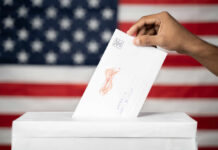
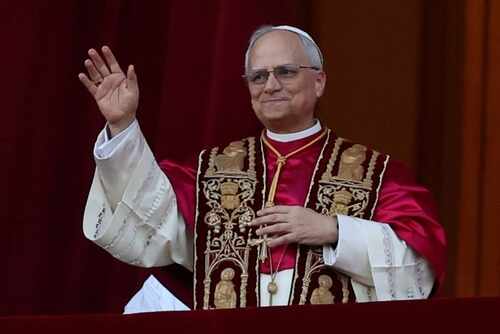
The Vatican says Pope Leo XIV mailed his U.S. ballot from Chicago, and that single envelope jolted church and state watchers worldwide.
Story Snapshot
- The Holy See Press Office said the pope submitted a mail-in ballot in Illinois.
- Officials in Will County listed him as a voter who requested a mail ballot.
- Reports framed the act as the first time a pope voted in a U.S. election.
- The Vatican cast the vote as a citizen’s duty, not a political signal.
What the Vatican confirmed and why it matters
The Holy See Press Office stated that Pope Leo XIV exercised his right as a United States citizen and submitted a mail-in ballot in Chicago. The office framed the act as consistent with his view that citizens should take part in elections. It also said he voted whenever eligible during his years living in Peru, underscoring a pattern of civic duty rather than a one-off gesture. This was not a press rumor; it was an on-record statement with clear language about participation.
CBS News reported that the Will County Clerk’s Office included the pope on its list of voters who requested a mail ballot, showing a registered address in New Lenox, Illinois. That aligns with the Vatican’s account and anchors the story to a specific election office and jurisdiction. Multiple outlets repeated the central point: a submitted mail ballot tied to Illinois ahead of the 2026 midterms, with the Vatican as the named source for confirmation.
The claim of a historic first, framed and constrained
Coverage called this the first time a pope voted in a United States election. That framing rests on contemporary reporting, not an exhaustive archival sweep of past pontiffs’ records. The functional fact is simpler and on firmer ground: the Vatican said he submitted an Illinois mail ballot, and county records confirm he requested one. Ballot secrecy prevents any claim about candidate choice, and that is as it should be in a free system. Treat the historic label as context, not the core proof.
Mail voting has clear checkpoints: casting, returning, accepting, and counting. A mailed ballot does not by itself prove it became a counted vote. That said, most returned mail ballots get counted in modern elections. The United States Election Assistance Commission reported that 98.8 percent of returned mail ballots were counted nationwide in 2024, with a 1.2 percent rejection rate. Signature mismatch was the largest share of rejections. Those base rates make rejection possible but not common.
How a pope votes without making it political theater
The Holy See described the vote as a citizen exercising a right and duty, not as a political act by a head of state. That distinction matters. The United States lets citizens who live abroad vote by mail if they meet their state’s rules. The question then becomes simple: Is he a citizen registered in Illinois and eligible to vote by mail? Reports tie his registration to New Lenox and confirm a mail ballot request. That satisfies the test for lawful participation in that jurisdiction.
Some readers will ask how far a religious leader can go in public life before it looks like lobbying. Here, the line is bright. Casting a secret ballot is private civic action, not public endorsement. He did not name a candidate, appear with a campaign, or steer votes from Saint Peter’s Square. American conservatives who prize individual responsibility should see a familiar theme: citizenship carries duties as well as rights. Vote, and keep your vote private. That is the norm the pope followed.
The mechanics, the message, and what comes next
Reports do not list the contests on his ballot, and they should not. That is the function of a secret ballot. The timeline also fits routine absentee practice. Overseas citizens often return ballots by international mail or courier, then local officials process the signature and eligibility checks under state law. Courts have long handled disputes about deadlines and acceptance rules, but those legal fights do not change a voter’s basic right to request and return a ballot from abroad.
History at the ballot box! Pope Leo XIV became the first sitting pope to vote in a U.S. general election, casting a mail-in ballot ahead of November 3’s midterms. The Chicago-born pontiff says voting is both a right and a civic duty. Who knew the Pope was making his voice heard… pic.twitter.com/6rJv2azc0K
— Toasted Tv News (@ToastedTvNews) November 2, 2026
The bigger signal lives beyond the envelope. A pope who is also an American citizen showed that civic duty scales from parish to papacy. The Vatican said he has voted when eligible for years, which frames this as a habit, not a headline stunt. People of faith can read a quiet instruction here: practice what you preach. People who argue for strong institutions can read another: play by the rules, in the open, and let the process work. That is how trust grows, one ballot at a time.
Sources:
cbsnews.com, vaticannews.va, chicago.suntimes.com, congress.gov