A bloody rum bottle, a vulgar note, and a long-hidden DNA trail now anchor a 14-year wait for answers in a college student’s murder.
Story Snapshot
- Prosecutors tie the defendant’s DNA to the victim, a rum bottle, and a food bag.
- Genetic genealogy helped identify a suspect nine years after the killing.
- A medical examiner said the rum bottle could match the injuries.
- The defense attacks timing, missing evidence, and gaps in handling.
What prosecutors say the evidence shows
Assistant District Attorney Angela Garcia-Lamarca told jurors the defendant’s DNA links to several key items. Reports state that DNA tied to him appears in the rape kit, on a wine or rum bottle, on clothing, and on a fast-food bag with a handwritten note. Prosecutors argue a stranger entered after the roommate left around 4:20 a.m., used a rum bottle as a weapon, sexually assaulted the victim, and left DNA at multiple points in the apartment.
Investigators reached the defendant using public genealogy data and relatives’ DNA to build a path from the old crime-scene profile. Authorities then matched him through a crime lab test in 2021, years after the case went cold. That step changed the case from a stalled file to a focused prosecution. It also launched the debate now at trial: source-level DNA matches versus activity-level questions about when, where, and how the DNA got there.
The rum bottle, the comforter, and the injuries
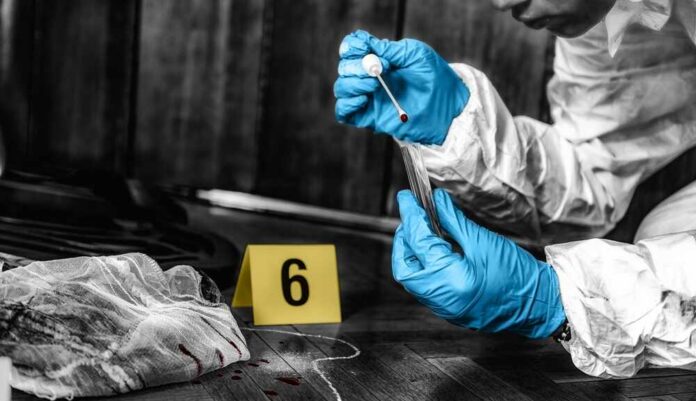
Crime-scene exhibits include a bloody Bacardi bottle found near the bed and tangled in the comforter. A sexual assault expert and the medical examiner testified the bottle could be consistent with the victim’s blunt-force injuries, placing it within the zone of violence and raising it as the likely weapon. An evidence technician identified the bottle in court with a lab label and referenced the broader set of collected items, including bottles, shorts, and the bag with the note.
One documentation problem surfaced: the evidence technician said the bottle was not photographed in place at the apartment. They photographed it later at the police crime lab. She did not know why it lacked a scene photo, leaving a gap the defense can press. Prosecutors insist the forensic processing and chain labels still support reliability of the exhibits and the lab work that followed.
The defense pushback on timing and missing pieces
Defense attorney James Rainsford told jurors that DNA alone does not prove when it was deposited or that it came from a murder. He argued multiple people’s DNA appeared on items, that the State’s story jumps from presence to guilt, and that the jury should ask, “Where’s the rest of the evidence?”. He added that the defendant’s DNA was not found on the neck of the alleged weapon and not on the removed tampon, though male DNA was found on the tampon string.
Defense filings and testimony highlighted two unidentified bloody thumbprints on the bottle neck that an expert said were not the defendant’s. They also pointed to a collected bloodstain from the bathroom door frame that could not be located for testing, and that the officer’s report was never updated to reflect the loss. Those problems do not erase the State’s DNA claims, but they do raise common-sense questions about evidence control and thoroughness.
The note, the food bag, and what DNA can and cannot say
The State links the defendant’s DNA to a note scrawled on a white fast-food bag found at the scene, framing it as a taunt left by the killer. The reporting does not clarify who wrote the words, whether handwriting was analyzed, or how DNA spread across the bag’s surfaces. Touch DNA can move through contact or transfer. A profile can match a person while still leaving open when and why it landed there. That is a core defense theme in the case.
DNA BREAKTHROUGH PUTS SUSPECT ON TRIAL 14 YEARS AFTER UNC STUDENT'S MURDER
For years, DNA collected after 19-year-old Faith Hedgepeth was found murdered failed to match hundreds of people investigators tested.
Then genetic genealogy led authorities to Miguel Enrique…
— Erik Hoffmann (@TheErikHoffmann) October 13, 2026
This trial tracks a pattern seen in modern cold cases. Investigators use a strong DNA association to unlock an old mystery. The defense then shifts the fight to activity-level questions: how the DNA arrived, whether objects were moved, and whether missing or unphotographed items weaken the story’s spine. Jurors must weigh the source-level strength of the matches against the real-world mess of an overnight crime scene and a long investigation.
What matters now for the jury
Jurors must decide whether the web of DNA, the rum bottle’s position and staining, the medical findings, and the timeline after the roommate left form a coherent whole that proves guilt beyond a reasonable doubt. The State’s case gains force from multiple, independent DNA hits and the genealogy match that led to the arrest. The defense invites doubt with missing photographs, lost samples, and prints on the bottle that do not match the defendant.
The American conservative instinct respects both the power of hard lab results and the demand for clean process. A fair verdict rests on strong facts, not headlines. If the State’s links fit and the handling gaps do not break the chain, a conviction follows common sense. If unanswered questions cast real doubt on the bottle, the note, or the timing, restraint is the prudent choice. Evidence, not outrage, should decide it.
Sources:
foxnews.com, courttv.com, abcnews.com, abc11.com, wral.com, charlotteobserver.com, cbs17.com, newsobserver.com, seattletimes.com