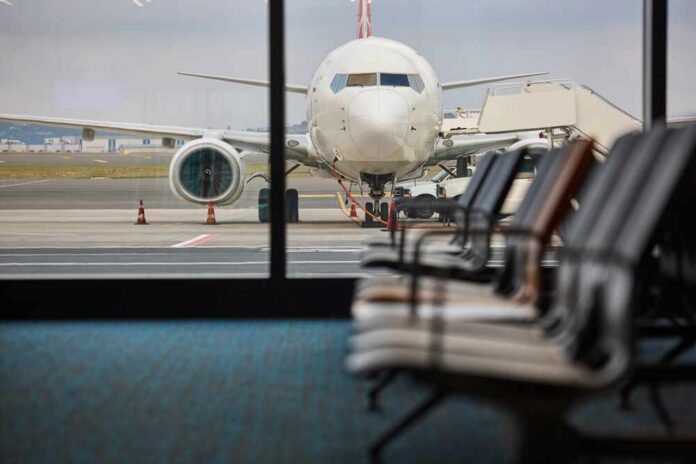
Six Frankfurt Airport workers fell ill with malaria, two died, and officials say a plane-borne mosquito was the likely trigger.
Story Snapshot
- Six airport employees were infected with malaria tropica in July 2026; two died.
- Health officials said an infected Anopheles mosquito likely arrived by aircraft.
- Authorities set mosquito traps and launched genetic testing to trace origin.
- Airport malaria is rare in Europe but not new; Frankfurt saw prior cases.
What Happened And When
Frankfurt health authorities reported a cluster of malaria among airport workers who became sick between July 4 and July 6, 2026. The illness was identified as malaria tropica, the most dangerous form of the disease.
A total of six employees were infected. Two of them died in August. Officials said the workers had not traveled to malaria regions, which pointed investigators to an airport-linked exposure on the job.
Frankfurt’s operator, Fraport, confirmed the infections and the deaths. City health officials explained that human-to-human spread does not cause airport malaria.
A mosquito must bite a person to pass on the parasite. That basic point matters for public risk. Authorities said the wider population faced a very low threat because the event was tied to airport grounds and work areas, not a neighborhood outbreak.
How A Mosquito Can Cross Continents
German health officials said the likely source was an infected Anopheles mosquito that traveled on an incoming aircraft or cargo. When the plane landed, the mosquito survived long enough to bite workers near the aircraft.
Public-health teams responded by placing traps around gates and service zones to catch local mosquitoes. Samples were sent to a tropical medicine laboratory for species checks and to look for clues about origin and infection patterns.
2 airport workers die of malaria from mosquito on plane in Germany, 4 others sickened. https://t.co/AcZlXUI9zu
— CBS News (@CBSNews) August 28, 2026
Airport malaria has a long, documented record in Europe. Medical literature uses the term for infections that occur at or near airports without travel to endemic countries.
Prior investigations in Germany and Belgium described single mosquitoes carried by long-haul flights that found hosts near ramps, baggage areas, or maintenance bays. These episodes are rare, but they recur often enough that major hubs maintain vector control plans.
Why Diagnosis Is Easy To Miss
Doctors often link malaria to travel history. That shortcut can slow care when the patient has never left Europe. Reviews of airport malaria warn that delays raise the risk of severe disease and death.
Malaria tropica, caused by Plasmodium falciparum, can progress fast from fever and chills to organ failure. Frankfurt’s cluster fits that pattern: workers with no travel history became sick in days, and two cases proved fatal despite medical care.
Airport outbreaks tend to surface in warm months when a hitchhiking mosquito can survive after landing. The insect needs only one good blood meal to transmit.
That is why response plans focus on insect control at aircraft doors, cargo holds, and waste areas. Simple steps—residual sprays on inbound long-haul flights, tighter waste handling, and ramp-area fogging—can cut the odds of a repeat.
What Officials Said And What Comes Next
Frankfurt health authorities called the infections a workplace-linked event and emphasized that human-to-human spread “plays no role” in airport malaria. The Robert Koch Institute described importation by aircraft as the most likely cause and backed mosquito trapping and lab analysis.
The goal is to confirm the mosquito species, map flight origins, and compare lab results to patient parasites if possible. That work helps refine future screening and control at the airport.
🚨 "Airplane/Airport Malaria"
German health authorities (RKI, Frankfurt officials), and Fraport confirm two Frankfurt Airport workers died of malaria.
Six employees were infected overall, likely by Anopheles mosquitoes that arrived on a plane in July.
It's a rare case of… https://t.co/Ggtx1TIOxK
— Marishay (@marishayone) August 27, 2026
Frankfurt has faced this before. A scientific report documented earlier airport-associated malaria cases tied to the same hub, highlighting the need for faster diagnosis and better vector control near runways and service roads.
That history does not make the current deaths any less tragic. It does show that big European hubs face a steady, low-frequency risk from global air links. The fix is not panic. The fix is vigilance that starts on the tarmac and ends in the clinic.
Common-Sense Takeaways
Air travel moves people and, at times, pests. The public deserves firm, simple guardrails. Airports should harden entry points for insects on long-haul routes. Airlines should keep to proven cabin and hold treatments.
Health systems should teach front-line doctors to test for malaria when fever hits a ramp worker with no travel. These steps align with basic duty of care and practical risk control. They cost far less than another missed case and another funeral.