Eight people died when a chartered Cessna went down beside a remote Alaska radar site in thick weather, minutes from landing.
Story Snapshot
- Military and state authorities confirmed no survivors after the crash near Cape Newenham.
- The U.S. Army Corps of Engineers said two of its employees were among the dead.
- Federal aviation details identify the aircraft as a Cessna 441 on an on-demand charter.
- National Transportation Safety Board set the timeline to late morning on August 20.
Charter Flight Ends Short of a Remote Runway
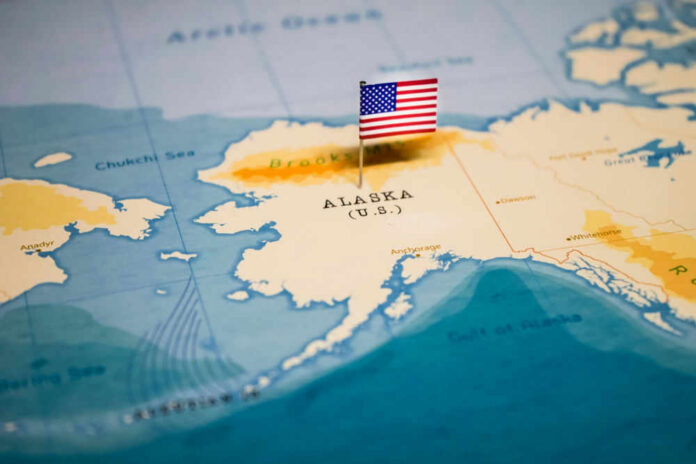
Alaskan Command reported a civilian-contracted aircraft crashed at the Cape Newenham Long Range Radar Site Airport, about 450 miles west of Anchorage, with eight people aboard and no survivors. Reports from multiple outlets aligned on two pilots and six passengers on the flight.
The location sits on the Bering Sea edge, where fast-changing weather often blinds pilots to terrain. The National Transportation Safety Board set the crash window around 11:45 a.m. local time on August 20.
The U.S. Army Corps of Engineers confirmed two of its Portland District employees died in the crash and that families had been notified. The agency often sends engineers and technicians to maintain or upgrade infrastructure in places only small aircraft can reach.
Aviation records summarized in trade reporting identify the airplane as a Cessna 441 Conquest II, operated by Security Aviation on an on-demand Part 135 charter as flight SVX45. The approach phase appears to have been the final segment.
What Investigators Are Gathering Right Now
The National Transportation Safety Board launched an Alaska-based team and began securing wreckage, flight track data, and weather details. A senior regional official confirmed the date and approximate time, while noting crews were still collecting facts.
Investigators will look at the approach path into Cape Newenham, pilot decision points, instrument procedures, and any missed approaches before the loss of contact. Early reports cited heavy fog and poor visibility in the area at the time.
All eight people aboard a plane chartered by the Army Corps of Engineers were killed in a crash near a remote radar site on the western coast of Alaska.
Read more at: https://t.co/vcg2PPnNDa
— Stars and Stripes (@starsandstripes) August 23, 2026
Accident investigations move in stages: first, confirm who, what, when, and where; then, test how and why. This case fits a pattern that Alaska aviators know well. Rugged terrain, long distances over water, and fast shifts between clear skies and a wall of cloud make each approach a high-skill task.
The Cape Newenham airstrip supports a long-range radar site. That mission brings regular charter flights that thread mountains, sea breeze, and fog banks to deliver people and parts.
Why Alaska’s Skies Are Less Forgiving
Alaska’s accident rate has long run higher than the rest of the country. A National Transportation Safety Board report found that from 2008 to 2017, the state’s total accident rate was 2.35 times higher than the nationwide rate, and its fatal accident rate was 1.34 times higher.
Much of that burden falls on on-demand charter operations that serve remote communities and government sites. Pilots face short windows, sparse navigation aids, and few safe alternates when weather drops.
The lesson is simple. Risk rises when missions cannot wait and weather will not bend. The country asks small aircraft and skilled crews to connect places that roads and ferries do not reach. That duty deserves respect and rigor.
Transparent investigations and steady safety upgrades honor both. The facts released so far are clear on the loss. The cause will come from recorders, radar, procedures, and parts laid out on a hangar floor, piece by piece.
What We Know, and What Comes Next
Authorities agree on the core facts: eight people aboard, no survivors, a crash near the Cape Newenham radar airfield, and two U.S. Army Corps of Engineers employees among the dead. The Federal Aviation Administration’s preliminary details tie the event to a specific airframe and charter operator during the approach.
The National Transportation Safety Board’s timeline fixes the late morning crash window. Investigators will release fuller findings after analysis. Until then, the focus remains on families, facts, and flight safety.
Sources:
alaskasnewssource.com, alaskapublic.org, poa.usace.army.mil, airwaysmag.com, abcnews.com, reuters.com, youtube.com