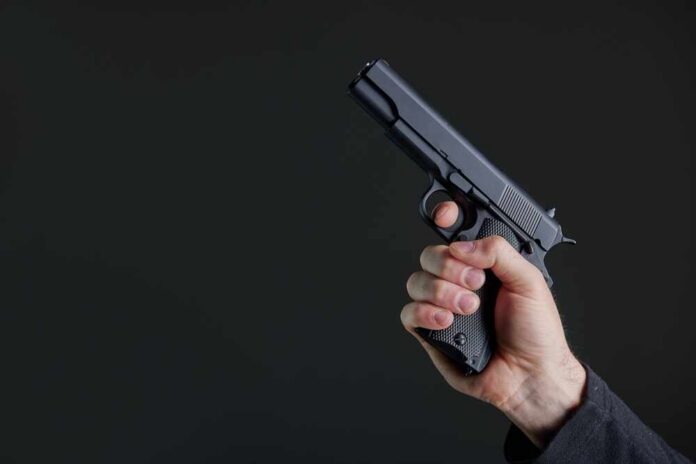
Hours before President Trump’s arrival, deputies say they found a loaded gun, extra ammo, and a man filming security at his Los Angeles-area golf club.
Story Snapshot
- Deputies arrested a 38-year-old man at Trump National Golf Club in Rancho Palos Verdes.
- Authorities say he filmed security activity and had a loaded handgun and hollow-point rounds nearby.
- Detectives later reported finding more firearms and “concerning” notebooks during a search.
- The case fits the protective-intelligence model: act on risk indicators before harm.
What Deputies And Agents Saw On The Ground
Los Angeles County deputies say a man walked the grounds of Trump National Golf Club on Sunday, filming and taking photos while appearing to monitor security preparations ahead of President Trump’s visit.
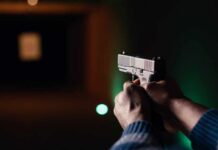
The Sheriff’s Department said investigators recovered a 16-round magazine with hollow-point ammunition on his person and a loaded pistol in his vehicle parked nearby, then took him into custody without injury. Authorities described his behavior as surveillance-like, tied to the specific security planning underway.
BREAKING: A man has been charged after authorities in the US found a gun concealed in his car and ammunition in his pocket at a golf course owned by Donald Trump near Los Angeles.
https://t.co/nCQljwgkhc📺 Sky 501 and YouTube pic.twitter.com/fxuiYBfALQ
— Sky News (@SkyNews) August 5, 2026
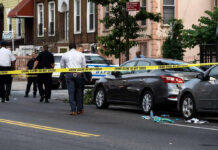
Officials said the arrest followed a plainclothes security sweep of the property before the president’s Tuesday appearance, a routine step when a sitting president travels. The department said federal partners joined the response.
A local television outlet and national outlets reported the timeline the same day the Sheriff’s Department summarized the incident, underscoring that the stop happened two days ahead of the visit and inside the protective perimeter for event planning.
What Investigators Say They Found After The Arrest
Detectives obtained a search warrant after the arrest and reported finding additional firearms and multiple notebooks they called “concerning” because of their contents and focus, according to follow-on reporting that cited the department’s statement.
Prosecutors later charged the suspect in a federal complaint centered on firearm-related offenses that stemmed from possessing ammunition on his person and a loaded handgun in his truck while at the club. The charging documents focused on weapons violations rather than a proven plot at this early stage.
Authorities have not alleged an explicit plan to attack. Law enforcement often files weapons and trespass-related counts first, then builds a fuller picture through digital forensics, interviews, and travel records.
That cadence is common in protective cases, where early moves aim to reduce immediate risk. The public should expect the record to expand in the coming days through court filings, which can confirm or temper the initial narrative as evidence is tested.
Why Protective Intelligence Treats Behavior As A Red Flag
The United States Secret Service’s National Threat Assessment Center explains that prevention hinges on spotting and acting on warning behaviors near protected venues, including surveillance, boundary testing, and access to weapons.
The guidance stresses that teams must reduce opportunity, not wait for declared intent. That doctrine matches what happened here: proximity to the president’s venue, filming of security routines, and immediate access to a loaded firearm triggered action before the event.
NEW: Federal authorities arresting an armed California man at Trump National Golf Club in southern California just two days before the president's visit.
Jeanine John Taele pleading not guilty after allegedly monitoring security pic.twitter.com/CbCqneDVSz
— Saltpy Goat (@trump_supp) August 5, 2026
Recent history at Trump properties shows why teams act early. In Florida in 2024, federal prosecutors charged a man after he was spotted with a firearm near Trump International Golf Club in West Palm Beach, describing conduct consistent with a planned attack in court filings.
The point is not to assume each case is the same, but to note the recurring pattern: behavior plus access to weapons near a high-value target prompts swift intervention to keep the odds in favor of safety.
What This Means, And What To Watch Next
Authorities drew a clear line: filming apparent security planning while carrying ammunition and keeping a loaded pistol close by is not “just photography” when a sitting president is due on site. That read aligns with basic common sense and the duty to protect life.
Civil liberties matter, but so does the reality that bad actors scout first. Courts now decide whether the facts fit the charges. Watch for search warrant affidavits and the precise language in federal filings to gauge the strength of the case.
Sources:
latimes.com, abcnews.com, youtube.com, osti.gov, uscp.gov