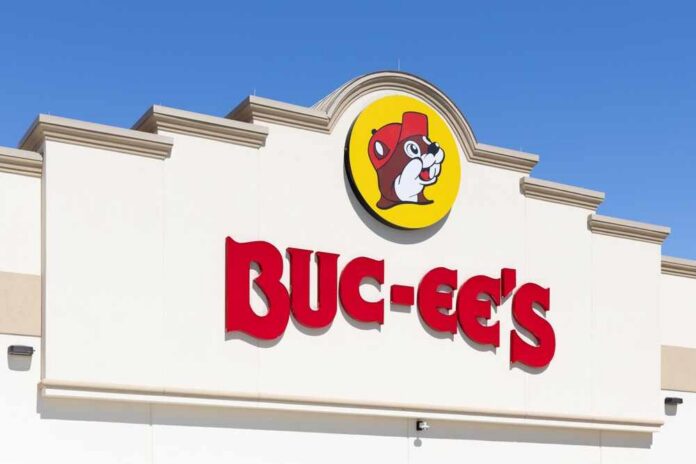
Oklahoma City greenlit a $25 million road rebuild that points straight at Buc-ee’s coming to the I-40 and Cimarron Road interchange in west OKC.
Story Snapshot
- Mayor David Holt said the city is in active talks with Buc-ee’s for a first-in-state site at I-40 and Cimarron Road.
- The City Council approved a three-party road agreement that aligns with a Buc-ee’s project path.
- The funding splits name the city, state, and Buc-ee’s-linked developer, with defined dollar caps.
- The vote was for infrastructure; final store approval remains a separate step.
What City Leaders Approved, And Why It Matters
The Oklahoma City Council voted to rebuild the Interstate 40 and Cimarron Road interchange to handle high traffic tied to a planned Buc-ee’s travel center. The package upgrades the bridge from two to five lanes, adds dedicated turn lanes, realigns ramps, and includes protected Texas turnarounds.
Mayor David Holt said the site sits at I-40 and Cimarron Road in west OKC, and talks with Buc-ee’s are “very active”. The move signals intent, timelines, and serious prep—not just wishful thinking.
The agreement enlists three parties with clear roles. Oklahoma City puts in $10 million, the Oklahoma Department of Transportation covers up to $15 million, and CSMS Management Limited Liability Company, linked to Buc-ee’s leadership, pays up to $8 million, for a project estimate of about $25 million.
That split reflects a common model for high-impact retail: public agencies fix the chokepoints, while the private developer funds project-specific pieces. It is not a blank check; it is a traffic solution designed for a known, large generator.
Where The Store Would Go And What Comes Next
Mayor Holt named the target: the northwest area of Interstate 40 and Cimarron Road, near Clarence E. Page Airport on the city’s western edge. Multiple outlets reported his remarks the same day, and the site details matched across reports.
The road plan matches Buc-ee’s traffic needs, which often require turnarounds, extra lanes, and long queuing areas for gas and parking. One report suggested construction could start as early as 2028, which fits big-interchange lead times.
I can now finally confirm that we are in very active conversations with Buc-ee’s about their first location in Oklahoma City (and the State of Oklahoma), which will be located at Interstate 40 and Cimarron Road in West OKC.
There will be new infrastructure necessary to… pic.twitter.com/LYcvwum6d5
— Mayor David Holt (@davidfholt) September 29, 2026
Tuesday’s vote covered the interchange rebuild, not the final store sign-off. That caveat matters for process, not direction. Major retail builds follow steps: transportation, site control, permits, design, and then vertical construction. The council cleared the crucial first step.
Agencies now align schedules, complete designs, and lock down right-of-way. Buc-ee’s and its development arm keep working through site control and city review. The train is on the track; the conductor still has signals to clear.
Jobs, Taxes, And The Conservative Growth Playbook
Buc-ee’s signals sales-tax muscle wherever it lands, and local leaders know it. The store design draws travelers from hundreds of miles, which converts highway pass-throughs into city revenue and nearby spinoffs.
Reuters reported no direct cash incentive to Buc-ee’s, but a targeted road fix paid with federal and state dollars plus a developer share. That approach fits conservative governance: build durable infrastructure, unlock private risk, and let the market prove demand.
Residents near Cimarron see both promise and pressure. A new interchange can spur housing and retail growth; it can also bring traffic and change to a rural-feeling area. The council vote was 5–2, showing support with debate over sprawl and costs.
The best policy test will be simple: does the road carry the load at rush hour and on summer travel weekends without jamming local streets? If the answer is yes, tax receipts and jobs follow. If not, planners recalibrate the lanes, not the goal.
Sources:
foxbusiness.com, journalrecord.com, yahoo.com, rmb.reuters.com, kjrh.com, ktul.com, newson6.com, koco.com