NATO fighter jets shot down an unauthorized drone over Lithuania just after midnight, and the message to Moscow and Minsk could not be clearer.
Story Snapshot
- Italian jets on NATO duty downed a drone near Pratkūnai, Lithuania.
- The drone entered Lithuanian airspace without permission and loitered before the strike.
- NATO coordinated the intercept through its German air operations center.
- Officials say the drone most likely crossed in from Belarus; the origin is still under review.
What Happened Over Lithuania And Why It Matters
Lithuania’s national crisis team reported a shootdown near Pratkūnai, close to Kaunas, just after midnight on 15 September 2026. Lithuanian President Gitanas Nausėda said NATO fighters destroyed a drone that had entered Lithuanian airspace without permission.
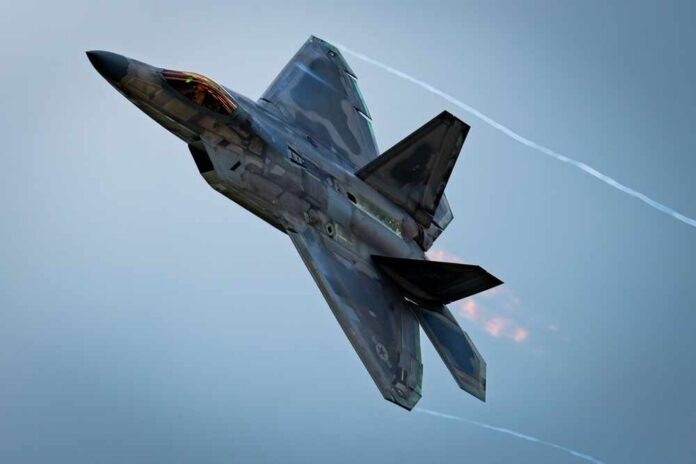
Italian Eurofighter crews scrambled from Šiauliai Air Base and took the shot under NATO air defense procedures, according to defense reporting and Italian statements cited in coverage. No injuries or damage were reported after the debris fell.
NATO officials described a fast, coordinated intercept. Two Italian Eurofighters deployed on the alliance’s air defense mission responded, with control flowing through NATO’s Combined Air Operations Centre in Uedem, Germany. That chain matters.
It shows allies can detect, decide, and act across borders in minutes. For the Baltic states, that is the point of the mission: constant presence, shared radar pictures, clear authority, and a trigger that works when seconds count.
NATO jets down drone in Lithuanian airspace after bloc warns strikes will drive support for Ukraine https://t.co/W1hK56U6z7 pic.twitter.com/IYRtPnQYZp
— New York Post (@nypost) September 15, 2026
Location, Timing, And The Firsts That Stand Out
Officials placed the drone near Pratkūnai, a central Lithuanian area that sits along known approach corridors from Belarus. Estonia’s foreign minister called the downing a first for the upgraded Baltic Air Defense mission, marking a clear step beyond past scrambles that ended with shadowing or warnings.
Lithuanian reporting said the drone lingered for roughly half an hour before the kill, a detail that explains why the allied jets treated it as a threat to airspace order and public safety.
Reuters reported the drone most likely entered from Belarus, while adding that investigators still need to confirm origin and type. That caveat is normal in the first day of a probe.
The operational facts remain solid: an unauthorized drone crossed the border, stayed in Lithuanian skies, and NATO fighters ended the flight under standing rules. The basic deterrent signal does not wait on lab results from the wreckage.
The Command Picture And What It Signals To Adversaries
The jets flew under NATO’s integrated command, not a loose national response, which underscores unity and speed. Italian crews followed alliance procedures to identify, warn as feasible, and then neutralize the drone.
That is how you deter gray-zone probes: make the costs clear and the response automatic. When a foreign drone ignores them, a firm and predictable response keeps the peace by removing doubt about resolve.
🔴🇷🇺🇱🇹Today has been confirmed that yesterday’s shoot down of a Russian drone in Lithuanian airspace was performed by an Italian F-2000 “Eurofighter Typhoon”.
The aircraft was deployed at Šiauliai Air Base, and was operating under the Air Defence contingent “Baltic Thunder III”.… pic.twitter.com/ibe96L4pmE
— BeamTracker | Military OSINT (@BeamTracker_) September 15, 2026
Leaders framed the strike as part of rising pressure from the east. Coverage quoted allied voices warning that Russia has grown more reckless, and that Belarus remains a likely vector for low-cost tests of NATO vigilance.
Whether this single drone served as a spy, a decoy, or a navigation stray, the political effect is the same. The alliance showed it will not let airspace become a slow-drip normal of intrusions. That message reduces risk by closing the window for miscalculation.
How This Fits The Baltic Pattern And What Comes Next
The incident tracks with a year of drone incursions across NATO’s northern flank. Reports have tied some flights to spillover from the Ukraine war, while others look like pressure tactics meant to probe radar gaps and response time.
Baltic leaders have pushed for stronger, layered defenses that include more fighters on alert, better drone detection, and clearer rules to act sooner. The Lithuanian shootdown advances that push by proving the system can and will take the shot when needed.
Sources:
foxnews.com, ilfoglio.it, breakingdefense.com, reuters.com, wfmd.com, news.err.ee, euronews.com