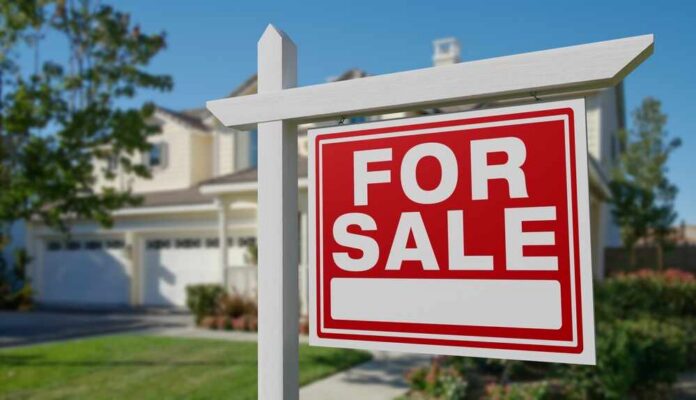
American homeowners are losing their houses not because they lost their jobs, but because property taxes and insurance bills have become financial weapons they cannot defeat.
Quick Take
- Foreclosure filings jumped to 45,921 properties in March 2026, marking a 28% year-over-year increase and the highest level in six years
- Rising property taxes and insurance costs are the primary culprits, not unemployment or mortgage rate shocks
- South Carolina, Indiana, Florida, Illinois, and New Jersey face the worst foreclosure rates
- Despite the surge, foreclosure rates remain well below the 2.23% peak from the 2008 financial crisis
The Cost Compression Crisis Nobody Saw Coming
The housing market is experiencing something economists didn’t predict: a foreclosure wave driven by cost compression rather than economic collapse.
Homeowners with stable jobs and locked-in low mortgage rates are still losing their homes. The culprit? Property taxes and insurance premiums have become unbearable.
In March 2026, lenders initiated foreclosure proceedings on 30,334 properties, up 21% from the previous year, while completed foreclosures jumped 42% year-over-year. This represents a fundamentally different foreclosure dynamic than previous crises.
The numbers tell a story of financial suffocation. Average homeowners’ insurance premiums rose to $2,948 annually in 2025, up 12% from 2024. Property tax burdens averaged $4,427, up 3% year-over-year.
When combined with mortgage payments averaging $2,005 per month by late 2024, homeowners face a relentless squeeze. These aren’t exotic financial products or predatory lending schemes. These are ordinary bills that have simply become too large for ordinary Americans to pay simultaneously.
U.S. foreclosures have jumped 26% since last quarter as they reach the highest quarterly total since 2020. pic.twitter.com/svrNC6Qyfa
— National Chronicle (@NCNewsOnX) May 5, 2026
Where the Pain Hits Hardest
Geography matters enormously in the foreclosure crisis. South Carolina leads the nation with the highest foreclosure rate, followed closely by Indiana, Florida, Illinois, and New Jersey. These aren’t random states. They’re regions where property taxes consume significant portions of household income or where insurance costs have skyrocketed due to natural disaster risk.
Florida’s elevated foreclosure activity reflects both high insurance premiums driven by hurricane risk and growing property values that inflate tax assessments.
New Jersey’s position reflects some of the nation’s highest property tax rates, a burden that falls heaviest on middle-class homeowners.
The concentration matters because it reveals policy failure at the state and local level. States with aggressive property tax collection or regulatory environments that permit insurance rate increases are watching their foreclosure rates accelerate.
This isn’t a national crisis affecting all Americans equally. It’s a targeted crisis affecting homeowners in specific jurisdictions where government policy and market forces have aligned to create an affordability emergency.
The Silent Majority Still Standing
Here’s what prevents panic: foreclosure rates remain dramatically below historical peaks. The 2010 financial crisis produced a 2.23% foreclosure rate. Today’s rate sits at roughly 0.23%, less than one-tenth the crisis level.
This suggests the market is normalizing rather than collapsing. Most American homeowners remain on a stable footing. The crisis is real but concentrated among vulnerable populations lacking a financial cushion to absorb cost increases.
Wealthy homeowners with substantial equity can refinance or sell. Middle-class homeowners with emergency savings can weather temporary hardship. Lower-income homeowners with minimal reserves face immediate jeopardy.
Why Traditional Solutions Are Failing
The Federal Housing Administration limits loan modifications to once every 24 months, a restriction that prevents homeowners from repeatedly restructuring debt as costs escalate.
Forbearance programs and COVID-era assistance programs have dried up, eliminating temporary relief options. The fundamental problem defies traditional solutions because it’s not a credit crisis.
Homeowners aren’t defaulting because they can’t borrow. They’re defaulting because their total housing costs have become mathematically unsustainable relative to their income. No loan modification addresses property taxes or insurance premiums.
Real estate agents in affected markets confirm this dynamic. Delaware agent Carol Quattrociochi reports that homeowners cite property tax increases, combined with rising everyday living costs, as their primary drivers of foreclosure, not job loss or rate shocks.
This represents a policy problem masquerading as a market problem. When government policy drives housing unaffordability, market-based solutions prove inadequate. The foreclosure surge accelerating through early 2026 represents a stress test on American homeownership itself.
It reveals that owning a home in certain jurisdictions has become financially unsustainable for ordinary working people, not because of unemployment or reckless borrowing, but because the cumulative burden of taxes, insurance, and maintenance has exceeded what middle-class incomes can support.
Until policymakers address property tax rates and insurance regulation directly, foreclosure filings will likely continue climbing.
Sources:
U.S. Foreclosure Rates by State – March 2026
Foreclosure Rates for All 50 States in February 2026
Foreclosure Rates and Filings January 2026
Foreclosure Rate by Year U.S. 2005-2025