A war half a world away is already hitting American families where it hurts most—at the gas pump—as the Strait of Hormuz turns into a choke point for global energy.
Story Snapshot
- Brent crude jumped from just over $73 to about $83 a barrel as shipping and production disruptions spread across the Gulf.
- The Strait of Hormuz isn’t “officially” closed, but tanker backlogs and shipper suspensions are creating a de facto slowdown in flows.
- QatarEnergy halted LNG production at major facilities after attacks, helping drive a sharp spike in European gas prices and tanker freight rates.
- Major shippers, including Maersk, paused Strait crossings, signaling higher transport costs that typically filter down to consumers.
- Analysts warn that price outcomes depend on whether disruptions stay limited or escalate into broader attacks on regional energy infrastructure.
Hormuz Disruptions Push Oil Higher and U.S. Drivers Feel It Fast
Energy markets reacted quickly as conflict-linked disruptions spread across the Strait of Hormuz, a narrow corridor that carries roughly one-fifth of global oil flows. Reports described dozens of tankers idling off the UAE and Oman while companies reassessed risk.
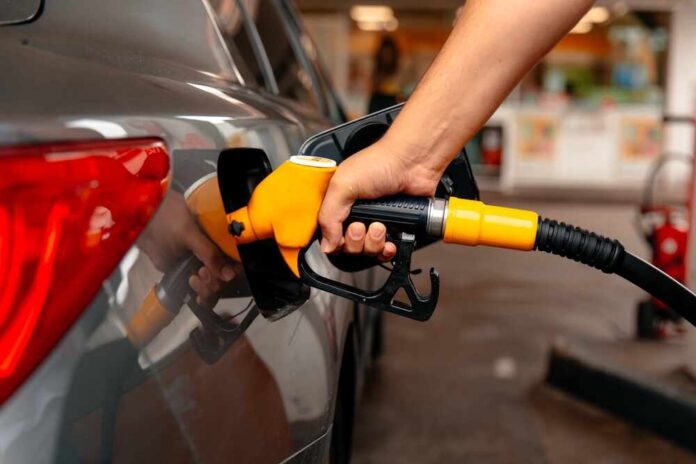
Brent crude climbed to about $83 a barrel after trading near $73 before the latest escalation. When crude moves that sharply in days, retail gasoline often follows with a lag measured in days, not months.
Shipping decisions amplified the shock. Maersk, one of the world’s largest container and logistics players, paused crossings through the Strait, the kind of move that disrupts schedules and adds emergency surcharges elsewhere in the supply chain.
Even when there is no formal blockade, a “functional” slowdown can cut effective supply as ships queue, reroute, or delay. That translates into higher delivered costs for oil and refined fuels, especially when insurance and freight costs jump together.
Gas prices across the U.S. jumped 11 cents overnight as the war with Iran continued to spread, pushing up the average cost nationwide to $3.11 per gallon, according to AAA. https://t.co/bvj1eWMI7l
— CBS Mornings (@CBSMornings) March 3, 2026
Natural Gas and LNG: Qatar Halt Sends the Strongest Warning Signal
The most immediate red flag came from liquefied natural gas. QatarEnergy halted LNG production at Ras Laffan and Mesaieed after attacks, a major development because Qatar is a dominant LNG supplier in global trade.
In response, LNG tanker freight rates reportedly surged more than 40%. European natural gas futures also spiked sharply, with benchmark pricing in the Netherlands jumping as traders priced in a sudden risk to seaborne supply moving through the Gulf’s chokepoints.
Europe and parts of Asia are particularly exposed when LNG logistics tighten, because replacing disrupted cargoes isn’t as simple as tapping a nearby pipeline.
Even if crude markets are “well supplied” on paper, LNG is less forgiving: cargo availability, shipping constraints, and terminal scheduling bottlenecks can all turn a regional shock into a wider pricing problem. For Americans, gas markets matter because higher global energy prices can ripple into manufacturing, home heating costs, and broader inflation pressure.
Strait Not Formally Closed, But Attacks and Fires Create Real-World Supply Friction
Reports described damage and interruptions across multiple Gulf energy nodes, including a fire at the Fujairah Oil Terminal in the UAE after a drone interception, disruptions affecting Saudi Arabia’s Ras Tanura area, and outages tied to Qatar’s LNG sites.
The key point for consumers is that markets don’t wait for official declarations. If ship operators and insurers treat the route as unsafe, flows slow, and prices respond as if a closure were underway—because in practical terms, that’s what “de facto” means.
Analysts have framed outcomes as scenario-driven. Columbia’s energy policy analysis has warned that kinetic U.S.-Iran conflict scenarios can create major shocks, even if there are buffers like alternative supply and spare capacity.
J.P. Morgan has outlined a range of outcomes as well, including cases where targeted action avoids prolonged damage to oil infrastructure—limiting the duration of a price rally. The uncertainty is not whether energy reacts, but how long elevated risk pricing persists.
What This Means Under Trump: Energy Security and the Cost of Global Chokepoints
For a conservative audience that has lived through years of inflation and “you’ll own nothing” style energy scarcity narratives, the Hormuz crisis is a reminder that globalism has a real household price tag. A single chokepoint can yank prices higher even when U.S. domestic conditions are stable.
Experts quoted in reporting emphasized that shipping and logistics costs ultimately get passed along—showing up in higher pump prices and broader consumer costs as freight and fuel surcharges spread through the economy.
The near-term question is whether disruptions remain contained or widen into sustained attacks that materially reduce Gulf exports. Some estimates suggest oil could push into the $80–$100 range if a significant share of GCC exports is curtailed or if Iranian output is effectively constrained by conflict dynamics.
For Americans, the practical takeaway is simple: when energy becomes a weapon and shipping lanes become battle space, everyday costs rise—and Washington’s strategic choices matter to family budgets.
Sources:
Strait of Hormuz Global Oil, Gas Trade Disrupt Amid Iran War | TIME
How a Conflict in Iran Could Affect Oil Markets in the Gulf Arab States