Detectives say a 24-year-old Florida woman used location info, took an Uber to her boyfriend, and fired one shot that hit the other woman in his car.
Story Snapshot
- Deputies say the girlfriend found the car, walked up, and shot once through the passenger window.
- The bullet hit the woman in the left shoulder; medics took her to a hospital for care.
- Investigators say they recovered a pink-and-black Glock and a 9mm casing at the scene.
- Prosecutors charged the suspect with attempted first-degree murder and related counts.
What Investigators Say Happened
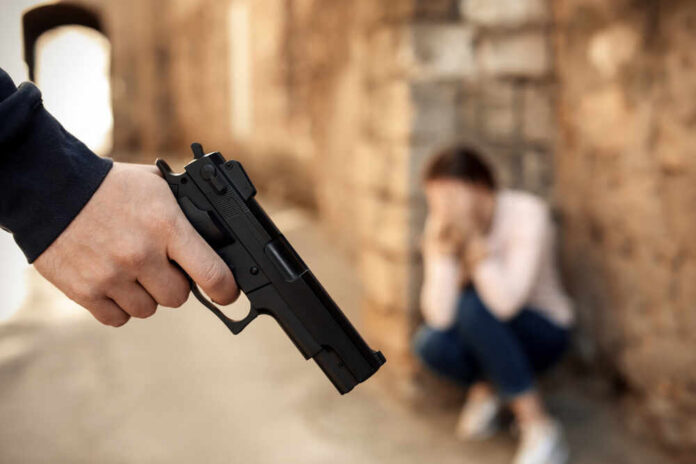
Brevard County deputies say the chain started with location data from a phone. The woman, identified in reports as Kelly, allegedly saw where her boyfriend, Elijah Baker, was and ordered an Uber. She rode to a grassy field near Bamboo Avenue, where Baker sat in a car with a woman named Angel Adenau. Detectives say Kelly walked up to the passenger side, drew a pink-and-black Glock, and fired one round through the window. The single shot hit Adenau’s left shoulder. Paramedics took her to Holmes Regional Medical Center.
Reports that cite the arrest affidavit say deputies later found the pink-and-black pistol and a 9mm shell casing linked to the shot. The detail matters because it anchors the timeline to physical items officers logged after securing the scene. A firearm, a casing, a struck window, and a wounded victim limit the room for spin. They do not answer why the trigger was pulled, but they do tie the act to a place and time.
The Statements And The Charges
Accounts tied to the affidavit say Kelly first told investigators she fired in self-defense because the car moved toward her. Detectives say she later stated she shot to “make a point” because she thought Baker was cheating. A jury will sort motive and intent. Police and prosecutors charged her with attempted first-degree murder with a firearm, aggravated battery with a deadly weapon, shooting into an occupied vehicle, and felony firearm use. Those counts fit an allegation of a deliberate shot into a car with people inside.
Reports also describe how the suspect prepared for the confrontation. They say she put the pink Glock in her purse before the Uber ride, went to Baker’s pinned location, and walked straight to the vehicle. That sequence, if proven, signals planning, not panic. It also explains why prosecutors chose an attempted murder count rather than a lesser assault. The state must still prove intent beyond a reasonable doubt, but the charge sheet mirrors the narrative in the affidavit-based reports.
Jealousy, Tracking, And The Fast Burn To Violence
This case sits on a familiar fault line: suspicion, surveillance, and a gun in reach. Reports say location data helped the suspect find the car. Many couples share live locations or send pins. That can be normal. It can also turn into a tool when tempers flare. Police across the country see this playbook often: a text fight, a car ride, a face-to-face flare-up, and then a gunshot. When you mix raw emotion with a loaded pistol, the margin for error is zero.
Florida Woman Accused of Shooting Rival After Tracking Boyfriendhttps://t.co/bYdgGZLbdA
— WFBNEWS (@WFBNEWS24) October 28, 2026
Claims that someone “tracked” a partner grab attention because they feel invasive. The reports here cite a screenshot of Baker’s location but do not name the app. That detail may surface in court filings. What matters for public safety is the pattern. When a person decides to confront a partner in the dark, brings a gun, and closes distance to a car window, the risk is off the charts. Common sense says walk away, cool off, and call a friend, not an Uber to a showdown.
Why The Evidence Trail Stands Out
Deputies and the hospital give this story hard edges: a wounded shoulder, a broken window, a shell casing, and a specific firearm color that witnesses remember. Those elements let jurors test each claim. Did the car move? Where did glass fall? How high was the muzzle? Does the casing location match the shooter’s path? Facts like these carry more weight than gossip about cheating. They also line up with how Florida prosecutors build violent crime cases step by step.
One fair caveat remains: an arrest is not a conviction. A defense lawyer may argue fear, poor lighting, or a sudden lurch by the car. The state will answer with trajectory, photos, and the suspect’s own words as cited in reports. The law draws a bright line on shooting into occupied cars. Whatever the pain that led to this moment, a bullet through glass crosses that line. The system now moves to depositions, motions, and, if needed, a trial calendar.
Sources:
foxnews.com, abc6onyourside.com, news-journalonline.com, m.dailyadvent.com, cleveland.com