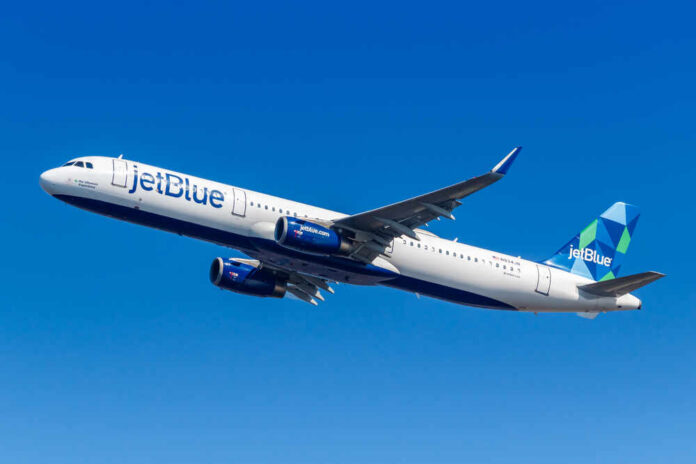
JetBlue just put a name and a date on its first-ever domestic first-class cabin—and it is coming fast.
Story Snapshot
- JetBlue introduced BlueFirst, a new domestic first-class cabin for non-Mint routes.
- Booking opens later this fall; first flights begin later this year.
- Seats use a two-by-two recliner layout with more legroom and deeper recline.
- The move aims to lift revenue while meeting fast-growing premium demand.
JetBlue names BlueFirst and locks in a 2026 rollout
JetBlue announced BlueFirst as its new domestic first-class experience, targeted at routes without the lie-flat Mint cabin. The airline said customers will be able to book BlueFirst later this fall, with first flights starting later this year.
The product is part of JetBlue’s JetForward plan, which focuses on simple shopping, clearer fare choices, and higher-yield seating to support a durable return to profitability. The airline framed BlueFirst as a real upgrade, not a label swap.
BlueFirst slots above Main and Even More Space, and below Mint, which remains the flagship for long routes. The cabin uses a two-by-two recliner layout that adds comfort without the heavy space trade-off of lie-flat pods.
This lets JetBlue offer a first-class seat on many domestic routes at a price point designed to attract both business travelers and families seeking more room. The airline is tying onboard perks and ground priority to make the choice simple.
The seat and service: what flyers can expect onboard
JetBlue detailed that BlueFirst seats will provide up to 7 inches more legroom than Main seats and about 5 inches of recline, arranged in a 2-by-2 layout for an easy in-and-out experience.
The Points Guy reported that standard and flexible BlueFirst fares are expected to include two checked bags, Group 1 boarding, and no change or cancellation fees, which align with the cabin’s “real first” positioning and reduce friction for travelers who value time and predictability. Those inclusions will matter on short work trips and family getaways.
Food and drink will follow a clear set of rules based on time and distance, with meals on longer flights and upgraded snacks and drinks across the board. That approach fits JetBlue’s brand of adding quality where flyers feel it most.
The airline is also pointing to “fresh tech” at the seat and across the cabin, aligning with its reputation for strong connectivity and entertainment. The goal is to win repeat business by making comfort and simplicity feel routine, not rare.
Why JetBlue is moving now: the premium seat wave
United States airlines have been shifting floor space toward premium seating because premium seats earn more and have grown faster than economy since 2020. Reports have shown double-digit increases in premium capacity, while standard economy growth lagged behind.
JetBlue is joining this wave with a product that matches how many Americans actually fly today: often domestic, often nonstop, and often willing to pay a bit more for comfort and control. That is not trend-chasing; it is a structural reset to where the money is.
JetBlue linked BlueFirst to a revenue lift strategy that targets higher revenue per available seat mile and a path back to steady profits after a bumpy era for the industry.
A first-class option on more routes gives JetBlue access to corporate buyers who require a premium cabin code on policy, which can open new accounts and steadier yields.
What changes for flyers on the ground and in the air
Booking will get simpler. JetBlue is pushing a “pick your cabin, then pick your fare” model that lines up choices in plain language: Main, Even More Space, BlueFirst, or Mint, then Base, Standard, or Flex pricing tiers.
That flow removes the guesswork that turns a family search into a puzzle. BlueFirst also comes with curb-to-carousel priority services, which reduce time at the airport and align with the cabin’s value promise for travelers who count minutes as much as inches.
JetBlue is giving domestic first class a major makeover with its new premium experience, "BlueFirst."
The redesigned cabin features extra legroom, 13.3-inch screens, free Wi-Fi and in-seat power, along with seatback ordering and a "Mixologist Mode" that lets passengers create… pic.twitter.com/05VbpDSbxC
— FOX Business (@FoxBusiness) September 3, 2026
Aircraft plans will roll out over time, starting with non-Mint planes, so the airline can fill a big gap on bread-and-butter routes. Some commentators argue that adding first class can squeeze coach seats on certain jets. That trade-off exists across the industry as carriers chase premium revenue.
The big test will be whether BlueFirst brings in enough new spend to support fair prices in the back. If it does, the whole plane wins on reliability, service, and network growth.
Sources:
news.jetblue.com, travelpirates.com, thepointsguy.com, travelandtourworld.com, parade.com