Archaeological discoveries in Jerusalem reveal remarkable evidence of ancient Jewish resistance and faith that continues to validate the biblical narrative conservatives have long defended against historical revisionism.
Story Highlights
- Archaeologists have uncovered the longest continuous stretch of ancient Hasmonean walls protecting Jerusalem from the Hanukkah era.
- Evidence suggests a 2,100-year-old ceasefire agreement required the Jewish king to dismantle defensive fortifications.
- Discovery validates biblical accounts of Jewish resistance to foreign occupation and the temple’s rededication.n
- Recent finds include rare ancient coins called “archaeological Hanukkah miracle” by Israeli researche.rs
Ancient Walls Reveal Jewish Kingdom’s Strength
Archaeologists completed excavation of the most substantial Hasmonean wall foundation ever discovered in Jerusalem, measuring 164 feet long and 16 feet wide.
The fortification surrounded Jerusalem during the Hasmonean Kingdom when Jewish fighters liberated the Temple from foreign occupiers, establishing the foundation for Hanukkah celebrations. These walls originally encircled an area much larger than today’s Old City, featuring 60 watchtowers exceeding 33 feet in height according to ancient writings.
An extraordinary discovery in Jerusalem 🏺✨
One of the longest, most intact Hasmonean city wall segments (2nd century BCE) uncovered by an Israel Antiquities Authority excavation.A people who fortified their ancient capital; who would one day rebuild the modern State of Israel… pic.twitter.com/H0kMgAwt3T
— Israel ישראל (@Israel) December 10, 2025
Evidence Points to Strategic Ceasefire Agreement
Dr. Amit Re’em from the Israel Antiquities Authority discovered the wall was purposefully dismantled to a uniform height rather than destroyed by war or time.
Historical records indicate King John Hyrcanus I struck a deal with Hellenistic King Antiochus VII around 132 B.C. The agreement required the Jewish king to “raze to the ground the Hasmonean fortification” in exchange for ending the siege, demonstrating how ancient powers used strategic concessions to survive overwhelming military pressure.
Archaeological Site Reveals Layers of History
The wall foundation was uncovered beneath the abandoned Kishleh building, constructed in 1830 as a military base and later used as a prison by British forces until the 1940s.
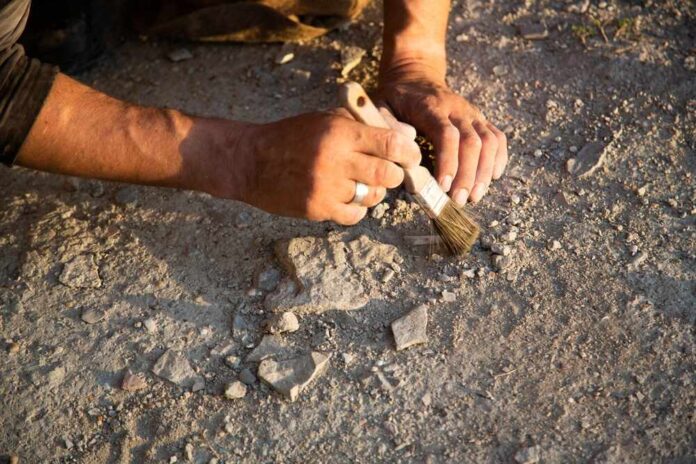
Excavations halted during the Second Intifada violence beginning in 2000 but resumed two years ago. Archaeologists removed by hand debris equivalent to two Olympic-size swimming pools, revealing medieval-era dye pits alongside the ancient fortifications.
Recent Discoveries Support Biblical Accounts
Israeli researchers discovered approximately 160 ancient coins belonging to King Alexander Jannaeus during December 2024 Hanukkah celebrations, calling it an “archaeological Hanukkah miracle.”
The coins, over 2,000 years old, belonged to descendants of Jewish revolt leaders who restored the Temple in Jerusalem. These findings reinforce historical accounts that secular academics have sometimes questioned, providing tangible evidence of Jewish sovereignty and religious dedication in ancient Israel.