Leaving globalists and rivals scrambling as U.S. innovation surges, President Donald Trump’s executive order slashing space industry red tape puts America back in the driver’s seat.
Story Highlights
- Trump’s order streamlines burdensome regulations, making it easier for U.S. space companies to operate and compete globally.
- Federal agencies are now required to eliminate redundant oversight and accelerate environmental reviews for commercial launches.
- The executive order establishes new positions dedicated to commercial space innovation, increasing launch frequency, and job creation.
- States and environmental groups may challenge the reforms, potentially sparking legal battles over federal authority and environmental protection.
Trump’s Deregulatory Push: Breaking Chains on U.S. Space Industry
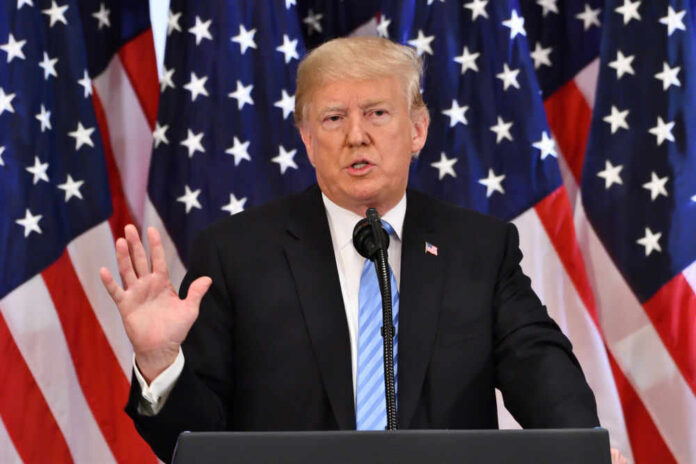
President Trump signed the “Enabling Competition in the Commercial Space Industry” executive order at the White House, surrounded by key officials from NASA and the Department of Transportation.
This bold move mandates that federal agencies coordinate to purge outdated and overlapping regulations that have stifled American space companies for years.
For decades, bureaucratic red tape and environmental review delays have hampered launch schedules and imposed excessive costs, making it nearly impossible for U.S. innovators to compete against heavily subsidized foreign rivals.
The order requires expedited—or in some cases eliminated—environmental reviews for launch and reentry licenses, a long-standing industry complaint.
Agencies like the Federal Aviation Administration and Department of Transportation must now prioritize rapid approval of commercial launches and new space activities, including satellite deployments and orbital refueling.
This deregulatory push aims to foster innovation, boost launch cadence, and cement American leadership in the global space economy by 2030.
Industry giants such as SpaceX and Blue Origin, along with emerging startups, stand to benefit from less government interference and faster access to the commercial marketplace.
Federal Power and State Pushback: Who Controls the Future?
The executive order centralizes authority in Washington, tasking federal agencies to override state-level objections when necessary.
While states with spaceports see economic opportunity, some local governments and environmental groups have criticized the waiver of reviews and possible weakening of oversight.
The Coastal Zone Management Act, often used by states to slow or block spaceport expansion, faces new federal challenges under Trump’s directive. Legal analysts expect courtroom battles as local interests try to defend their regulatory turf against federal streamlining.
Trump’s allies argue that federal leadership is essential to counter China and Europe’s aggressive state-backed space efforts and to prevent America from falling behind on the next frontier.
Federal officials, including DOT Secretary and Acting NASA Administrator Sean Duffy and FAA Administrator Bryan Bedford, have publicly endorsed the executive order.
Duffy emphasized slashing red tape and unleashing American innovation, while Bedford stated the reforms will help the U.S. “dominate commercial space activities.”
Commercial firms are already ramping up investments and launch plans, encouraged by the promise of regulatory certainty and speed.
Critics, however, warn that rapid deregulation may raise safety and environmental risks if oversight is weakened; these concerns are expected to fuel ongoing partisan debate.
Economic Impact and Global Implications
Industry experts predict the order will accelerate permitting, increase launch frequency, and generate a wave of new jobs in engineering, manufacturing, and STEM fields.
The U.S. space sector, already valued in the tens of billions, is poised for explosive growth as companies seize new opportunities. Trump’s deregulatory stance sends a clear message to global competitors: America will lead by enabling rather than restricting innovation.
By setting a precedent for streamlined oversight, the U.S. could influence international standards and intensify the competition for commercial space dominance.
Environmental advocacy groups and some state officials remain on alert, but the White House, NASA, and FAA maintain that the reforms are critical for national security and economic prosperity.
Trump Signs Order to Reduce Regulations in Space Industry | https://t.co/tDnFA8g8E2 https://t.co/ZSIJWGUzzK
— Poppins (@Wertz4Wertz) August 13, 2025
As agencies roll out new regulations and internal reforms, the impact will be closely watched by industry stakeholders, state governments, and legal experts.
The coming months will reveal whether Trump’s order delivers on its promise to make America the world’s commercial space leader or ignites further controversy over federal overreach and environmental stewardship.
Sources:
Fact Sheet: President Donald J. Trump Enables Competition in the Commercial Space Industry
Trump Signs Order to Boost US Space Industry, Streamline Launch Regulations by 2030
Enabling Competition in the Commercial Space Industry
Trump Issues Executive Order on Commercial Space