President Trump raised global tariffs to 15% following a Supreme Court defeat that struck down his sweeping tariff plan, demonstrating his unwavering commitment to aggressive trade policy despite judicial pushback.
Story Snapshot
- Trump announced 15% global tariffs after the Supreme Court invalidated his broader tariff plan on February 20, 2026
- US Trade Representative opens investigations on major trading partners to negotiate better terms
- Businesses have 150-day window to import goods before potential tariff hike impacts consumer prices
Trump Responds to Supreme Court Setback
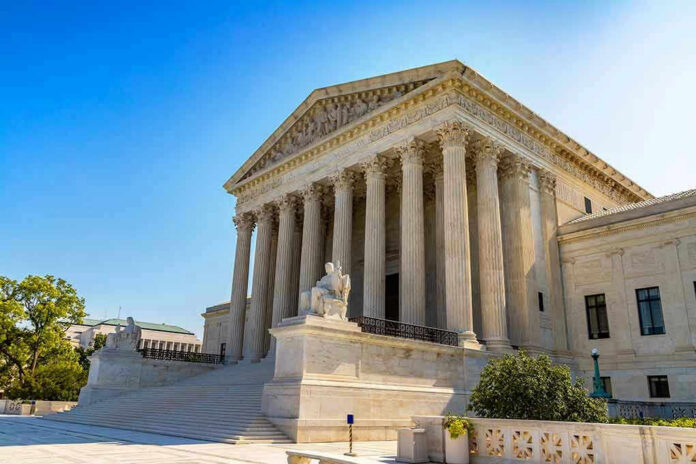
President Trump announced on February 21, 2026, that he would increase global tariffs from 10% to 15%, just one day after the Supreme Court ruled his sweeping tariff plan violated federal law. The rapid response demonstrates the administration’s determination to pursue aggressive trade policy within legal constraints.
The 10% rate became effective February 24, 2026, while the threatened 15% increase carries a July 24, 2026 deadline. This timeline creates a 150-day negotiation window for trading partners facing economic pressure to reach favorable trade agreements with the United States.
Strategic Use of Tariff Threats
US Trade Representative Jason Greer opened investigations on most major trading partners, signaling the administration’s intention to leverage tariff threats for negotiating better trade terms. The approach targets China, Russia, Iran, Cuba, Brazil, EU member states, Japan, South Korea, and other nations.
Matthew Metzcar, business professor at UNC Charlotte, noted businesses can strategically time imports during the current window to secure lower costs. This creates opportunities for companies to import goods from China and other nations at reduced rates before potential increases take effect, temporarily benefiting both businesses and consumers.
BREAKING: Trump raises the global tariff from 10% to 15%, effective immediately.
Says the administration will “determine and issue new and legally permissible tariffs” in the coming months under different legal authority after the Supreme Court struck down IEEPA tariffs… pic.twitter.com/7gAu5eVOTT
— FSMN (@faststocknewss) February 21, 2026
Economic Impact on American Consumers
The tariff structure extends beyond the baseline 10-15% global rate, with automobiles facing 25% tariffs and certain Chinese maritime equipment hit with 100% duties. Steel and aluminum products also face sector-specific rates.
Importers and retailers must adjust pricing strategies to manage increased costs, which will ultimately impact American consumers. While short-term price reductions may occur as businesses pass along current savings, the threatened 15% increase would likely result in higher consumer prices on imported goods across multiple sectors once implemented.
Legal Foundation and Trade Policy Evolution
The administration has employed the International Emergency Economic Powers Act and the National Emergencies Act as legal justifications for tariff actions throughout 2025 and 2026. Executive orders targeted drug trafficking, border security threats, synthetic opioids, Venezuelan oil imports, and reciprocal trade deficits.
The Supreme Court’s February 20, 2026 ruling indicates judicial skepticism about expansive emergency powers, forcing the administration to work within narrower legal parameters. This represents a meaningful check on executive authority that conservatives should welcome, as unchecked presidential power can threaten constitutional balance regardless of who occupies the Oval Office.
Trading partners now face critical decisions about whether to negotiate during the 150-day window or prepare for higher tariff rates. Domestic manufacturers may benefit from reduced foreign competition if the 15% rate takes effect.
The administration argues these measures address longstanding trade imbalances and unfair practices by nations that have exploited American markets. However, the economic efficiency concerns and potential growth slowdown require careful monitoring to ensure American families and businesses aren’t burdened unnecessarily while pursuing fair trade objectives.