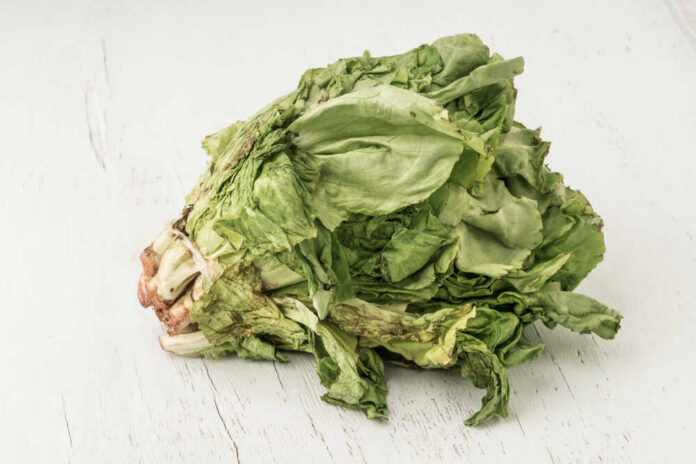
One bag of shredded iceberg lettuce turned fast food into a nationwide parasite problem that now stretches across 15 states.
Story Snapshot
- Federal health officials link a massive cyclospora outbreak to shredded iceberg lettuce served at Taco Bell.
- The Centers for Disease Control and Prevention expanded the outbreak map from a handful of states to 15 as cases mounted.
- The Food and Drug Administration traceback points to Taylor Farms de Mexico and iceberg lettuce grown in central Mexico.
- The episode shows how fragile our food safety system is when fresh produce crosses borders at high speed.
A fast food topping becomes the center of a multistate health crisis
The Centers for Disease Control and Prevention first traced a wave of severe stomach illness to shredded iceberg lettuce used at Taco Bell restaurants in five states.
People in Indiana, Kentucky, Michigan, Ohio, and West Virginia ate their usual tacos and burritos, then landed in clinics with days of diarrhea, stomach pain, and fatigue. Investigators found that nearly all shared one detail in common: they had recently eaten menu items topped with that lettuce blend.
As more people got sick, the investigation widened. The Centers for Disease Control and Prevention and the Food and Drug Administration began working with state health departments to look at every plate, every shift, and every shipment.
They found that the same shredded iceberg lettuce had moved far beyond those first five states. Illnesses appeared in places that never grabbed headlines for foodborne disease, and the pattern kept circling back to that one ingredient.
The outbreak spreads and the investigation follows the lettuce trail
By late July, federal counts showed thousands of laboratory-confirmed Cyclospora infections since May, and officials noted that a large share clustered around lettuce exposure.
The Centers for Disease Control and Prevention outbreak page described a growing multistate problem and warned people not to eat shredded iceberg lettuce at specific Taco Bell locations while the investigation continued.
This was not a vague warning. It named the product, the chain, and the states because the evidence repeatedly pointed to the same supply line.
The CDC says hundreds of people across more than two dozen states have gotten sick in a salmonella outbreak linked to jalapeños. @eschulze reports. pic.twitter.com/S0PP0uze7i
— Good Morning America (@GMA) August 6, 2026
Traceback work then shifted from what people ordered to where the lettuce came from. Food and Drug Administration investigators followed invoices and shipping records from Taco Bell restaurants back to processors and farms.
That trail converged on Taylor Fresh Foods and Taylor Farms de Mexico, which supplied iceberg lettuce grown in central Mexico to many of the affected locations.
Faced with those findings, Taylor Farms de Mexico announced it would voluntarily remove all iceberg lettuce from that region from the United States market. The company said that the farm at issue made up less than one percent of national iceberg supply, yet the damage to public trust was much larger.
Cyclospora, false positives, and why officials still trust the traceback
Cyclospora is a tiny parasite that hides in fresh produce and causes what one television segment bluntly called “explosive diarrhea.” It does not spread person to person, so nearly every case points back to something eaten.
That makes interviews and restaurant histories central to the investigation, especially since tests on leafy greens are technically hard and often come back negative even when people are truly sick. In this outbreak, that scientific reality collided with public demand for simple proof.
The Food and Drug Administration initially reported a positive test for cyclospora in a lettuce sample from Taylor Farms, but later said the finding was a laboratory false positive and retracted it. Critics tried to jump on that reversal as proof that officials had no case. That claim does not hold up well when you look at the data trail.
Even after the false positive, the Food and Drug Administration said the traceback and the “overwhelming epidemiological data” still supported Taylor Farms de Mexico’s voluntary recall and the link to the outbreak.
What this says about imported food, personal responsibility, and government transparency
This outbreak carries a blunt lesson about how much we rely on foreign farms for cheap salad toppings. Iceberg lettuce from Mexico moved into American fast food kitchens with the same ease as a carton of napkins, but the parasite it carried hit families, workers, and kids who had no idea they were part of a giant experiment in global sourcing.
HEALTH ALERT: 15 states now linked to iceberg lettuce cyclospora outbreak, CDC says ➡️ https://t.co/hgeNOUmIzq
— WBKO News (@wbkotv) August 6, 2026
At the same time, the case shows why honest, fast reporting matters. The Centers for Disease Control and Prevention posted clear alerts naming Taco Bell, shredded iceberg lettuce, and the affected states. The Food and Drug Administration explained the false positive and kept the public updated on the traceback and recall.
Sources:
reuters.com, washingtonpost.com, cnn.com, fda.gov, npr.org, facebook.com, youtube.com, cnbc.com, taylorfarms.com