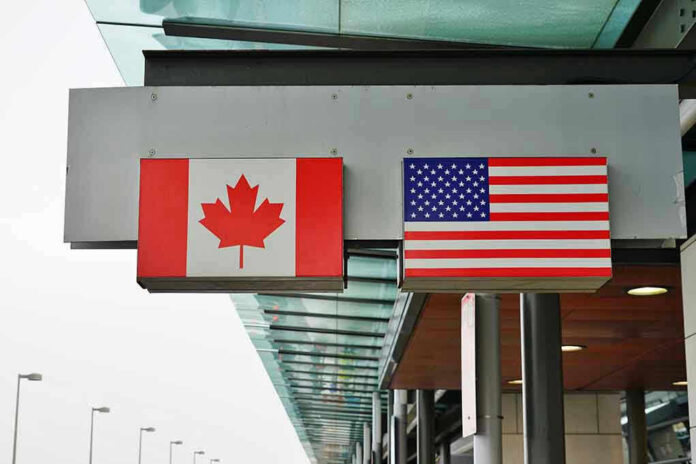
Canada answered President Trump’s tariff surge with a “dollar-for-dollar” counterpunch set to hit key U.S. exports right after Labor Day.
Story Snapshot
- Prime Minister Mark Carney said Canada will match new U.S. tariffs “dollar for dollar.”
- Counter-tariffs target steel, dairy, appliances, farm equipment, pulp and paper, and electronics.
- Measures take effect Sept. 8, after Labor Day, absent a late deal.
- White House says U.S. tariffs answer Canada’s “discriminatory treatment” of American products.
Canada’s Rapid Retaliation And What It Hits
Prime Minister Mark Carney announced that Canada will hit back with matching tariffs on a list of U.S. goods. His message was clear: the response will protect Canadian workers and businesses and mirror Washington’s rates and reach.
Reports list steel, dairy, appliances, agricultural equipment, pulp and paper, and electronics as the first wave of targets. Carney’s team tied the move to the collapse of talks and a firm rejection of a U.S. offer that Ottawa called unacceptable.
Canadian officials said the counter-tariffs will start after Labor Day, with a marked-on-the-calendar date of Sept. 8. That timing gives importers a short window to adjust shipments and invoices. It also creates leverage.
The delay invites one last round of phone calls, but it also signals resolve. Newsrooms across North America reported the same timeline, which reduces any doubt about when the costs start to land on border paperwork and store shelves.
What Triggered The Showdown In Washington
The White House set the stage in July with new tariffs of up to 50 percent on certain Canadian goods. The administration framed the action as a response to Canada’s unfair treatment of American products. The fact sheet laid out the legal and policy basis and put allies and rivals on notice.
Once those duties were posted, a Canadian reply was not a surprise. Ottawa has a long history of counter-tariffs when the United States raises barriers.
Canada hit back with retaliatory tariffs on about $20 billion worth of US annual imports and rolled out aid for businesses and workers, matching Washington's latest duties dollar-for-dollar https://t.co/D3omUwWked pic.twitter.com/kY9Ok9ayqp
— Reuters (@Reuters) August 26, 2026
Trade fights between the United States and Canada follow a familiar script. One side raises tariffs to gain leverage. The other side replies to spread political pain and draw both back to the table.
Economic research on the 2018 episode found those Canadian counter-tariffs raised prices at home but helped send a political signal that kept talks alive. That is the practical trade-off again: accept short-term pain to avoid one-sided rules.
How “Dollar For Dollar” Works In Real Life
“Dollar for dollar” does not mean every item gets the same rate. It means the total hit aims to match the U.S. move. Canada can pick sectors where it has bargaining weight and where buyers have options.
That is why dairy and steel show up, along with appliances and farm gear. Those picks touch swing states, union jobs, and farm counties. The point is pressure, not punishment for its own sake. Ottawa said, in plain terms, it would not take the U.S. offer as written.
Canada announces retaliatory tariffs on U.S. goods starting Sept 8. "Dollar-for-dollar" response to Trump's 50% tariffs. Carney: "Because we were attacked." 📌 Sources: Al Jazeera, Bernama #Canada #US #TradeWar #Tariffs #MarkCarney #SeptentriaNews pic.twitter.com/I4ywondyWT
— Septentria News (@SeptentriaNews) August 26, 2026
Households and small firms will feel it. Tariffs work like a tax at the border. Importers pay first. Some costs get eaten in margins, but many get passed on as higher prices. A family replacing a fridge, a contractor buying steel beams, or a farmer ordering parts could all see price bumps.
Past data showed that pattern during the 2018 fight. The near-term cure for those higher prices is a negotiated deal that drops duties on both sides. That is still on the table if both leaders want it.
The Stakes For Jobs, Prices, And Negotiations
Canada’s move raises the pressure on key U.S. industries while rallying support at home. That can speed a deal if both sides see balanced risk. It can also harden lines if politics reward the stare-down. History shows the two countries usually resolve these standoffs once core sectors feel real costs.
The best path is: target real problems, set clear off-ramps, and avoid blanket measures that punish families and small shops more than they move the needle.
What To Watch Next
Watch for the final Canadian tariff schedule and any carve-outs. Track whether the United States narrows its list or offers time-limited relief. Focus on three flash points: steel supply chains, farm goods that move on tight seasons, and consumer electronics that drive back-to-school sales.
If prices rise fast in those lanes, pressure on both governments will soar. If talks restart, expect each side to claim strength while quietly trading narrow exemptions to cool the heat.
Sources:
youtube.com, cnbc.com, reuters.com, theglobeandmail.com, en.wikipedia.org, mlex.com