
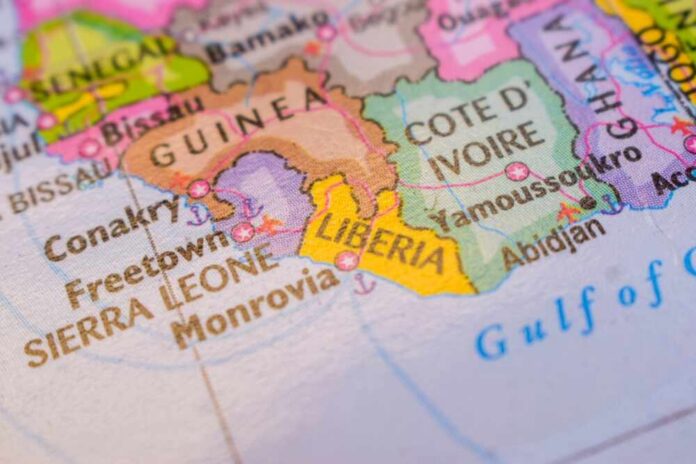
Twenty deportees touched down in Liberia, launching a year-long U.S. plan to send up to 1,200 non-Liberians there under a signed deal.
Story Snapshot
- The first flight carried 20 deportees to Roberts International Airport near Monrovia.
- Liberia agreed to receive up to 1,200 non-Liberians from the United States over 12 months.
- Officials described a screened list, focused on immigration offenses, arriving in phased flights.
- This fits a broader U.S. shift to “third-country removals” across dozens of nations.
What Happened On The Ground In Liberia
U.S. officials carried out the first deportation flight to Liberia under a bilateral arrangement. The plane landed at Roberts International Airport outside Monrovia with 20 people on board. Local media and wire services documented the arrival and the handoff to Liberian authorities.
Government statements in the days before the flight said more groups would follow during the next year as part of a larger intake of up to 1,200 people who are not Liberian nationals. The flight marked the start of that schedule.
The U.S. carries out its first deportation under an agreement for Liberia to accept up to 1,200 people who are not from the West African country, one of the Trump administration’s largest efforts yet to deport people to countries other than their own. https://t.co/ZmawRHYEbl
— NBC News (@NBCNews) August 21, 2026
Liberia’s government framed the operation as an agreed, managed intake. Officials said the list had been screened and that most individuals had immigration violations rather than violent offenses.
Reporters later identified nationalities among the group, including people from Venezuela and Cuba, showing how the transfers target nationalities that Washington struggles to return to their home countries.
The public message in Monrovia focused on order, processing, and the ability to depart Liberia freely after entry requirements were met.
The Deal And Why It Matters
Monrovia announced it would accept up to 1,200 third-country deportees from the United States over the next 12 months. The first group of 20 set the pace for a phased series of flights. For the United States, the pact offers a release valve when home-country returns stall.
For Liberia, it brings diplomatic ties and leverage with Washington, along with pressure to manage people who have no roots in the country. That tension will shape how both sides handle the next flights.
Third-country deportations differ from standard returns to a person’s own nation. They move people to a country with which they have little or no connection.
Nonpartisan trackers define this as a distinct tool in U.S. removal policy and count dozens of agreements pursued by the executive branch in recent years.
Advocacy groups and legal analysts have raised concerns about transparency, safeguards, and monitoring in these deals, which can affect asylum seekers and others with pending protection claims. Supporters argue the practice restores order to a strained system.
The Bigger U.S. Strategy Comes Into Focus
The Liberia flights fit a broader U.S. strategy of using third-country removals to deter unlawful crossings and enforce final removal orders when direct returns face roadblocks.
The U.S. Committee for Refugees and Immigrants cataloged the spread of these agreements and described how they operate as a network rather than one-off exceptions.
US carries out its first deportations under pact for Liberia to accept 1,200 non-Liberians
Source: https://t.co/ij7fPRhYpp https://t.co/IVp9ss922j— zim!! (@1nv4d3r_z1m) August 22, 2026
The Liberia pact met a written government-to-government threshold, the debut flight ran under agency control, and it targets people already ordered removed.
Oversight still matters. Clear screening, humane transport, and firm follow-up should be non-negotiable. Liberia’s statements about screening and free onward movement set an early marker to watch.
Sources:
apnews.com, npr.org, reuters.com, semafor.com, rfi.fr