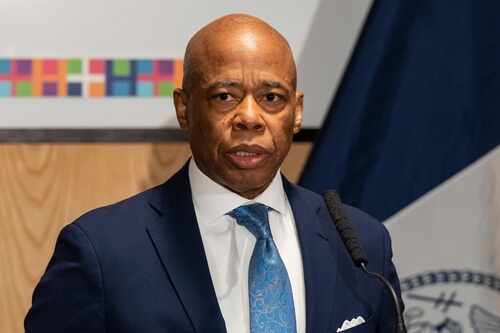
President Donald Trump’s DOJ has taken a decisive stand against New York City Mayor Eric Adams and his sanctuary city policies, thrusting the embattled mayor into yet another legal storm.
At a Glance
- The DOJ, under Trump, filed a lawsuit against Mayor Eric Adams over NYC’s sanctuary city policies.
- Adams has faced a tumultuous tenure marked by scandals and federal investigations.
- The lawsuit underscores the tension between federal immigration enforcement and local governance.
- Adams, despite controversies, remains defiant and plans to seek reelection.
Trump’s DOJ Takes Action Against Adams
In a move that has sent shockwaves through the political landscape, the Department of Justice, now under the leadership of the Trump administration, has filed a lawsuit against New York City Mayor Eric Adams.
This legal action targets Adams’s sanctuary city policies, which have long placed him at odds with federal immigration enforcement.
The lawsuit highlights the ongoing clash between local governance and federal authority, as the Trump administration seeks to hold jurisdictions accountable for policies that prioritize illegal immigrants over law-abiding citizens.
Trump's DOJ Smacks New York City Mayor Eric Adams With Lawsuit Over Sanctuary City Policieshttps://t.co/f8tkLvpKYK
— RedState (@RedState) July 25, 2025
Eric Adams, once hailed as a moderate Democrat with a law-and-order platform, has seen his administration become embroiled in a series of scandals and federal investigations.
His initial promises to restore stability after Bill de Blasio’s controversial tenure have been overshadowed by allegations of corruption and mismanagement.
The DOJ’s recent lawsuit adds another layer of complexity to Adams’ embattled tenure, as he continues to face scrutiny from both the public and federal authorities.
Adams in the Eye of the Storm
Federal investigations into Adams’ administration have been ongoing since 2023, focusing on alleged illegal foreign donations and potential quid pro quo arrangements involving city contracts.
The scandal has led to high-level resignations and arrests within his administration, further eroding public trust. Despite these challenges, Adams has maintained his innocence and refused to step aside, framing the investigations as politically motivated attacks.
The DOJ’s recent lawsuit against Adams is a continuation of the Trump administration’s efforts to enforce federal immigration laws.
The lawsuit specifically targets New York City’s sanctuary city policies, which critics argue provide safe havens for illegal immigrants at the expense of public safety and the rule of law.
This legal battle is set against the backdrop of a polarized national political climate, with Adams’ case intersecting with the 2024 presidential election and Trump’s return to the White House.
The Fallout and Political Ramifications
The dismissal of charges against Adams, ordered by the DOJ earlier this year, has not quelled the controversy surrounding his administration.
The decision sparked a mass resignation of senior federal prosecutors and drew criticism for alleged political interference.
Judge Dale Ho’s dismissal of the case with prejudice effectively ended legal proceedings against Adams, but the political fallout continues to reverberate through New York City.
Adams has declared vindication and announced his intention to seek reelection, despite the swirling allegations and legal battles. His defiance has rallied some supporters who view the investigations as overreach by federal authorities.
However, the DOJ’s lawsuit over sanctuary city policies could further complicate Adams’ political future, as he faces a deadline to enter the Democratic primary for mayor.
Implications for New York City and Beyond
The lawsuit and ongoing controversies have significant implications for New York City’s governance and the broader national debate over immigration policy.
In the short term, the legal battles contribute to political instability and uncertainty over city leadership.
In the long term, the case sets a precedent for federal intervention in local governance, potentially chilling future prosecutions of public officials and raising questions about the balance of power between federal and local authorities.
The economic, social, and political impacts of these developments are far-reaching. City projects and contracts may face delays due to administrative upheaval, while public cynicism about political accountability and justice is likely to increase.
As the legal and political saga unfolds, New Yorkers and the nation will be watching closely to see how these events shape the future of one of America’s most iconic cities.