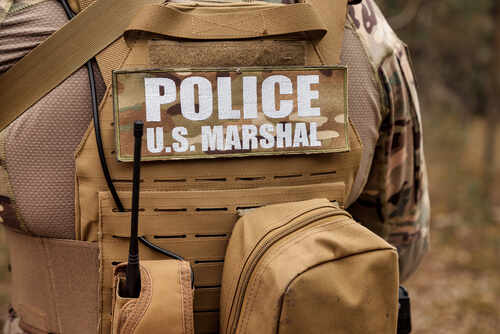
A deputy United States Marshal walked up to a quiet Louisiana home to serve a warrant, and within seconds, gunfire turned that routine task into a federal murder case.
Story Snapshot
- A deputy United States Marshal was shot and killed serving a fugitive arrest warrant in Alexandria, Louisiana.
- Federal Bureau of Investigation (FBI) agents now treat the case as an assault on a federal officer, a serious federal crime.
- The government confirms the death and custody, but withholds names, warrant details, and video.
What Happened On Rutland Road
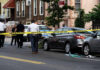
On a Monday afternoon around 3 p.m., a United States Marshals Service fugitive task force moved into the Rutland Road area of Alexandria, Louisiana, to arrest a wanted man.
Rapides Parish sheriff’s detectives joined them at a home near the Moor Road intersection, turning that small stretch of neighborhood into a high risk arrest scene. Officers came to the house to serve an arrest warrant on a fugitive, a task these teams perform every week across the country.
Federal authorities say that as officers approached and tried to make the arrest, the suspect opened fire and shot a deputy United States Marshal.
Neighbors reported hearing gunshots within seconds of law enforcement getting to the home, suggesting there was almost no time for long talks or slow negotiations before bullets started flying. The deputy was struck and later died from the wounds, and the United States Marshals Service publicly confirmed the death in a statement that same day.
A Standoff, Injured Suspect, And A Federal Case
After the shooting, the suspect did not surrender right away. Rapides Parish officials describe a standoff with local, state, and federal officers who now had a fallen deputy on the ground and an armed suspect refusing to come out.
Reports differ on how long the standoff lasted, with some calling it “lengthy” and others putting it near three hours, a gap that hints at early confusion or poor public communication.
The U.S. Marshals Service confirms a Deputy U.S. Marshal was shot and killed today while serving an arrest warrant on a fugitive in Alexandria, La. The suspect is in custody. Rapides Parish Sheriff’s Office and the FBI are investigating. pic.twitter.com/4tDNbtyRN1
— U.S. Marshals Service (@USMarshalsHQ) July 14, 2026
Eventually, police moved in and took the suspect into custody. Authorities say he was injured during the incident and then transported to a local hospital for treatment. The suspect survived, which means a federal courtroom will likely become the next battleground in this story.
The FBI’s New Orleans office has already labeled the case “an assault on a federal officer,” a strong legal frame that points directly toward serious federal charges and long prison time if a jury convicts.
What We Know, What We Do Not, And Why It Matters
The United States Marshals Service confirms that one of its deputies from the Western District of Louisiana was shot and killed while serving a fugitive arrest warrant, and that the suspect is now in custody.
The Rapides Parish Sheriff’s Office joined Louisiana State Police and the Alexandria Police Department at the scene, and they now share investigative duties with the FBI, which leads the federal side of the case. On paper, that looks like a full house of law enforcement oversight.
Yet for the public, the picture is still cloudy. Officials have not released the deputy’s name or the suspect’s name. They have not revealed the underlying charges in the warrant, so ordinary citizens cannot see whether this fugitive was wanted for violent crimes or something less serious.
No body camera video has been released, no forensic ballistics report is public, and officials have not walked through a detailed timeline that explains each decision during the standoff.
The Bigger Pattern Behind One Dead Marshal
This tragedy fits a long, bloody line in United States Marshals Service history. The service’s own roll call of honor stretches back to 1794, when Robert Forsyth, a United States Marshal in Georgia, was shot and killed while serving civil papers.
Nearly 300 marshals and deputies have died in the line of duty over the years, many during attempts to arrest dangerous people who refuse to go quietly. In recent decades, several deputies have been killed in similar warrant services in Louisiana and other states.
🔴 U.S. Marshal killed serving arrest warrant in Louisiana; suspect in custody
A deputy U.S. Marshal was shot and killed Monday while serving an arrest warrant on a fugitive in Alexandria, Louisiana, approximately 95 miles northwest of Baton Rouge. The shooting occurred at about… pic.twitter.com/d9oPaE2wt0
— NewsTongue (@NewsTongueX) July 14, 2026
Independent reporting has raised a harder question that matters here. Investigations by groups like The Marshall Project describe United States marshals acting like local police, but with more shootings and less outside accountability.
Between 2015 and 2020, at least five marshals and task force members were killed while trying to make arrests, yet suspects and bystanders also died in marshal-involved shootings that drew little public review. That record creates a tension for those who back law and order but also demand limited government power and real transparency.
Accountability, Community, And Common Sense
For many Americans, especially on the right, two truths can exist at once. First, shooting a federal officer during an arrest is a grave crime that deserves a tough, swift response.
Second, the government still owes the public clear facts, not just slogans, when a man dies in a hail of bullets on a quiet street. Common sense says we respect the badge but also watch the state, especially when agencies with guns guard their own records.
Local voices already hint at a possible clash. Some neighbors and community members describe the suspect as a “good man,” not someone they saw as violent or dangerous.
That does not erase the claim that he shot a marshal, but it does mean people who knew him may doubt an easy villain label. Without names, video, or a released warrant, those doubts sit in the dark, where conspiracy theories grow faster than facts.
What Should Come Next
Real trust does not come from press releases. It comes from evidence. If the official story is solid, full disclosure should back it up. That means releasing the deputy’s name and record once family notifications are complete, sharing the suspect’s identity and warrant details, and later opening body camera and forensic findings once the case moves through court.
Freedom of Information Act tools exist for a reason. Citizens should not need special access to learn basic facts when a public officer dies in public service.
High-risk fugitive operations will never be safe. Deputies will keep knocking on doors where dangerous people might shoot first. But in a free country, deadly force by and against government agents must always answer to more than internal memos.
If we ask young men and women to wear a star and risk their lives on our streets, we owe them not just honor when they fall, but honest scrutiny of every shot fired in their name.
Sources:
thegatewaypundit.com, abcnews.com, cbsnews.com, audacy.com, backstoppers.org, wtkr.com, facebook.com, en.wikipedia.org, police1.com