A 43-year-old security guard spent 8 days buried alive under a collapsed shopping mall in Venezuela — and teams from 7 countries worked more than 100 hours to bring him out breathing.
Story Snapshot
- Hernan Alberto Gil Flores survived 8 days under rubble after twin 7.2 and 7.5 magnitude earthquakes struck Venezuela in late June 2026.
- His small security booth in the mall basement created an air pocket that kept him alive until rescuers reached him.
- Teams from Chile, the United States, Portugal, Mexico, Costa Rica, El Salvador, and Venezuela worked together to pull him out.
- Gil Flores emerged conscious, able to move his arm, and was transferred to a medical facility in good condition.
The Quakes That Brought a Nation to Its Knees
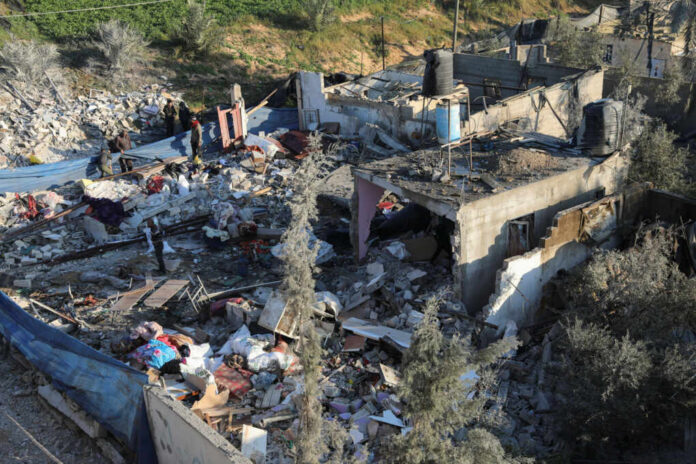
On June 24, 2026, two massive earthquakes — measuring 7.2 and 7.5 in magnitude — ripped through Venezuela in rapid succession. The Galerias Playa Grande shopping center in La Guaira collapsed entirely. Gil Flores was on duty in the basement when the building came down around him.
More than 2,000 people died in the disaster. Tens of thousands more went missing. The scale of destruction was staggering, and the odds of finding anyone alive after the first 48 hours dropped fast.
A security guard was pulled out of the rubble alive on Thursday, more than one week after twin earthquakes devastated Venezuela. Rescuers first made contact with the man four days ago and fed him through a syringe as they worked tirelessly to free him. @CamiloReports has more… pic.twitter.com/T5BUhH9DNl
— CBS Evening News with Tony Dokoupil (@CBSEveningNews) July 3, 2026
Why the Security Booth Made All the Difference
Survival under rubble is not random. Experts call it a “survivable void space” — a small, stable pocket that keeps debris off the body and preserves airflow. For Gil Flores, that pocket was the compact security cabin where he was stationed.
The booth held firm as the floors above collapsed, shielding him from crushing weight and keeping enough air around him to breathe. Geophysicist Victor Tsai of Brown University has described this exact scenario: a sturdy structure nearby acts like a tent over the trapped person.
Staying still also worked in his favor. People trapped under rubble burn far fewer calories and lose far less water when they remain motionless. That single biological fact extends survival time well beyond what most people expect.
Medical research confirms that survivors have been pulled from earthquake rubble as late as 13 to 14 days after collapse. Eight days is extraordinary — but it is not outside the boundaries of what the human body can endure under the right conditions.
A 100-Hour Mission Across Seven Nations
Rescuers did not just wait and hope. Chile’s fire brigade led a coordinated urban search-and-rescue mission, working alongside specialized teams from the United States, Portugal, Mexico, Costa Rica, El Salvador, and Venezuela. The operation stretched more than 100 hours.
Teams used a telescopic camera to communicate directly with Gil Flores. They fed him water through a hose and inserted a tube through the rubble to deliver oxygen. The rescue was a technical achievement as much as it was a human one.
The Moment He Came Out Alive
When rescuers finally reached him on Thursday, July 3, Gil Flores was conscious and able to move his arm. He was transferred immediately to a medical facility and described as being in good condition. The moment was captured on video and spread rapidly across the world.
One detail from the rescue stood out to many: before workers began the final extraction, he reportedly asked them not to tell his wife what was happening — so as not to worry her until he was safely out.
Miracle Rescue: Venezuelan Security Guard Pulled Alive After Eight Days Beneath Earthquake Rubble https://t.co/IVOqFh6JM9 #News
— The Right News, Right Now. (@BradPorcellato) July 6, 2026
A Remarkable Rescue Set Against a Grim Backdrop
The rescue of Gil Flores was real and it was remarkable. But it unfolded inside a catastrophe that the broader world has not fully reckoned with. Over 2,000 confirmed dead.
More than 50,000 people still missing. Reports emerged that fuel shortages left heavy rescue machinery sitting idle, despite Venezuela sitting atop the world’s largest oil reserves.
Critics noted that humanitarian funding had been pulled back in the year before the disaster, leaving emergency systems thin when they were needed most. The rescue of one man is worth celebrating. The full picture demands more than that.
What This Story Actually Proves
Calling this a miracle is emotionally satisfying, but it undersells what actually happened. Seven nations set aside political differences — El Salvador sent specialists despite known tensions with Venezuela’s government — and executed a disciplined, high-stakes technical operation. That is not luck.
That is preparation, coordination, and will. The “miracle” framing makes for better headlines. The operational reality makes for a better lesson: when trained teams from free nations work together, they pull people out alive who should not be alive. That is worth remembering long after the news cycle moves on.
Sources:
apnews.com, christianpost.com, timesofindia.indiatimes.com, instagram.com, news.un.org, youtube.com