A 60-year-old hiker walked into the granite maze above Lake Tahoe with a water bottle and a plan—and vanished into a search that tells you a lot about modern America’s limits, not just its wilderness.
Story Snapshot
- Jason Coughran disappeared after a solo trek from Fallen Leaf Lake into Desolation Wilderness, last heard from May 25.
- Local deputies, state emergency officials, air crews, drones, dogs, and nearly 200 searchers have combed thousands of rugged mountain acres.[1]
- The search shows how fast agencies can mobilize—and how thin the line is between “prepared” and “exposed” in real backcountry.[1][3]
- Conservative common sense questions how a fit, experienced 60-year-old ends up alone, lightly equipped, and effectively off the grid.[3]
A solo hike into a granite trap
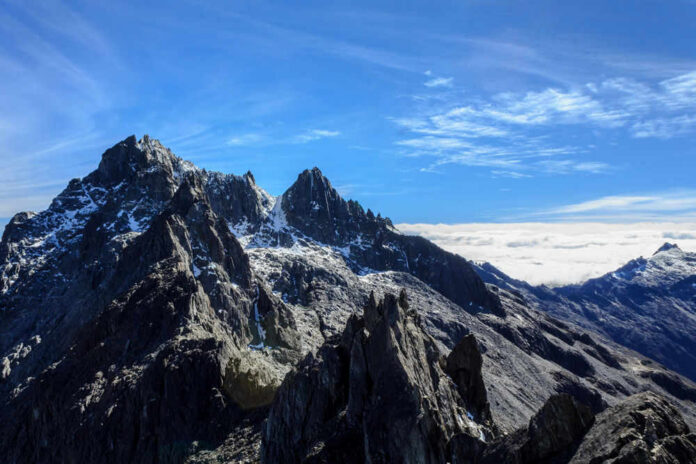
Jason Coughran left the trailhead at Fallen Leaf Lake for a solo hike into Desolation Wilderness, a brutally beautiful basin of granite slabs, lakes, and steep, broken ridges southwest of Lake Tahoe.[1]
Authorities say the 60-year-old, six-foot-two, 150-pound hiker was last believed to be near Angora Peak around 11 a.m. that Monday and was last heard from around 4 p.m. the same day.[3] After that contact, the line goes dead, and the story becomes everyone else’s problem.
Desperate search for missing hiker after 60-year-old vanishes into the wilderness near Lake Tahoe https://t.co/dcKxphdm1h
— Daily Mail (@DailyMail) May 31, 2026
El Dorado County Sheriff’s Office launched a search-and-rescue response as an overdue hiker case and quickly escalated it when Coughran failed to return or make further contact.[3]
Deputies and volunteer teams pushed into steep canyons, dense forest, and rock fields where one bad step can break an ankle and one wrong turn can hide you from the world.
From local callout to large-scale search
As the first 24 to 48 hours passed without success, the operation expanded sharply.[1] Reports describe nearly 200 personnel—county search-and-rescue volunteers, neighboring sheriff’s teams from Douglas and Alpine counties, specialized dog units, and mutual-aid crews from across California—deployed into the Desolation Wilderness search box.
California’s Office of Emergency Services joined the effort, bringing coordination, air assets, and more specialized support to what had become a full-scale rescue mission.[1]
Search managers carved the wilderness into sectors around Fallen Leaf Lake, Angora Peak, and interior basins such as Half Moon Lake and Gilmore Lake, matching likely routes and terrain traps to methodical grid sweeps.[1]
Aircrews flew overhead while ground teams followed ridgelines, creek drainages, and unofficial use paths where an experienced hiker might travel.[1][3]
One television report cited more than three thousand miles of terrain covered when you add up every rescuer’s tracked path—an enormous effort condensed into a handful of map squares.[1]
What the case reveals about risk, responsibility, and reality
Media outlets repeat the same tight set of facts: solo trek from Fallen Leaf Lake; last seen near Angora Peak; last heard from around 4 p.m.; athletic 60-year-old; shorts and a light shirt; a water bottle; no mention of overnight gear or a locator beacon.[3]
That pattern fits what often happens in missing-person coverage: early details come almost entirely from law enforcement briefings, while crucial operational and personal context stays offstage. The public sees the search, not the decisions that made it necessary.
Search intensifies for missing hiker Jason Coughran in Desolation Wilderness; nearly 200 personnel join rescue efforts. https://t.co/bGzxgzNahs
— NEWSRADIO 630 WLAP (@630WLAP) June 2, 2026
The tension is clear. On one side, hundreds of citizens and public servants drop everything to look for one man in a harsh country—an impressive display of community responsibility and institutional capacity.[1]
On the other side, the same story highlights a culture where individual choices can quietly assume that someone else will mobilize massive resources when things go wrong, even in terrain where rescue is never guaranteed and sometimes not possible in time.[1][3]
Why wilderness still humbles modern systems
Technology, budgets, and training have never been better for search-and-rescue teams, yet Desolation Wilderness shows how mountains still set the terms.[1][3]
Steep slopes block radio signals; forests swallow thermal signatures; granite slabs bounce sound and confuse orientation even for people who know the trails.
One slip off-route, a sudden whiteout, or a minor medical event can turn a routine hike into a life-threatening emergency long before anyone realizes something is wrong.[3]
Authorities emphasize that the search for Coughran remains active, even as they scale back from the peak weekend surge to smaller teams targeting specific high-probability areas.[1][3]
That operational shift is logistical, not emotional; crews cannot keep two hundred people in the field indefinitely without burning them out or degrading effectiveness.[1]
The uncomfortable truth is that some wilderness searches end not with answers, but with a file that says “remains unaccounted for”—a phrase that should sharpen how seriously older, fit, confident hikers treat both their limits and their preparations.[3]
Sources:
[1] Web – Search ongoing for 60-year-old hiker missing for over a week in Lake …
[3] YouTube – Search for missing hiker Jason Coughran continues in El Dorado …