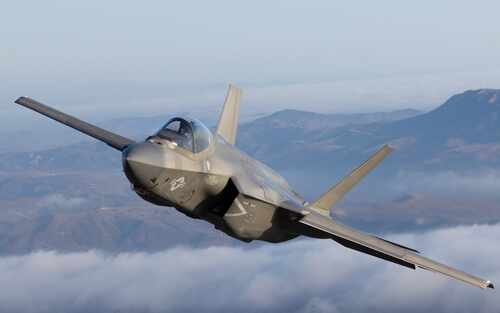
A $100 million Navy F-35C fighter jet exploded into flames in a California field, but what investigators discovered about this crash could shake confidence in America’s most expensive military program.
At a Glance
- Navy F-35C Lightning II crashed near NAS Lemoore on July 30, 2025, with the pilot ejecting safely.
- This marks the second F-35 crash in the U.S. this year, raising questions about the program’s reliability.
- The $100 million loss occurred during operations with VFA-125 “Rough Raiders” training squadron.
- Emergency responders contained the resulting grass fire within two hours of the crash.
- Investigation ongoing with no preliminary findings released about the cause.
When America’s Most Advanced Fighter Becomes a Fireball
At 6:30 PM on July 30th, what started as a routine training flight near Naval Air Station Lemoore turned into every pilot’s nightmare scenario. The Navy’s most sophisticated fighter jet, an F-35C Lightning II, suddenly plummeted toward the California countryside. In those terrifying seconds before impact, one thing worked perfectly: the ejection seat that saved a pilot’s life.
The massive fireball that erupted when 15 tons of cutting-edge military hardware met the earth created more than just smoke and flames.
It ignited fresh concerns about whether America’s most expensive weapons program can deliver on its trillion-dollar promises. This wasn’t just any fighter jet going down—it was a technological marvel that cost more than most people will earn in several lifetimes.
The Troubling Pattern Nobody Wants to Discuss
Here’s what should make every taxpayer’s blood run cold: this represents the second F-35 crash on American soil in 2025 alone. Back in January, an Air Force F-35A went down at Eielson Air Force Base in Alaska, with that pilot also ejecting safely. Two crashes in seven months isn’t exactly the reliability record you’d expect from the world’s most advanced fighter program.
The F-35C involved in this latest mishap belonged to Strike Fighter Squadron 125, known as the “Rough Raiders.” These aren’t rookie pilots learning to fly—VFA-125 serves as the Navy’s Fleet Replacement Squadron, responsible for training the elite aviators who will take these jets into combat. When your training squadron starts losing aircraft, it raises uncomfortable questions about what’s happening in actual operational units.
Why This Crash Could Ground International Confidence
The timing couldn’t be worse for Lockheed Martin and the Pentagon. International partners who’ve invested billions in the F-35 program are watching every incident with microscopic attention. Countries like the United Kingdom, Italy, and Australia have bet their air superiority on this single platform, and each crash chips away at their confidence in that decision.
NAS Lemoore isn’t just any Navy base—it’s the service’s largest Master Jet Base and the primary hub for F-35C operations. When crashes happen at your flagship facility, it sends ripples through the entire program. The fact that emergency responders managed to contain the resulting grass fire by 8:32 PM demonstrates their preparedness, but it also highlights how routine these emergency responses have become.
The Investigation That Could Change Everything
Right now, investigators are combing through the wreckage, looking for clues about what caused this $100 million disaster. The Navy’s official statement remains frustratingly vague: “The pilot successfully ejected and is safe. There are no additional affected personnel.” What they’re not saying speaks volumes about the complexity of determining what went wrong with such an advanced aircraft.
The F-35’s computer systems generate massive amounts of data during every flight, which should theoretically make crash investigations straightforward.
However, previous F-35 incidents have revealed that the aircraft’s complexity can actually complicate rather than simplify the investigation process. Multiple interconnected systems mean multiple potential failure points, each requiring extensive analysis to rule out or confirm as contributing factors.