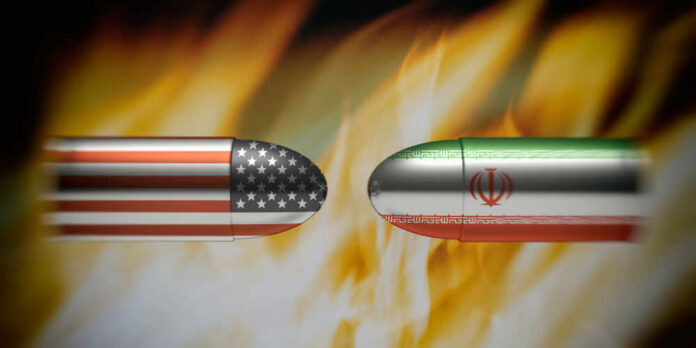
The Pentagon says Iran’s Islamic Revolutionary Guard Corps killed two Americans in Jordan—and the U.S. is hitting back fast.
Story Snapshot
- U.S. Central Command said two troops were killed and one is missing after a July 17 attack in Jordan.
- Iran’s Islamic Revolutionary Guard Corps claimed missile and drone strikes on U.S. targets, including in Jordan.
- U.S. forces launched new airstrikes to punish the units tied to the attack and degrade their weapons.
- Escalation risks are high as both sides trade strikes across multiple sites in the region.
What Happened And Why It Mattered In Minutes
U.S. Central Command reported that two American service members died and one remains missing after Iranian missile and drone strikes hit U.S. and partner forces in Jordan on July 17. The deaths marked a clear red line. Within hours and then days, the U.S. military struck back.
The Pentagon said the strikes aimed to punish the Islamic Revolutionary Guard Corps units behind the attack and to sap Iran’s ability to launch more missiles and drones. The message was speed and certainty, not ambiguity.
The Islamic Revolutionary Guard Corps publicly claimed responsibility for multiple attacks on U.S. bases, including in Jordan, framing them as payback for earlier U.S. strikes. Those claims met the U.S. timeline of rapid attribution and a swift answer. This tit-for-tat is not new.
It tracks a pattern where the Islamic Revolutionary Guard Corps signals resolve, and the United States seeks to deter the next strike by imposing real costs. Each side believes it must act or invite more violence.
How The U.S. Hit Back And What Was Targeted
The U.S. campaign focused on the Islamic Revolutionary Guard Corps units and support hubs believed to enable the Jordan strike. Central Command described targets such as coastal surveillance, air defenses, and storage sites for missiles and drones. U.S. planners called the strikes a “swift punishment” designed to blunt near-term threats and raise the price of firing on Americans.
This approach favors precision against nodes that feed the Islamic Revolutionary Guard Corps’ missile-and-drone machine, not broad attacks that risk a wider war.
Officials also said the strikes continued over multiple nights to keep pressure on the Islamic Revolutionary Guard Corps command chain. That cadence matters. One night can be dismissed as a warning. A sustained tempo signals endurance.
It also buys time to protect bases, adjust defenses, and ready follow-on options. The U.S. wants the Islamic Revolutionary Guard Corps to ask, “Is the next launch worth what comes next?” Deterrence works best when that answer is “no” without needing new proof each time.
Escalation Risks And The Deterrence Math
Regional risk rose as Iran and its forces struck at U.S. partners while the U.S. hit Iranian military sites across several areas. The danger sits in the math of retaliation. The Islamic Revolutionary Guard Corps gains status at home and with proxies by hitting U.S. assets and showing reach.
The United States must protect troops and shipping, and it earns credibility by punishing attackers. Both can claim self-defense. Both can misread the other’s red lines. The ladder has many rungs and few exits.
US Suffers Heavy Casualties and Losses in Iranian Attacks
US Confirms 2 Soldiers Killed, 4 Wounded, One Missing in Jordan; American Media Claims Several Helicopters Also Destroyed
The US military has announced that it has completed the eighth night of airstrikes on Iran. The… pic.twitter.com/4LhTnLsOr2— Voice of Germany (@NewsVOG) July 20, 2026
American values point to clear lines: defend troops, keep promises to partners, and maintain freedom of navigation. On the public record, the U.S. cited its dead and missing as cause to strike the Islamic Revolutionary Guard Corps units tied to the attack.
That aligns with common sense: if an adversary kills Americans and says it will do it again, you remove the tools and the teams that make it possible. The alternative invites more coffins and more chaos.
What To Watch Next
First, watch whether the U.S. keeps hitting Islamic Revolutionary Guard Corps enabling sites, like launch crews, storage depots, and command nodes. Second, watch Islamic Revolutionary Guard Corps statements and follow-on fire patterns.
Do they shift to lower-cost harassment or pause to regroup? Third, track U.S. base defenses in Jordan and across the Gulf. More air defense layers and dispersion can cut the effect of drones and missiles. Fourth, watch for channels that cool tempers without rewarding attacks.
Sources:
apnews.com, irishtimes.com, en.mehrnews.com, caliber.az, timesofisrael.com, reuters.com