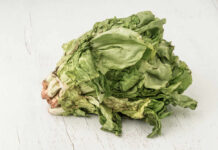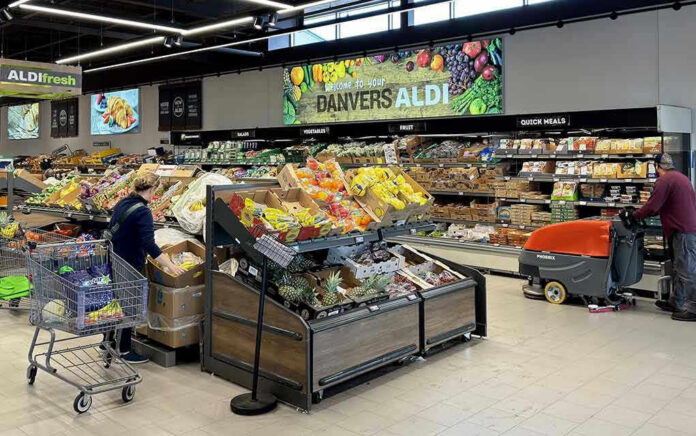
The salad on your plate just triggered the biggest food fight yet between public health caution and corporate risk.
Story Snapshot
- Sysco, America’s biggest food distributor, stopped buying iceberg lettuce from Mexico after a parasite outbreak was tied to two deaths in Michigan.
- Federal investigators linked the outbreak to iceberg lettuce from Taylor Farms operations in central Mexico, even without a single confirmed contaminated product sample.
- Taylor Farms voluntarily recalled Mexican iceberg lettuce, and major buyers like Walmart and Taco Bell pulled products and changed menus.
- The case exposes how regulators and corporations can reshape the food supply overnight, long before courtroom-level proof exists.
Sysco slams the brakes on Mexican lettuce
Sysco is not a household name, but it feeds much of America’s restaurants, hospitals, and stadiums. When its chief executive Kevin Hourican says the company is done buying iceberg lettuce from Mexico, that decision ripples straight onto millions of plates. He told reporters Sysco is “not buying iceberg lettuce from them, and we’re not buying it from Mexico,” after federal officials tied a cyclosporiasis outbreak to the product.
The move is not symbolic. Sysco had already stopped selling and distributing the implicated lettuce weeks earlier and voluntarily recalled affected products even before Taylor Farms announced its own recall.
Sysco then shifted iceberg lettuce sourcing to United States growers and said it was able to meet demand by diversifying where it buys from. That is a textbook example of how a single investigation can reset global supply chains in days when a major distributor acts first.
How a parasite turned taco lettuce into a national crisis
The illness at the center of this story is cyclosporiasis, caused by the Cyclospora parasite. It triggers severe diarrhea, stomach pain, nausea, fatigue, and weight loss. In this outbreak, Michigan officials reported more than eleven thousand lab-confirmed cases in the state and linked two recent deaths to the wider wave of infections.
Federal investigators traced the largest cluster to shredded iceberg lettuce served at Taco Bell restaurants and sourced from Taylor Farms operations in central Mexico.
America’s biggest parasite outbreak forces food giant to ditch Mexican lettuce https://t.co/jK2FlS5fWc
— The Right News, Right Now. (@BradPorcellato) August 5, 2026
The United States Food and Drug Administration said its traceback work found a link between the outbreak and iceberg lettuce supplied by Taylor Farms to Taco Bell in nine states. That tracing relied on shipping records, purchase orders, and patient interviews, not a smoking gun sample.
Regulators still warn that other potential sources may exist and have not ruled out other produce. Yet the statistical pattern and distribution chain all point back to that Mexico-grown iceberg lettuce.
Recalls, false positives, and the fog of food-safety war
Taylor Farms responded by voluntarily recalling all iceberg lettuce grown in central Mexico that was identified as a potential source of one of the Cyclospora outbreaks.
The recall covered Marketside-branded bagged salads sold at Walmart and products shipped to major food service distributors, including Sysco, in twenty-seven states.
Walmart removed affected bagged iceberg salad products “out of an abundance of caution” and said no confirmed illnesses were tied directly to those bags.
The science did not stay simple. At one point, a shredded iceberg lettuce sample connected to Taylor Farms tested positive for Cyclospora, only for the government to later call that a false positive and reverse the specific finding.
Even after that reversal, the Food and Drug Administration kept the recall in place and said the false result did not change its broader traceback conclusion that Mexican iceberg lettuce remained the likely source.
When precaution trumps proof, who carries the cost?
Side B of this dispute leans on a simple point: as of late July, officials admitted they had no confirmed positive Cyclospora product samples tied to the outbreak.
From a strict evidence view, that matters. No retained-sample audit, no lot-level product test, no warehouse swab has yet proven that a specific bag of lettuce carried the parasite. The official case rests on epidemiology and traceback rather than a tested, contaminated batch.
Sysco, the nation's largest food distributor, will stop buying iceberg lettuce from Mexico as federal health officials investigate a multistate cyclosporiasis outbreak linked to the product, the company's CEO said Tuesday. https://t.co/llIeHRhVtW
— FOX 5 DC (@fox5dc) August 5, 2026
Yet regulators and big distributors are not judges. They make decisions under pressure, not on trial timelines. With thousands sick and deaths reported, the Food and Drug Administration and Centers for Disease Control and Prevention followed the “better safe than sorry” playbook. Sysco did the same, pulling Mexican lettuce and shifting supply.
A wake-up call for anyone who eats “fresh and healthy”
Most Americans think of salad as the safe choice. This outbreak shows how fragile that trust can be. A single link in a complex chain—farms in central Mexico, a processing plant in Guanajuato, bags shipped to fast-food chains and hospitals—can fail, and the shock hits everyone from Walmart shoppers to taco fans.
Consumers never see the spreadsheets and shipping manifests; they just see another recall notice and a headline about human waste and parasites in the food supply.
There are reasonable lessons here. First, fresh produce from complex global networks will never be risk-free. Second, early outbreak investigations often move faster than the lab can, and that means recalls may be based on best-guess tracing.
Third, once media and regulators lock onto a single culprit, that narrative can harden in public memory even if later details show a more mixed picture.
For now, the lettuce in your next restaurant salad is more likely to be grown in the United States than in Mexico—because one outbreak forced the biggest player in food distribution to redraw its map.
Sources:
foxbusiness.com, fda.gov, taylorfarms.com, detroitnews.com, reuters.com, msn.com