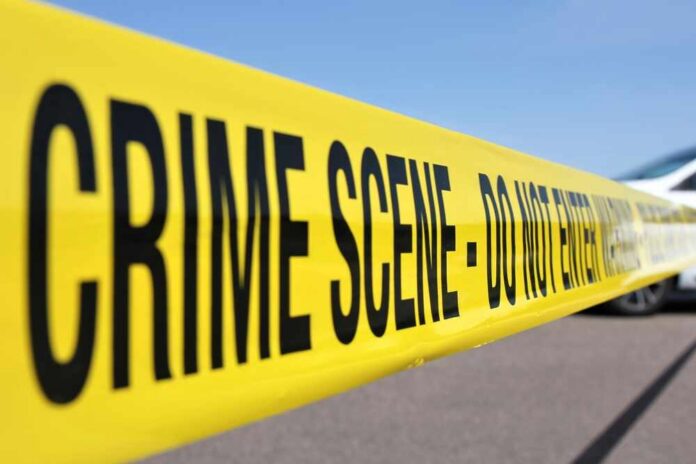
Two gunmen on a motorcycle trapped journalist Camilo Rodríguez’s car in traffic and shot him dead in broad daylight in Costa Rica.
Story Snapshot
- Attackers on a motorcycle opened fire on Rodríguez’s vehicle near San José.
- Authorities say he had filed about 10 threat complaints in the past two years.
- Investigators are hunting the shooters and anyone who helped track or order the hit.
- This is Costa Rica’s first journalist killing in about 25 years, reviving an old wound.
A planned interception on a busy route
Costa Rican authorities say two men on a motorcycle pulled alongside Rodríguez’s vehicle as he drove through Santo Domingo de Heredia, just north of San José, and opened fire, killing him at the scene. Police described a targeted strike, not a random attack. The shooting happened on Route 32, a known thoroughfare, which allowed the assailants a fast escape. The hit mirrored tactics seen across the region when criminals want speed, surprise, and a clean exit.
Investigators from the Judicial Investigation Agency said the killers may have had help tracking his movements before the ambush. That detail matters because it points to planning and surveillance, not chance. Officers collected casings and canvassed for camera footage in the area. They asked for public tips and warned that they were looking not only for the shooters but also for whoever ordered or supported the operation. No arrests had been announced at the time of reporting.
A journalist who named names
Rodríguez made his name by publicly identifying people he said were tied to drug trafficking and corruption. Costa Rica’s attorney general said he was “a communicator who publicly identified people for alleged links to drug trafficking”. The British Broadcasting Corporation described how his work denounced alleged ties between politicians and drug traffickers. That focus put him on collision paths with powerful interests. It also earned him an audience that expected straight talk and hard edges.
Authorities confirmed Rodríguez had reported threats, and not just once. The Judicial Investigation Agency said he filed about ten complaints over the past two years. That is a paper trail, not a rumor mill. Reports also said he declined a formal protection program when it was offered, even as some victim-support services were discussed. People make these choices for many reasons: freedom to work, fear of stigma, or distrust of the shield. The fact remains that threats escalated, and then came the attack.
First in a generation, but not without echoes
This killing is Costa Rica’s first journalist homicide in about a quarter century, a jarring break in a country known for stability. The site sits near where radio host Parmenio Medina was gunned down in 2001, a case that once shocked the nation and led to convictions that proved masterminds can be unmasked. That history raises a hard question now: will this case get the same relentless push to identify every hand in the chain, from lookouts to paymasters?
The killing of journalist Camilo Rodríguez in Costa Rica raises fresh concerns about journalists' safety. Police are investigating the November 16 shooting and have yet to establish a motive.#PressFreedom #CostaRica #JournalistSafety
— JournalismPakistan (@JournalismPk) November 17, 2026
Officials have not stated a motive as the inquiry continues. Still, the pattern looks familiar across Latin America: a journalist who aired alleged corruption, a string of threats, and then a tight, fast hit on a public street. This is where common sense meets civic duty. A free press is not a luxury brand. It is a watchdog. When bullets replace debate, citizens lose the truth first and their safety next. Strong states prove strength by solving crimes, not by shrugging at them.
What accountability should look like now
Costa Rican investigators say they are pursuing the shooters and any organizers or helpers. That requires the basics done well and fast: collecting camera feeds, mapping phones, tracing the motorcycle, and following the money. It also means testing overlaps between the ten threat complaints and names, numbers, or vehicles that show up around the crime. The public deserves steady updates grounded in evidence. Silence creates a vacuum, and vacuums invite spin.
Global data puts this case in a wider frame. United Nations Educational, Scientific and Cultural Organization reporting shows impunity in journalist killings remains high worldwide, even as some regions have improved. Latin America bears a heavy share of these deaths, often outside war zones. That is why this Costa Rican case matters beyond its borders. A clean, credible prosecution sends a message that ideas, not guns, settle arguments. Anything less invites more ambushes at red lights.
Sources:
cbsnews.com, ticotimes.net, reuters.com, cpj.org, bbc.com, rsf.org, unesco.org