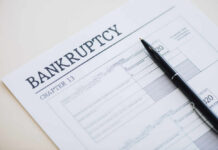
Saks Global’s bankruptcy filing is yet another testament to the economic perils brought on by excessive debt and leftist economic policies.
Story Snapshot
- Saks Global files for Chapter 11 bankruptcy amidst heavy debt.
- The luxury retailer secures $1.75 billion in financing to support its restructuring.
- E-commerce competition and market contraction challenge Saks.
- New leadership aims to steer the company towards stability.
Saks Global Files for Bankruptcy
This week, Saks Global, the iconic luxury retailer, filed for Chapter 11 bankruptcy protection in the U.S. Bankruptcy Court in Houston. This move comes as the company grapples with significant debt following its 2024 acquisition of Neiman Marcus.
The exorbitant $2.65 billion deal, funded by $2 billion in debt from Hudson’s Bay Company and $1.5 billion from Apollo Global Management, has left the company in a precarious financial state.
Despite this financial turmoil, Saks has secured $1.75 billion in financing to maintain its operations, keep its stores open, and pay its suppliers and employees during the proceedings. This financial safety net, known as debtor-in-possession (DIP) financing, is crucial to the company’s survival during restructuring.
The company’s leadership has also seen a shake-up, with Geoffroy van Raemdonck, former CEO of Neiman Marcus, stepping in to guide the restructuring process and optimize Saks’ operational footprint for long-term viability.
Saks Global, the longtime leader of luxury department stores, files for bankruptcy protection https://t.co/1k8xBxbWrQ
— CNBC (@CNBC) January 14, 2026
The Impact of E-commerce and Market Contraction
The luxury retail sector has been under siege from the rise of e-commerce giants and fast-fashion retailers, creating a challenging environment for traditional department stores like Saks. The e-commerce boom, driven by companies such as Amazon, has shifted consumer purchasing habits online, leaving brick-and-mortar stores with dwindling foot traffic.
Additionally, the global luxury market is expected to contract for the second consecutive year, according to Bain & Co., amplifying pressure on Saks and similar retailers.
With a reported 8,100 U.S. store closures in 2025 alone, the retail sector is facing a crisis. Saks’ bankruptcy filing is emblematic of the broader struggles within the industry, where excessive debt and fierce competition have eroded once-stable business models.
The restructuring plan aims to address these issues by focusing on debt reduction and operational efficiency while retaining the brand’s luxury identity.
Future Prospects and Conservative Concerns
The restructuring of Saks Global under van Raemdonck’s leadership offers a glimmer of hope for the storied retailer. However, the long-term success of the restructuring plan hinges on the company’s ability to adapt to the shifting market dynamics.
While the DIP financing provides immediate relief, the potential for future store closures and asset sales remains a concern.
Conservatives worry that Saks Global’s economic challenges are indicative of a broader trend of fiscal mismanagement and market interference by previous administrations.
The erosion of traditional business models, coupled with the burden of excessive debt, underscores the importance of returning to conservative economic principles that prioritize fiscal responsibility and market-driven success.
Sources:
Saks Global, century-old high-end department store chain, files for bankruptcy protection
Luxury retailer Saks Global files for bankruptcy, prepares to restructure
Saks Global Secures $1.75 Billion of Committed Capital and Announces Return of Industry Veterans