President Trump’s bold declaration to designate Antifa as a domestic terrorist organization sends a clear message that the era of leftist violence and intimidation is over.
Story Snapshot
- Trump publicly supports designating Antifa as a domestic terrorist organization following Charlie Kirk’s assassination.
- Conservative activist Charlie Kirk was killed by a sniper at Utah Valley University, with suspect Tyler Robinson arrested.
- The president links the assassination to broader left-wing radicalization and suggests using RICO statutes against organizers.
- Congressional allies rally behind Trump’s position, citing Antifa’s destructive role in political violence.
Trump Takes Decisive Stand Against Leftist Violence
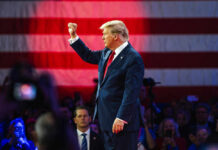
President Donald Trump declared his support for designating Antifa as a domestic terrorist organization during a White House press conference on Monday. “It’s something I would do, yeah… Antifa is terrible,” Trump stated when asked about the potential designation.
The President’s remarks came one week after the shocking assassination of Charlie Kirk, founder of Turning Point USA, who was gunned down by a sniper while speaking at Utah Valley University in Orem, Utah.
The assassination has sent shockwaves through conservative circles, with Utah Governor Spencer Cox describing the incident as a “political assassination.”
Law enforcement authorities arrested Tyler Robinson, who confessed to the killing and faces charges of aggravated murder.
The brazen nature of the attack—a targeted assassination of a prominent conservative voice—has crystallized concerns about escalating left-wing extremism and the safety of patriots exercising their First Amendment rights.
Congressional Support Builds for Terror Designation
Senator Bill Cassidy immediately endorsed Trump’s position, stating, “The President is right to recognize the destructive role of Antifa by designating them domestic terrorists.” This support builds on years of Republican efforts to address Antifa’s violent tactics.
In 2019, Senators Cassidy and Ted Cruz introduced a Senate resolution calling for Antifa to be labeled a domestic terror organization, recognizing the movement’s pattern of intimidation and violence against conservatives.
Trump suggested deploying federal legal tools, including RICO statutes, against those funding or organizing such violence.
This approach targets the financial networks and coordination behind leftist agitation, potentially exposing deep-pocketed donors and organizers who enable political terrorism while maintaining plausible deniability.
The President’s willingness to use these powerful federal instruments demonstrates his commitment to dismantling the infrastructure supporting domestic extremism.
Legal Challenges and Constitutional Implications
The proposed designation faces significant legal hurdles, as current U.S. law lacks clear mechanisms for designating domestic groups as terrorist organizations—a framework that exists only for foreign entities.
However, the assassination of a prominent conservative leader may provide the catalyst needed to expand federal authorities in combating domestic terrorism. Legal experts note that Antifa’s decentralized structure, lacking formal leadership or organizational hierarchy, complicates traditional designation processes.
Critics argue such designations could infringe on First Amendment rights, but supporters contend that violent actions transcend protected speech and assembly.
The targeted killing of Charlie Kirk represents a dangerous escalation that demands decisive action to protect constitutional conservatives from intimidation and assassination.
Patriots understand that without strong deterrents, political violence will continue threatening the foundations of American democracy and the safety of those defending traditional values.
Sources:
Trump says he would support designating Antifa as a domestic terrorist organization
Cassidy Statement on Trump Designating Antifa as Domestic Terrorists