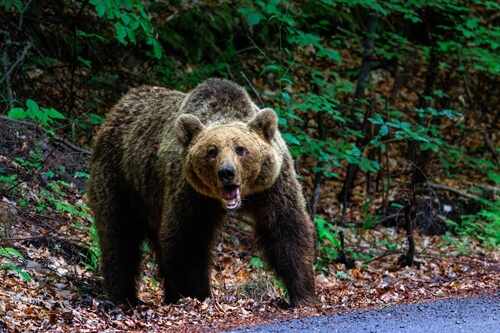
A solo hiker’s bear spray failed to stop a grizzly bear attack in Yellowstone National Park, raising serious questions about the effectiveness of the recommended defense method that outdoor officials have promoted for decades.
Story Highlights
- A 29-year-old hiker suffered significant injuries despite attempting to deploy bear spray during a grizzly attack.
- The first bear attack in Yellowstone since 2021 occurred on the remote Turbid Lake Trail in a known bear management area.
- National Park Service confirms bear spray deployment, but the hiker still sustained chest and arm injuries.
- Incident exposes potential gaps in current bear safety protocols promoted by federal agencies.
Bear Spray Fails When It Matters Most
A 29-year-old solo hiker became the latest victim of federal wildlife management policies that prioritize bear protection over human safety.
The man sustained significant but non-life-threatening injuries to his chest and left arm while hiking the Turbid Lake Trail in Yellowstone’s Pelican Valley Bear Management Area.
Despite following National Park Service recommendations and attempting to deploy bear spray, the defensive tool failed to prevent the mauling.
This raises uncomfortable questions about whether our government agencies have been giving Americans a false sense of security through inadequate protection methods.
The attack occurred in an area specifically designated as a Bear Management Area, where federal officials already acknowledge high bear activity.
Yet hikers are encouraged to venture into these dangerous zones armed with nothing more than pepper spray and wishful thinking.
The victim was flown to a hospital but released the following day, fortunate that his injuries weren’t fatal. Many American families who enjoy the great outdoors deserve better protection than what current federal policies provide.
Hiker attacked by bear during ‘surprise encounter’ in Yellowstone National Park https://t.co/D11DhFL2pH
— ConservativeLibrarian (@ConserLibrarian) September 17, 2025
Federal Agencies Prioritize Bears Over Americans
The National Park Service’s response to this attack reveals troubling priorities that have become all too common in federal agencies.
Officials immediately announced that no management action would be taken against the bear, describing the attack as “defensive behavior.”
This approach treats Americans as intruders in their own national parks while giving dangerous predators free rein to continue threatening visitors.
The Turbid Lake Trail remains closed, but only temporarily, ensuring future hikers will face the same risks with the same inadequate protection.
Since Yellowstone’s establishment in 1872, bear attacks remain rare statistically, but that’s cold comfort to victims and their families.
The park service boasts that only eight people have been killed by bears compared to 125 drownings, yet this comparison ignores the fundamental difference between accidental deaths and preventable predator attacks.
American citizens shouldn’t have to accept being mauled as an acceptable risk of enjoying public lands that their tax dollars support.
The Bear Spray Myth Exposed
For years, federal agencies and environmental groups have promoted bear spray as highly effective protection against aggressive bear behavior. This incident highlights the significant disparity between government promises and actual outcomes.
When a grizzly bear decides to attack, having time to properly deploy bear spray while maintaining accuracy under extreme stress proves nearly impossible for most people.
The fact that this hiker attempted to use bear spray but still suffered significant injuries should force an honest reevaluation of current safety recommendations.
Wildlife experts consistently emphasize hiking in groups and making noise to avoid surprise encounters, but these strategies assume bears will always act predictably.
The reality is that grizzly bears are apex predators weighing up to 800 pounds, capable of running 35 miles per hour, and equipped with claws and teeth designed to kill.
Telling Americans to rely on pepper spray against such formidable predators while simultaneously restricting more effective means of protection reflects misguided priorities that put ideology ahead of human safety.
Time for Common-Sense Bear Management
The grizzly bear population in the lower 48 states has declined dramatically since the 1800s, with fewer than 1,000 remaining today. However, conservation success shouldn’t come at the expense of American families’ safety and freedom to enjoy public lands.
States like Alaska have demonstrated that effective bear management can protect both wildlife and humans through practical policies that acknowledge reality rather than wishful thinking about coexistence.
This attack occurred in an area where federal officials already restrict access through seasonal closures and advisories, yet still failed to prevent the incident.
Instead of constantly expanding restrictions on where Americans can go and how they can protect themselves, park management should focus on proven methods that actually work.
The current approach of treating every bear encounter as a human failure while maintaining inadequate protection standards serves neither conservation goals nor public safety.
Sources:
LA Times – Yellowstone Hiker Survives Bear Attack
National Park Service Official Update
Outside Online – Yellowstone Hiker Bear Attack Coverage